National
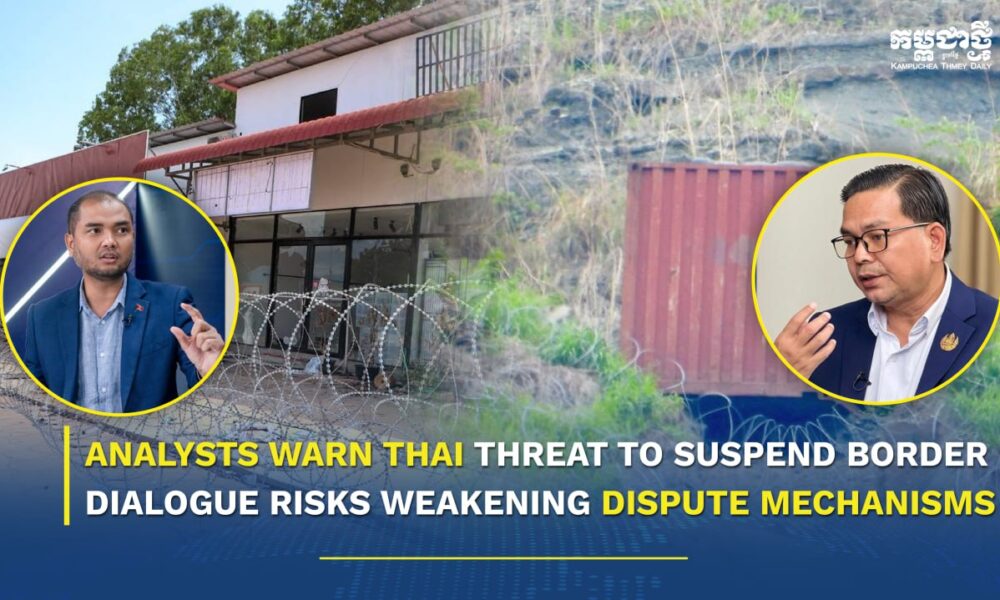
Analysts warn Thai threat to suspend border dialogue risks weakening dispute mechanisms

PHNOM PENH, June 9, 2026 (KPT) – Analysts have criticised Thailand’s reported warning that it could suspend key bilateral border mechanisms with Cambodia, saying such a move would undermine established frameworks and create uncertainty over how disputes are managed along one of Southeast Asia’s most sensitive frontiers.
The warning, attributed to Thai Prime Minister Anutin Charnvirakul after Cambodia moved to pursue compulsory conciliation under the UN Convention on the Law of the Sea, has cast doubt over the future of the General Border Committee (GBC), Regional Border Committee (RBC) and Joint Boundary Commission (JBC).
For decades, these platforms have been the principal channels for addressing incidents, military communication and technical demarcation.
Analysts cautioned that if formal mechanisms become inactive, coordination would likely shift to informal military contacts, local commanders and ad hoc diplomatic exchanges.
While such communication may prevent complete breakdowns, experts warned it lacks the authority, transparency and legal foundation of established institutions.
“Land border issues already have internationally recognised agreements and mechanisms for resolution,” said Cambodian political analyst Kin Phea.
“Weakening those channels creates more uncertainty rather than solutions.” He argued that formal mechanisms remain the most effective means of managing disputes and preventing misunderstandings.
Geopolitical analyst Gnel Rattha said a prolonged freeze in official dialogue could create a vacuum in which informal coordination becomes increasingly important but less predictable.
“When formal structures become inactive, communication does not stop. It simply moves elsewhere,” he said.
“The problem is that informal channels often lack accountability and can be influenced by changing political circumstances.” Rattha added that suspending regular meetings between border committees could complicate efforts to address incidents on the ground and slow progress on demarcation work.
Analysts also noted that informal coordination offers no clear pathway for resolving long‑standing sovereignty disputes, which ultimately require legal, diplomatic and political agreements endorsed by both governments.
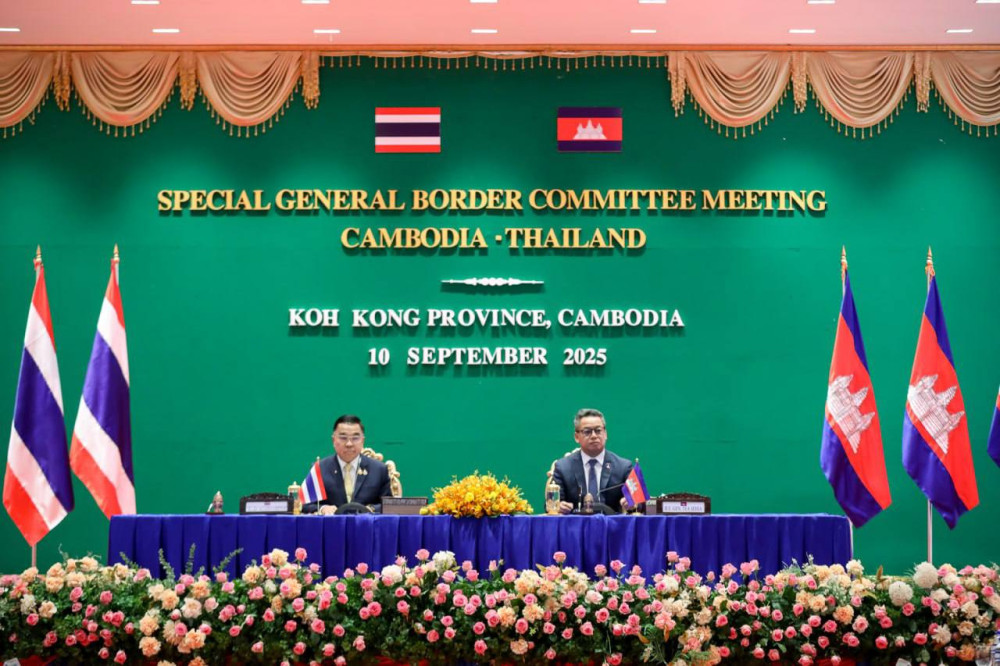
Cambodian government spokesman Pen Bona said Cambodia remained committed to peaceful dialogue and existing bilateral agreements despite recent tensions.
He stressed that the government continued to support implementation of agreements reached by both sides and remained committed to mechanisms aimed at maintaining stability along the border.
Cambodian officials said the JBC is expected to continue technical work related to surveying and demarcation under existing agreements.
For observers, the central question is no longer whether communication between Cambodia and Thailand will continue, but whether informal contacts can effectively replace institutions specifically created to manage disputes.
As tensions over maritime and land issues become increasingly interconnected, the durability of formal mechanisms may prove as important as the disputes themselves.











-
 National2 months ago
Cambodia launches construction of major Funan Techo canal section
-
 National1 month ago
Poll Finds Strong Cambodian Support for Closer China Ties
-

 Economy2 months ago
Cambodia Moves to Boost Green Economy with $30 Million Climate Financing Deal
-

 Opinion2 months ago
Opinion: The “Scambodia” Fallacy: Editorial Malpractice and the Erosion of Journalistic Ethics
-

 National2 months ago
Cambodia Condemns ‘Scambodia’ Label in Wall Street Journal Report
-

 Economy1 month ago
Cambodia Bans Prize Promotions on Beer and Energy Drinks to Level Playing Field
-
 Opinion1 month ago
Vienna Convention on the Law of Treaties (VCLT)’s ruling over the MoU 2001 Cancellation by Thailand against Cambodian Maritime Territories
-

 Economy1 month ago
Cambodia Caps Fuel Price Rise as Global Oil Surge Hits Domestic Market