National
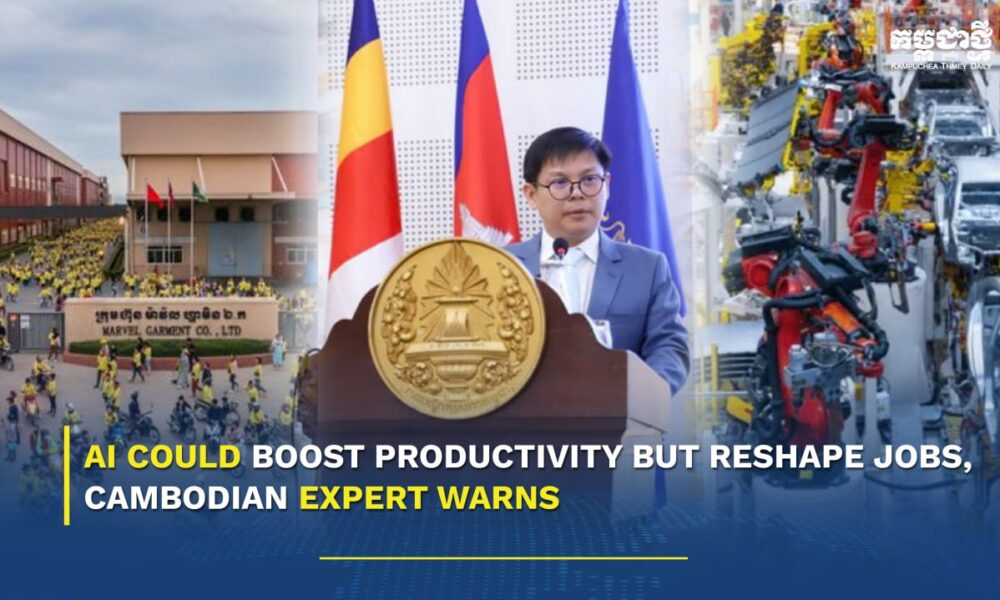
AI could boost productivity but reshape jobs, Cambodian expert warns

PHNOM PENH, Mar 19, 2026 (KPT) — Artificial intelligence could sharply increase industrial productivity but also reshape the labour market if workers are not adequately prepared, a Cambodian economic specialist warned Thursday.
Ky Sereyvath of the Royal Academy of Cambodia said AI represents a major step forward for industry, allowing companies to produce more with fewer workers and lower costs.
“It uses fewer employees but gains greater benefits, making production cheaper than before,” he said.
He cautioned that without sufficient government focus on training and workforce adaptation, the technology could disrupt employment.
“It will affect the workspace if the government does not focus on AI in the labour force,” he added.
Sereyvath stressed AI should be seen as a tool to enhance productivity rather than replace human workers, but warned that untrained workers may face job shortages as technology reshapes demand.
Beyond technology, he pointed to broader global shifts, warning of intensifying economic rivalry between major powers, particularly the United States and China, as trade disputes and tariffs reshape supply chains and increase uncertainty for smaller economies.


-

 National1 month ago
Cambodia Expands Free ID Services While Introducing Clear Fee Structure for Administrative Documents
-

 National3 weeks ago
Cambodia proposes trilateral anti‑crime liaison mechanism with Laos, Vietnam
-

 National2 weeks ago
PM Hun Manet to visit China as trade surges and investment deepens
-

 National2 weeks ago
Cambodia says four soldiers injured in border blast, investigation launched
-

 National1 month ago
Samdech Techo Hun Sen Says Cambodia Can Meet Defence Needs Through Domestic Production
-

 National2 weeks ago
Cambodia opens new distribution hub to expand market access for local businesses
-
 Opinion2 months ago
From Connectivity to Resilience: How Japan’s Strategic Shift Could Transform Cambodia’s Next Development Phase
-
 Economy2 months ago
Cambodia Welcomes 1 Million Tourists in Q1, But Arrivals Fall Sharply Amid Regional Pressures