Economy
Digital transformation seen as key to reducing informality and boosting productive jobs in Asia
MANILA, July 13, 2026 (KPT) – Digital technologies are playing an increasingly vital role in helping Asian economies shift workers from low‑productivity informal jobs into more secure and higher‑value employment, according to a new Asian Development Bank (ADB) study.

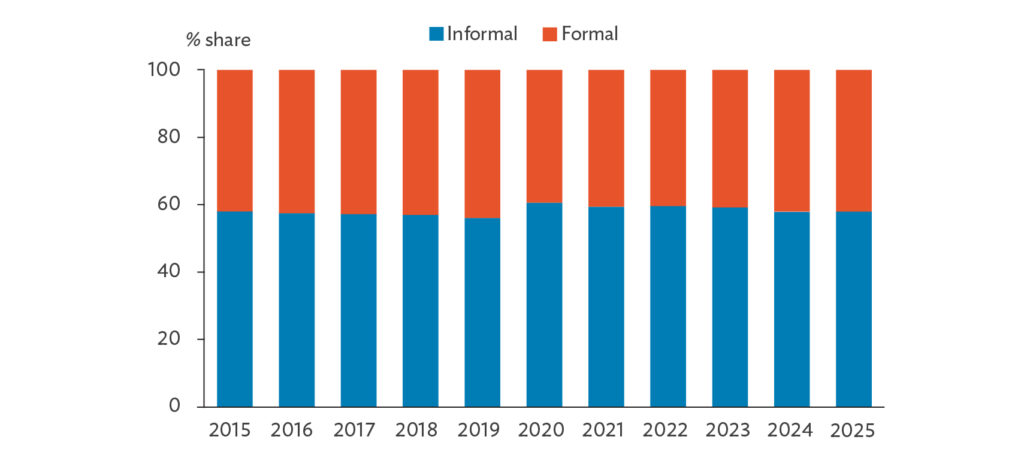
The report highlights Indonesia as a case study, noting that despite strong economic growth, more than half of the country’s workforce remains in informal employment, often concentrated in agriculture and basic services. These jobs provide limited wages and little social protection, underscoring the challenge of translating growth into better livelihoods.
ADB said the persistence of informality reflects structural gaps in both skills and firm capabilities. Workers with higher education are more likely to secure formal jobs, while those with lower attainment remain in informal work. At the same time, many firms struggle to adopt advanced technologies due to financial and organizational constraints, limiting demand for skilled labor.
Digital transformation offers a way forward. For workers, online platforms can improve job matching, reduce information gaps and support mobility through credentialing systems. For firms, digital tools lower operating costs and expand market access. Indonesia’s QRIS digital payment system, for example, has enabled micro and small enterprises to participate more fully in the formal economy.
The study points to international examples, including Japan’s plug‑and‑play low‑cost technologies, Singapore’s Tech Depot, and South Korea’s Smart Factory Initiative, as models for supporting small and medium‑sized enterprises. These programs reduce barriers to adoption and strengthen links between firms, training institutions and technology providers.
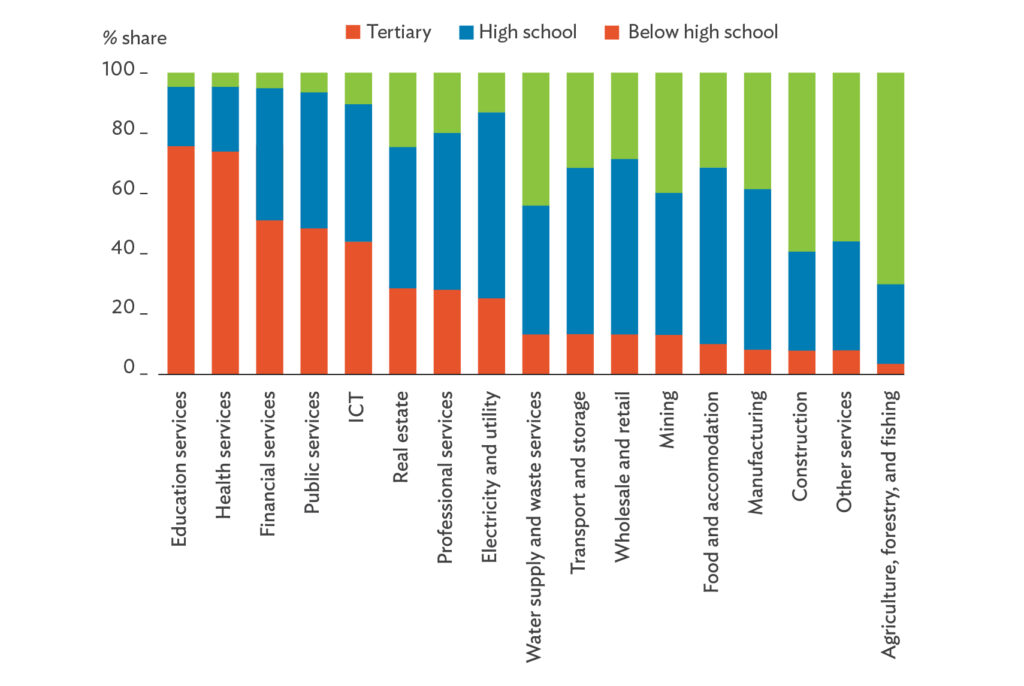
ADB said Southeast Asian policymakers should focus on expanding vocational education, apprenticeships and firm‑led training to align skills with modern sector needs. It also urged investment in interoperable payment systems, digital identity and labor market platforms to reduce costs and encourage formalization.
“Reducing informality requires more than job creation,” the report said. “It demands coordinated policies that combine skills development, firm upgrading and digital transformation to unlock productivity growth and inclusive employment.”













-

 National2 weeks ago
PM Hun Manet to visit China as trade surges and investment deepens
-

 National1 month ago
Samdech Techo Hun Sen Says Cambodia Can Meet Defence Needs Through Domestic Production
-

 Opinion2 months ago
From Connectivity to Resilience: How Japan’s Strategic Shift Could Transform Cambodia’s Next Development Phase
-

 Economy2 months ago
Cambodia Welcomes 1 Million Tourists in Q1, But Arrivals Fall Sharply Amid Regional Pressures
-

 Opinion2 months ago
Op-Ed: A Decade of Dialogue, Yet Many Challenges Remain
-

 Economy2 months ago
Cambodia Denies Viral Rumors of Border Closure, Entry Ban
-
 Economy1 month ago
Cambodia’s Labor Market Set to Add 445,000 Jobs in 2026 as Industry and Services Drive Growth
-

 Economy2 months ago
Cambodia Air Cargo Surges 36% Despite Dip in Passenger Traffic