Opinion
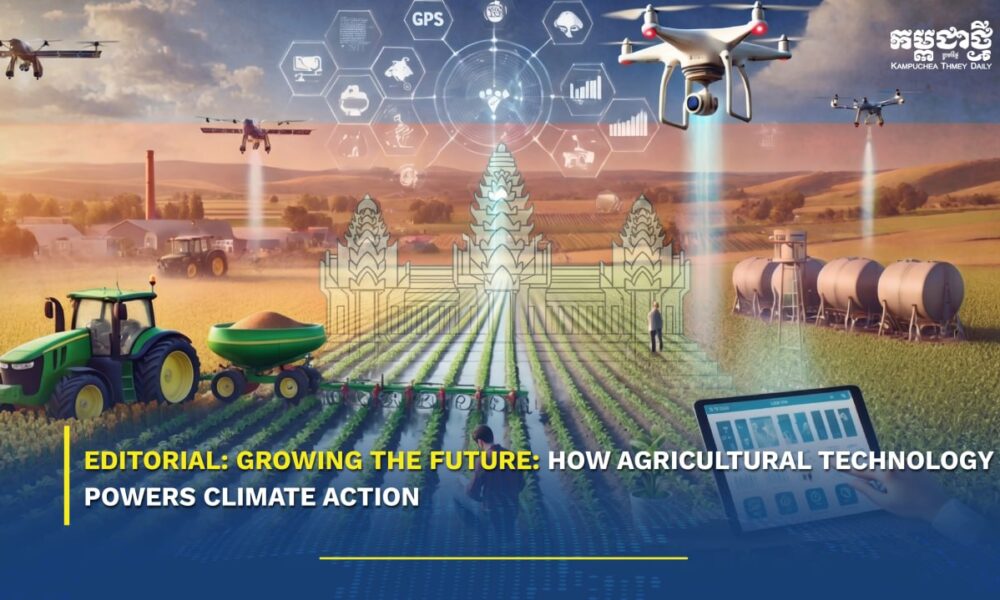
Editorial: Growing the Future: How Agricultural Technology Powers Climate Action
PHNOM PENH, June 22, 2026 (KPT)- Agriculture lies at the heart of human civilization. It feeds our families, supports livelihoods, and sustains economies. Yet agriculture today faces one of its greatest challenges: climate change.
Rising temperatures, prolonged droughts, unpredictable rainfall, floods, pests, and diseases are increasingly threatening food production around the world. In this new reality, agricultural technology is no longer a luxury—it is a necessity. It has become one of the most powerful tools for climate action.
For centuries, farmers relied on experience, seasonal patterns, and traditional practices. Today, however, weather patterns are changing faster than ever before. A season that was once predictable can now bring drought, floods, or extreme heat.
Farmers need new solutions that help them adapt to these changing conditions while continuing to produce enough food for a growing population.
Agricultural technology offers exactly that opportunity.
Modern irrigation systems can deliver water directly to plant roots, reducing water waste and helping crops survive drought conditions. Drought-resistant crop varieties can produce harvests even under extreme heat and limited rainfall.
Weather forecasting tools and mobile applications can provide farmers with early warnings about storms, floods, or pest outbreaks, allowing them to make informed decisions and reduce losses.
Technology also helps agriculture become part of the solution to climate change rather than a contributor to it.
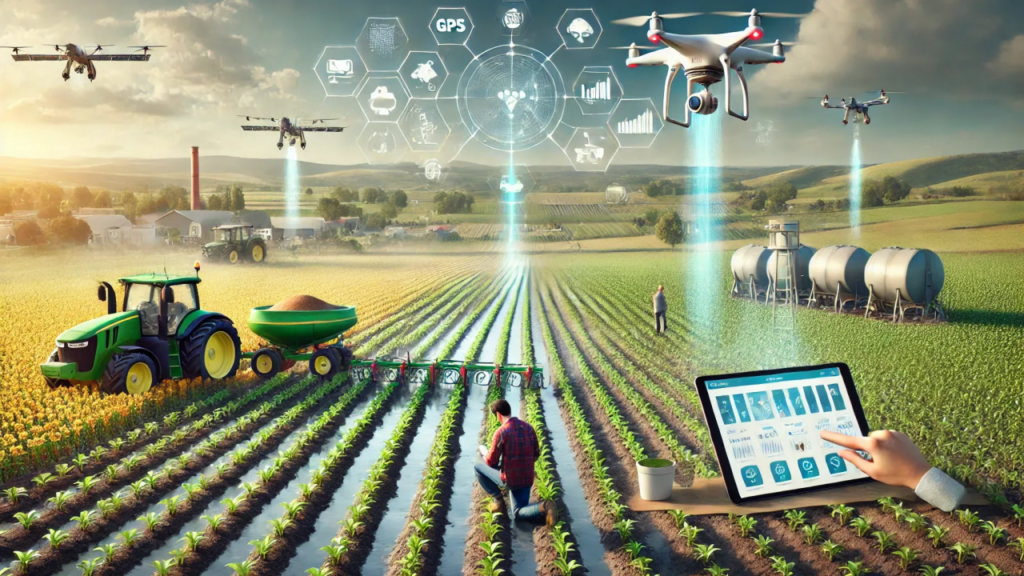
Precision agriculture, which uses sensors, satellites, drones, and digital monitoring systems, allows farmers to apply fertilizers and pesticides only where and when they are needed. This reduces costs, increases productivity, and lowers greenhouse gas emissions.
Better soil management practices can increase the amount of carbon stored in the ground, turning agricultural land into an important carbon sink.
Climate-smart agriculture combines traditional wisdom with modern innovation. Practices such as conservation agriculture, agroforestry, crop rotation, organic fertilization, and efficient water management improve resilience while protecting the environment.
Trees planted on farms can absorb carbon dioxide, improve soil fertility, reduce erosion, and provide additional income for farming families.
The benefits extend far beyond the farm.
When agricultural technology improves productivity, farmers earn higher incomes. When crops become more resilient to climate shocks, food supplies become more stable.
When water and soil resources are used efficiently, ecosystems remain healthy for future generations. In short, agricultural technology strengthens food security, economic development, and environmental sustainability simultaneously.
For developing countries, embracing agricultural technology is particularly important. Agriculture often supports a large share of the population, and rural communities are among the most vulnerable to climate change.
Investing in farmer education, research, innovation, digital services, and climate-smart infrastructure can help build stronger and more resilient agricultural systems.
Young people also have an important role to play. The future farmer is increasingly becoming a technology user, combining agricultural knowledge with digital skills.
Smartphones, artificial intelligence, remote sensing, and modern machinery are transforming farming into a profession that is innovative, productive, and environmentally responsible.
Climate action is not only about reducing emissions from factories, power plants, or vehicles. It is also about transforming how we grow our food.
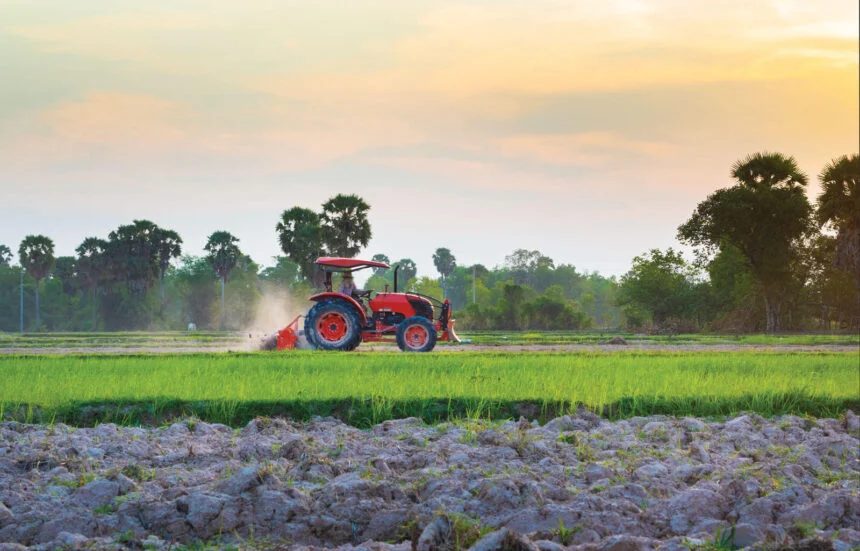
Every drop of water saved, every tree planted on farmland, every efficient irrigation system installed, and every climate-resilient seed planted contributes to a more sustainable future.
Agriculture has always adapted to changing conditions throughout history. Today, agricultural technology provides the tools needed for the next stage of that adaptation.
By embracing innovation and climate-smart practices, we can protect farmers, strengthen food security, and help combat climate change at the same time.
The future of agriculture is not simply about producing more food. It is about producing food more wisely, more sustainably, and more resiliently.
Agricultural technology is the bridge that connects food security with climate action, ensuring that future generations inherit both a healthy planet and a secure food supply.
The seeds of tomorrow’s harvest are being planted today through innovation, science, and sustainable farming. By empowering farmers with technology, we cultivate not only crops, but also resilience, prosperity, and hope for a climate-secure future.

-

 National2 months ago
Poll Finds Strong Cambodian Support for Closer China Ties
-

 Opinion2 months ago
Vienna Convention on the Law of Treaties (VCLT)’s ruling over the MoU 2001 Cancellation by Thailand against Cambodian Maritime Territories
-

 Economy2 months ago
Cambodia Bans Prize Promotions on Beer and Energy Drinks to Level Playing Field
-
 Economy2 months ago
Cambodia Caps Fuel Price Rise as Global Oil Surge Hits Domestic Market
-

 Politics2 months ago
Chinese Embassy Warns Citizens Over High Paid Job Scams in Thailand
-

 Opinion4 weeks ago
From Connectivity to Resilience: How Japan’s Strategic Shift Could Transform Cambodia’s Next Development Phase
-

 Education2 months ago
Cambodia Deepens Japan Backed Education Cooperation
-

 Education2 months ago
UK Pearson Edexcel Program Launched to Expand Cambodia’s International Education Standards