
National
Cambodia Defends Cybercrime Crackdown, Rejects ‘Scambodia’ Label

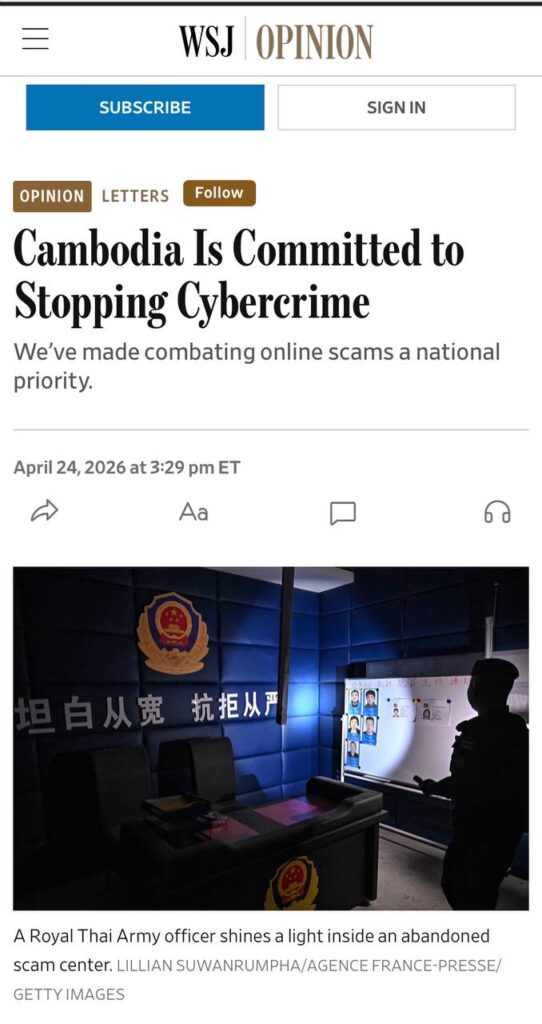
PHNOM PENH, April 27, 2026 (KPT) — Cambodia has defended its efforts to dismantle transnational online fraud networks and rejected the use of the term “Scambodia,” saying it unfairly stigmatizes the country and its people.
In an opinion piece published by the Wall Street Journal, the government said combating cybercrime had become a national priority under Prime Minister Hun Manet.
Officials stressed that many of the operations were transnational and “largely foreign led,” while reaffirming Cambodia’s commitment to dismantling criminal networks and prosecuting those responsible.
The government outlined measures including stronger law enforcement, new legislation and expanded international cooperation.
A recently enacted law on combating online scams is designed to strengthen investigations and prosecutions, while nationwide operations have shut down illegal compounds and rescued victims.
Authorities said that between July 2025 and mid April 2026, more than 250 cases linked to online scams were investigated, including the closure of 91 casino sites.
Courts have handled 112 cases involving about 1,089 suspects of various nationalities, alongside large scale deportations.

-

 National1 month ago
Cambodia Expands Free ID Services While Introducing Clear Fee Structure for Administrative Documents
-

 National3 weeks ago
Cambodia proposes trilateral anti‑crime liaison mechanism with Laos, Vietnam
-

 National2 weeks ago
PM Hun Manet to visit China as trade surges and investment deepens
-

 National2 weeks ago
Cambodia says four soldiers injured in border blast, investigation launched
-

 National1 month ago
Samdech Techo Hun Sen Says Cambodia Can Meet Defence Needs Through Domestic Production
-

 National2 weeks ago
Cambodia opens new distribution hub to expand market access for local businesses
-

 Opinion2 months ago
From Connectivity to Resilience: How Japan’s Strategic Shift Could Transform Cambodia’s Next Development Phase
-

 Economy2 months ago
Cambodia Welcomes 1 Million Tourists in Q1, But Arrivals Fall Sharply Amid Regional Pressures