Opinion
Op-Ed: Why Third Parties Matter in the Cambodia-Thailand Border Conflict
PHNOM PENH, June 12, 2026 (KPT)- Third-party engagement is essential to the Cambodia–Thailand border conflict because political trust between the two countries remains severely strained, while public hostility has deepened since the July 2025 border clashes.
Under such conditions, neutral and trusted actors can play a vital role in facilitating dialogue, rebuilding confidence, reducing tensions, and helping both countries move from confrontation toward reconciliation and lasting peace.
Against this backdrop, several countries and diplomatic actors have contributed to de-escalating tensions and preserving space for dialogue despite persistent mistrust. Through mediation, confidence-building measures, and diplomatic engagement, they have helped prevent further deterioration and encouraged both sides to pursue peaceful solutions.
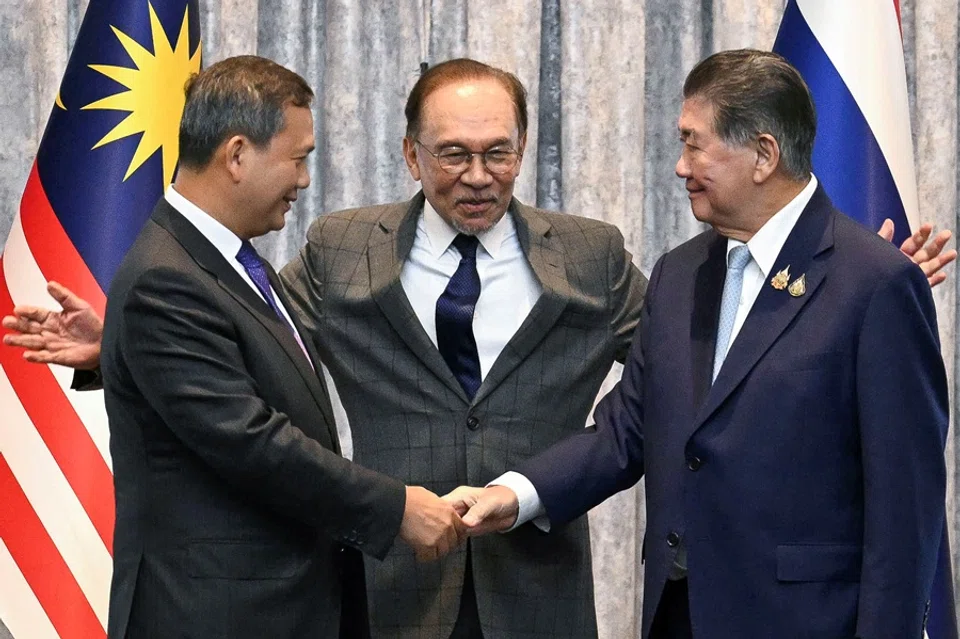
As ASEAN Chair, Malaysia took the lead in mediation efforts. Prime Minister Anwar Ibrahim worked actively to maintain communication and encourage peaceful engagement between the two countries.
Through ASEAN’s platform, with the direct involvement of the United States and the active participation of China, a first-round ceasefire was achieved. These efforts reflected a shared recognition that prolonged instability could undermine regional confidence, economic cooperation, and ASEAN unity.
A key confidence-building measure was the deployment of the ASEAN Observation Team (AOT), which was tasked with monitoring developments in sensitive border areas and helping reduce misunderstandings.
However, questions remain because its reports have reportedly not been made public since July 2025. Greater transparency could help strengthen trust and reduce competing narratives. Meanwhile, the Philippines, as ASEAN Chair in 2026, has continued to support efforts to sustain dialogue and preserve peace between the two neighbouring countries.
The United States played one of the most visible roles during the most difficult period of the crisis. Washington actively engaged in supporting the July and October 2025 ceasefire agreements. The US involvement was important because it helped both sides step back from immediate confrontation and maintain diplomatic communication channels.
The American role was not focused on determining sovereignty or taking sides publicly. Instead, it concentrated on de-escalation and conflict management. At a time when tensions along the border were rising rapidly, the ceasefire arrangements helped prevent the situation from spiralling further.
China also played an important diplomatic role, albeit in a quieter manner, by maintaining active communication with both Phnom Penh and Bangkok throughout the crisis. A major breakthrough came on 28 December 2025, when China hosted the trilateral foreign ministers’ meeting involving China, Cambodia, and Thailand in Fuxian, Yunnan Province.
The meeting produced the Fuxian Five-Point Consensus Agreement, which helped reduce tensions, strengthen dialogue mechanisms, and promote the peaceful management of disputes.
China’s role in facilitating the meeting highlighted its growing importance as a diplomatic actor capable of engaging both sides simultaneously. Through quiet diplomacy and relationship-building, Beijing helped create a conducive environment for dialogue at a time when neither Cambodia nor Thailand wanted negotiations to be perceived domestically as a political concession or surrender.
France also deserves attention because of its historical connection to the Cambodia-Thailand boundary issue. As the former colonial power in Indochina, France played a central role in the Franco-Siamese treaties of 1904 and 1907 and in the original border demarcation process.
Consequently, French archives remain highly relevant to historical maps, agreements, and border records. France has reportedly expressed its willingness to provide access to archival materials related to the dispute, which could help promote fact-based discussions and support future peaceful settlement efforts grounded in historical evidence.
As a permanent member of the United Nations Security Council, France remains an influential diplomatic actor. While unlikely to serve as a direct mediator, it can contribute by supporting peaceful dialogue, diplomatic engagement, and respect for international law.
Among external actors, however, Japan may be uniquely positioned to play a particularly constructive role in helping Cambodia and Thailand rebuild trust and advance reconciliation. For decades, Tokyo has maintained close relations with both countries while avoiding the perception of being confrontational or politically intrusive. As a result, Japan enjoys a high degree of trust from both governments and societies.
Japan has consistently encouraged peaceful dialogue, the normalisation of relations, and the reopening of border crossings for the benefit of local communities. Importantly, Tokyo has avoided framing the dispute in terms of winners and losers, instead emphasising stability, development, and peaceful coexistence. This balanced approach has enhanced Japan’s diplomatic credibility and acceptance by both sides.
Looking ahead, Japan could support confidence-building measures, technical dialogue, and humanitarian cooperation in border areas, while helping create a more conducive atmosphere for sustained negotiations.
It could also facilitate both formal and informal exchanges at multiple levels, including scholar-to-scholar, business-to-business, military-to-military, and government-to-government dialogues, thereby contributing to the gradual restoration of trust and normal relations.
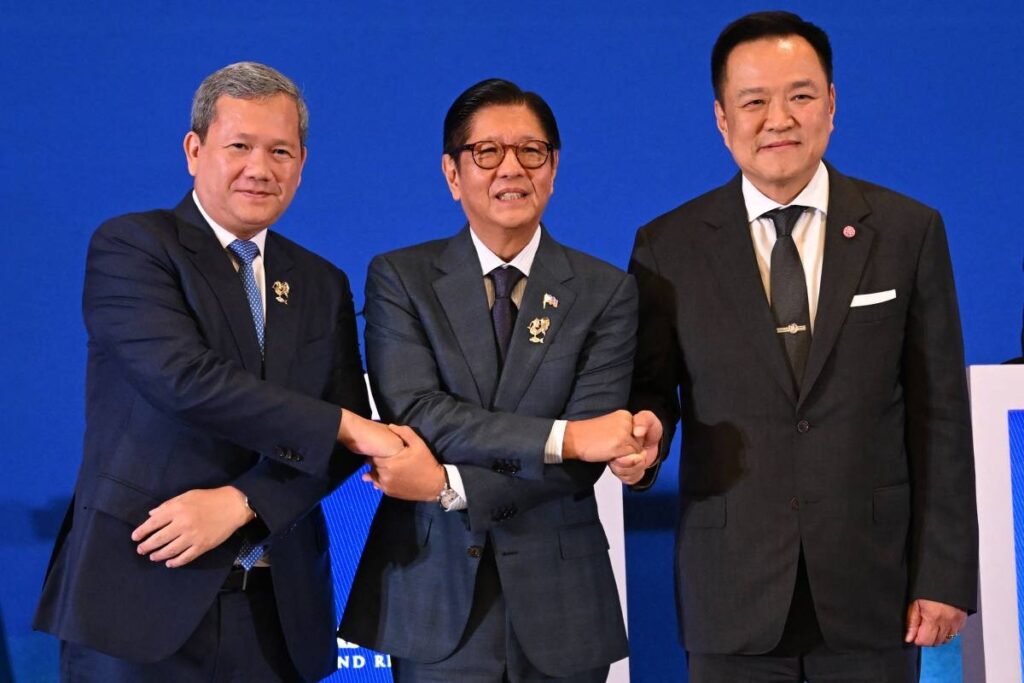
For Cambodia, the consistent position has been that any peaceful solution grounded in diplomacy and international law should be welcomed. Phnom Penh has repeatedly shown its willingness to engage in diplomatic initiatives proposed by various partners.
In this spirit, friendly countries trusted by both Cambodia and Thailand, including the United States, China, ASEAN member states, France, Japan, and others, could issue a joint appeal urging both sides to resolve disputes peacefully, uphold international law, restore trust, avoid escalation, and normalise relations. Such a collective voice could help create a more favourable environment for dialogue and reconciliation.
The Cambodia–Thailand border conflict has shown that trusted third parties matter most when trust between the parties themselves is at its lowest. By encouraging dialogue, reducing tensions, and rebuilding confidence, friendly countries can play an important role in supporting reconciliation and peace.
While no external actor can resolve the dispute for Cambodia and Thailand, constructive engagement can help keep the door to diplomacy open. Lasting peace will be built not through confrontation, but through trust, restraint, and dialogue.
By: Kin Phea, Alternate Member of the Royal Academy of Cambodia (RAC) & Director General of the International Relations Institute of Cambodia (IRIC). The views expressed in this article are solely his own and do not represent those of KPT English.





-
 National2 months ago
Cambodia Expands Free ID Services While Introducing Clear Fee Structure for Administrative Documents
-
 National4 weeks ago
Cambodia proposes trilateral anti‑crime liaison mechanism with Laos, Vietnam
-
 National4 weeks ago
PM Hun Manet to visit China as trade surges and investment deepens
-
 National2 months ago
Samdech Techo Hun Sen Says Cambodia Can Meet Defence Needs Through Domestic Production
-
 National3 weeks ago
Cambodia says four soldiers injured in border blast, investigation launched
-

 National3 weeks ago
Cambodia opens new distribution hub to expand market access for local businesses
-

 Economy2 months ago
Cambodia’s Labor Market Set to Add 445,000 Jobs in 2026 as Industry and Services Drive Growth
-
 Economy2 months ago
10% Tariff Proposed on Cambodian Exports as U.S. Reviews Forced Labor Concerns