Economy
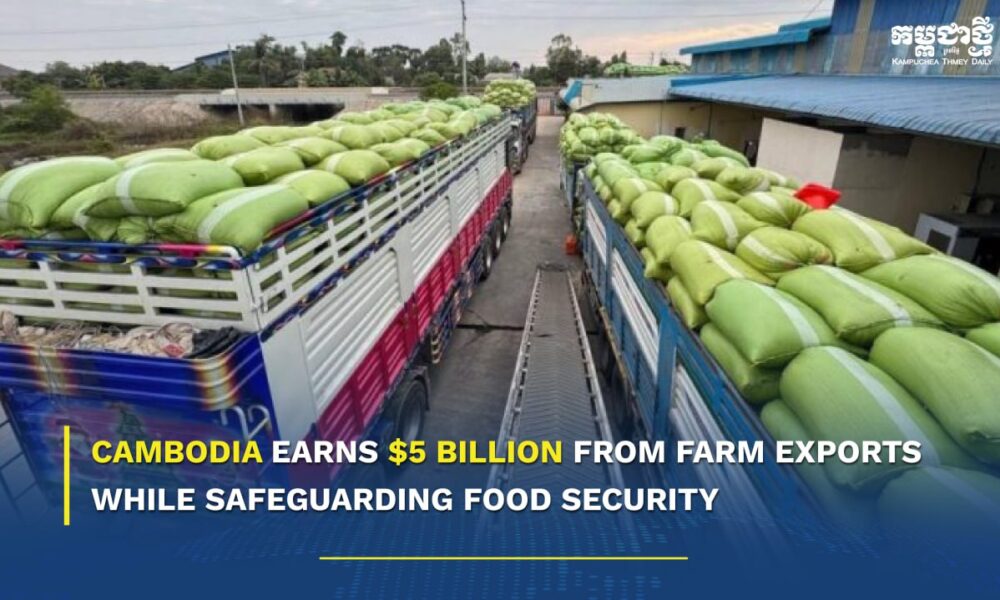
Cambodia earns $5 billion from farm exports while safeguarding food security
PHNOM PENH, Jan 23, 2026 (KPT) — Cambodia generated about US$5 billion from the export of nearly 15 million tonnes of agricultural products in 2025, while maintaining sufficient supplies to meet domestic demand and ensure national food security, the agriculture ministry said Friday.
Exports of crops reached 14,910,480 tonnes last year, marking a 27.8 percent increase from 2024, according to the ministry’s report. Paddy rice accounted for 6,859,930 tonnes, up 48.9 percent, while milled rice exports rose 45.6 percent to 940,321 tonnes. Other agricultural products made up 7,110,229 tonnes.
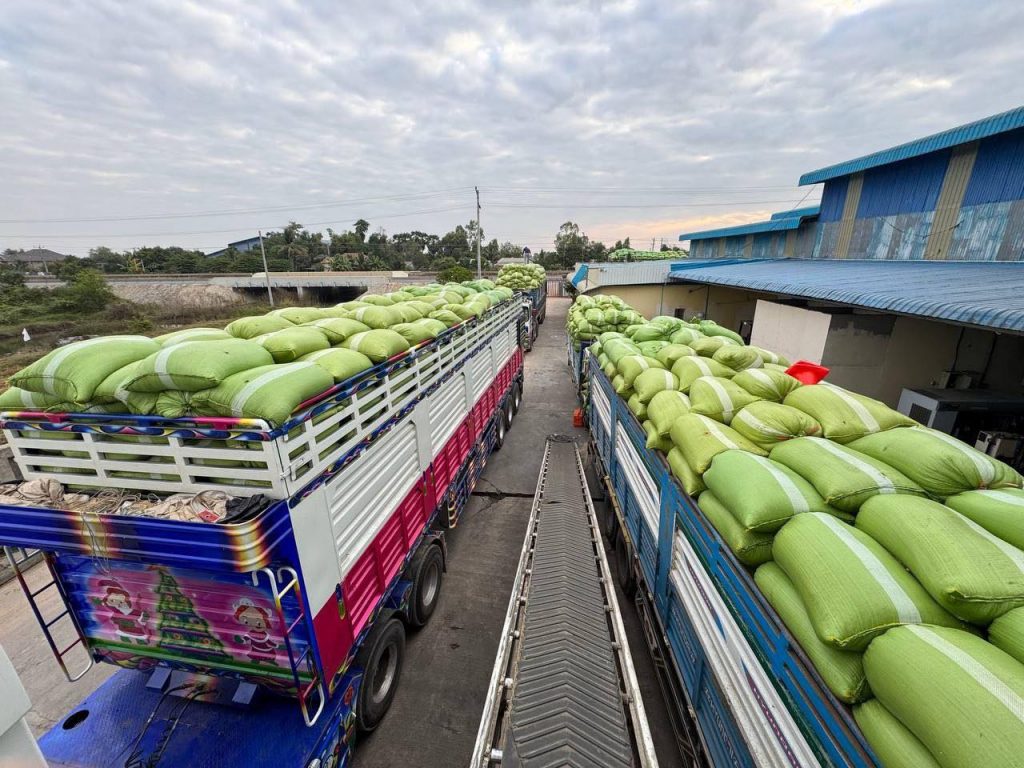
The report noted that after exports and domestic consumption, Cambodia retained a wet-season paddy balance of 5,085,787 tonnes — equivalent to 3,254,904 tonnes of rice — sufficient for local consumption and continued shipments abroad.
Agriculture Minister Dith Tina hailed the strong performance, stressing that production of rice, mixed crops, fruits, vegetables, fish and meat remained adequate to supply domestic needs.
He added that exports continued uninterrupted despite border tensions with Thailand, while food security for the population was preserved.










-

 National2 months ago
Cambodia Expands Free ID Services While Introducing Clear Fee Structure for Administrative Documents
-

 National3 weeks ago
Cambodia proposes trilateral anti‑crime liaison mechanism with Laos, Vietnam
-

 National2 weeks ago
PM Hun Manet to visit China as trade surges and investment deepens
-

 National2 weeks ago
Cambodia says four soldiers injured in border blast, investigation launched
-

 National1 month ago
Samdech Techo Hun Sen Says Cambodia Can Meet Defence Needs Through Domestic Production
-

 National2 weeks ago
Cambodia opens new distribution hub to expand market access for local businesses
-

 Opinion2 months ago
From Connectivity to Resilience: How Japan’s Strategic Shift Could Transform Cambodia’s Next Development Phase
-
 Economy2 months ago
Cambodia Welcomes 1 Million Tourists in Q1, But Arrivals Fall Sharply Amid Regional Pressures