Economy
U.S. Moves to Shield Businesses and Civilians as Thai Naval Threat Raises Risk of Wider Conflict
PHNOM PENH, Cambodia (Dec. 17, 2025) — The United States has sought to reassure the American business community in Cambodia amid rising concerns that the escalating Cambodia–Thailand conflict could spill beyond the battlefield and disrupt maritime trade, threatening severe civilian and economic fallout.
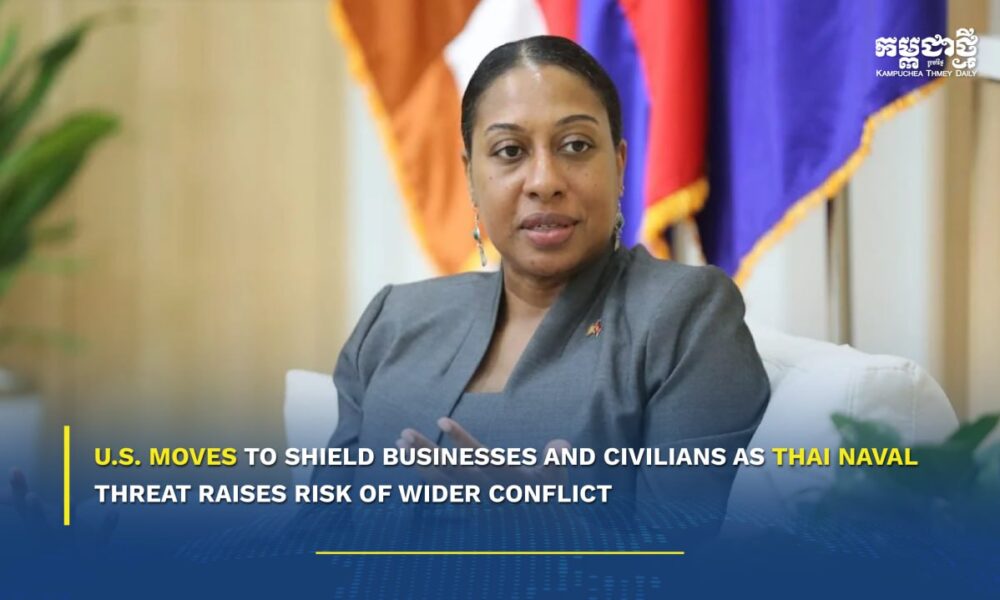
In a formal response to the American Chamber of Commerce in Cambodia (AmCham), U.S. Chargé d’Affaires Bridgette L. Walker said Washington is pressing both Cambodia and Thailand to uphold the Kuala Lumpur Peace Accords and return to dialogue, as fears mount over threats by the Royal Thai Navy to restrict shipping routes to Cambodian ports.

“I appreciate the insights and concerns shared by the U.S. business community regarding the impact of potential disruptions in sea shipping routes,” Walker wrote. “Please be assured that we continue to actively encourage both Cambodia and Thailand to uphold and return to the principles of the Kuala Lumpur Peace Accords.”
The assurance followed AmCham’s alarm over remarks by a Thai Navy spokesperson on Dec. 14 proposing to classify Cambodian ports as “high risk zones” and potentially intercept fuel and cargo shipments. AmCham warned such actions would dangerously escalate the conflict, extending it into civilian supply chains and international trade corridors.
Casey Barnett, AmCham Cambodia president, cautioned that disruption to maritime shipping would have immediate and devastating consequences. More than 865 American owned businesses operate in Cambodia, with hundreds more supplying U.S. brands through local manufacturers. Together, they represent billions of dollars in investment and employ large numbers of Cambodian workers.
“A fuel or cargo blockade would not only cripple businesses but directly harm civilians,” AmCham said, warning that American families and Cambodian workers alike would struggle to access basic needs such as transportation, schooling and medical care.
Because most U.S.–Cambodia trade moves by sea, AmCham said labeling civilian ports as “high risk” would sharply raise insurance premiums and shipping costs, undermining the 2025 Reciprocal Trade Agreement and pushing more than one million manufacturing workers deeper into hardship.
The chamber described the proposed maritime restrictions as “collective punishment of civilians,” urging U.S. officials and international partners to intervene before the conflict’s economic consequences spiral further.
“The expansion of this conflict beyond military zones risks imposing the heaviest costs on civilians and foreign nationals who have no role in the fighting,” AmCham said.











-
 National2 months ago
Cambodia Expands Free ID Services While Introducing Clear Fee Structure for Administrative Documents
-
 National3 weeks ago
Cambodia proposes trilateral anti‑crime liaison mechanism with Laos, Vietnam
-
 National2 weeks ago
PM Hun Manet to visit China as trade surges and investment deepens
-

 National2 weeks ago
Cambodia says four soldiers injured in border blast, investigation launched
-

 National1 month ago
Samdech Techo Hun Sen Says Cambodia Can Meet Defence Needs Through Domestic Production
-

 National2 weeks ago
Cambodia opens new distribution hub to expand market access for local businesses
-
 Opinion2 months ago
From Connectivity to Resilience: How Japan’s Strategic Shift Could Transform Cambodia’s Next Development Phase
-

 Economy2 months ago
Cambodia Welcomes 1 Million Tourists in Q1, But Arrivals Fall Sharply Amid Regional Pressures