National
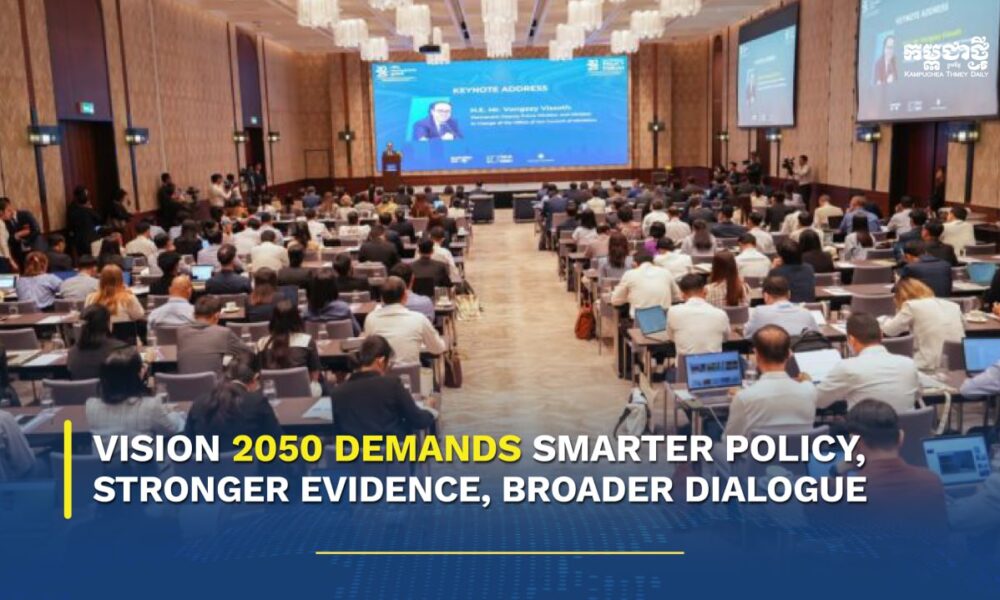
Visoth: Vision 2050 Demands Smarter Policy, Stronger Evidence, Broader Dialogue
PHNOM PENH (Sept. 5, 2025) —Deputy Prime Minister Vongsey Visoth on Thursday urged Cambodia’s public institutions, research bodies and development partners to embrace a culture of evidence-based policymaking, warning that the country’s long-term resilience depends on decisions grounded in data, inclusive dialogue and contextual analysis.
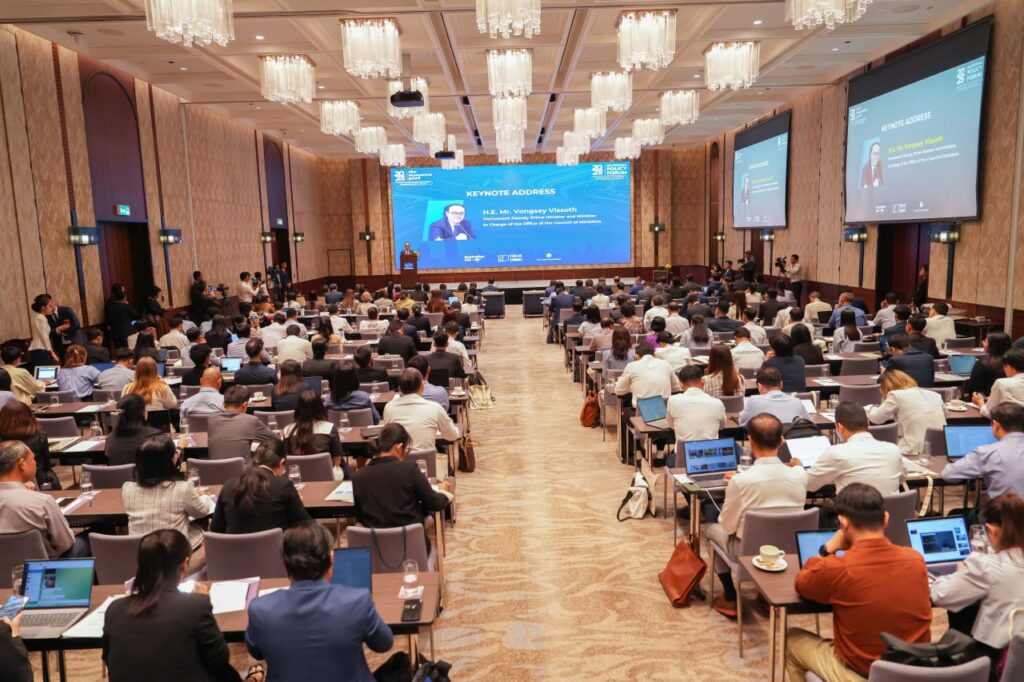
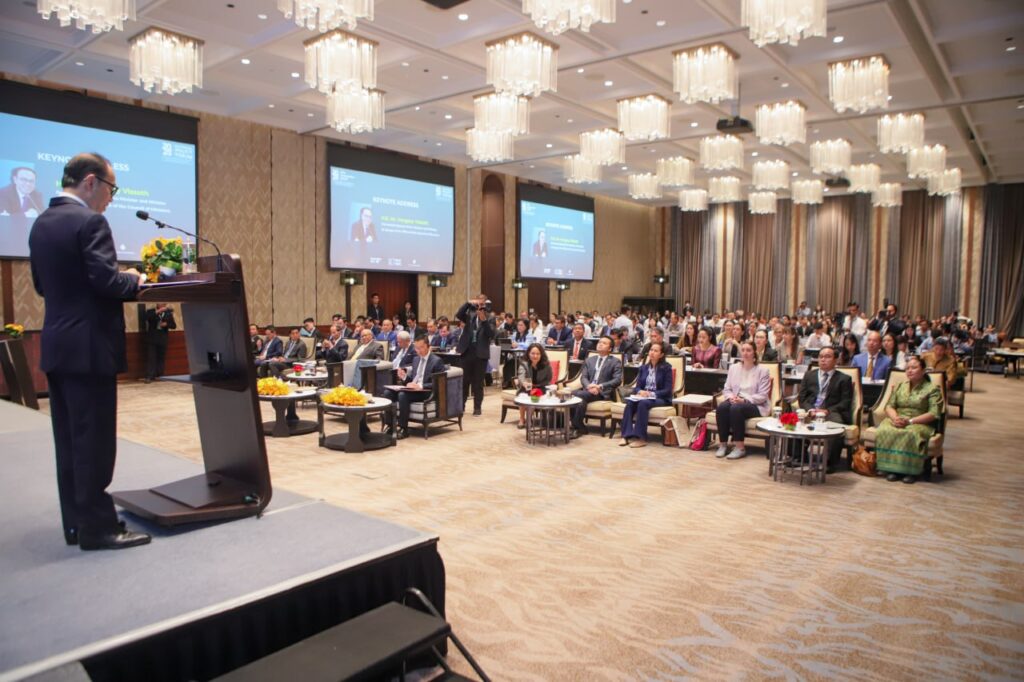
Speaking at the 2025 National Policy Forum in Phnom Penh, Visoth said Cambodia has entered a new phase of development that demands forward-looking strategies and adaptive governance. The forum, held under the theme “Contextual Policymaking in an Uncertain Era: Bridging Knowledge, Policy and People,” was co-hosted by Australian Aid, the Asia Foundation and the Knowledge Sector Initiative. It drew participation from Australian Ambassador Derek Yip, senior officials, civil society leaders and research institutions.
Visoth credited the Knowledge Sector Initiative for strengthening Cambodia’s research-policy ecosystem, noting its first phase (2019–2023) laid the groundwork for more inclusive and data-informed policy processes. He expressed confidence that the second phase (2023–2027) would further institutionalize evidence-based decision-making across government ministries and sectors.
He emphasized that policymaking rooted in reliable data and inclusive consultation is not merely a technical requirement but a national imperative. In his remarks, Visoth described research as the foundation for designing, refining and reforming public policy, and called for stronger linkages between government, academia and civil society.
He also reaffirmed the Seventh Legislature’s commitment to transparency and accountability under Prime Minister Hun Manet’s leadership, citing the rollout of Cambodia’s first pentagonal strategy monitoring framework. Visoth said the government is determined to make decisions based on facts and analysis—not sentiment or speculation—and to ensure that policies serve the real needs of all Cambodians, especially the most vulnerable.
As global conditions grow increasingly volatile, Visoth said Cambodia must be prepared to respond with clarity, fairness and resilience. He called for continued investment in data infrastructure, improved inter-ministerial coordination, and the integration of modern technologies—including artificial intelligence—to support deeper and faster policy analysis.
The forum underscored Cambodia’s evolving approach to governance, one that seeks to align national priorities with credible evidence and inclusive engagement. Visoth’s remarks signaled a renewed push to embed research and consultation into the heart of policymaking, as the country moves toward its Vision 2050 goals

-
 National2 months ago
Cambodia Expands Free ID Services While Introducing Clear Fee Structure for Administrative Documents
-
 National3 weeks ago
Cambodia proposes trilateral anti‑crime liaison mechanism with Laos, Vietnam
-
 National2 weeks ago
PM Hun Manet to visit China as trade surges and investment deepens
-

 National2 weeks ago
Cambodia says four soldiers injured in border blast, investigation launched
-

 National1 month ago
Samdech Techo Hun Sen Says Cambodia Can Meet Defence Needs Through Domestic Production
-
 National2 weeks ago
Cambodia opens new distribution hub to expand market access for local businesses
-
 Opinion2 months ago
From Connectivity to Resilience: How Japan’s Strategic Shift Could Transform Cambodia’s Next Development Phase
-
 Economy2 months ago
Cambodia Welcomes 1 Million Tourists in Q1, But Arrivals Fall Sharply Amid Regional Pressures