
Economy
Cambodia says peaceful maritime settlement could unlock $300 billion in offshore energy potential
PHNOM PENH, July 3, 2026 (KPT) – Cambodia said Friday that a peaceful settlement of its maritime boundary dispute with Thailand under the United Nations Convention on the Law of the Sea (UNCLOS) could unlock offshore oil and gas resources worth up to US$300 billion, delivering long-term economic benefits for both countries and bolstering ASEAN’s energy security.
Mines and Energy Minister Keo Rottanak told reporters that Cambodia’s decision to pursue compulsory conciliation under UNCLOS follows the successful example of Timor-Leste, which used the same mechanism to resolve its maritime boundary dispute with Australia.
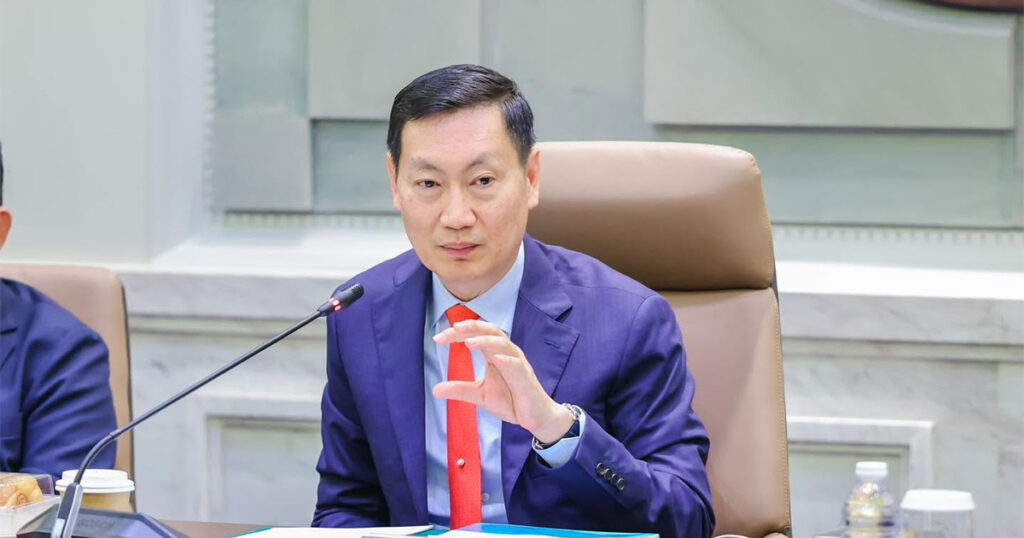
“Timor-Leste faced a maritime dispute with Australia over offshore resources. As a small country, it chose UNCLOS rather than confrontation, and Cambodia is pursuing the same peaceful legal mechanism with Thailand,” he said.
Rottanak stressed that Cambodia’s objective is to establish a clear maritime boundary and eventually create a framework for joint development of offshore resources. He noted that the global energy crisis has underscored the urgent need for new sources of oil and natural gas.
According to international consultancy Wood Mackenzie, the 26,000-square-kilometre Overlapping Claims Area (OCA) in the Gulf of Thailand is estimated to contain around 12 trillion cubic feet of natural gas and 700 million barrels of oil, with a potential value of US$280–300 billion.
“If these resources can be jointly developed through a peaceful agreement, they will not only benefit Cambodia and Thailand but also improve ASEAN’s energy security, lower energy costs and strengthen regional competitiveness,” Rottanak said.
Cambodia reaffirmed that compulsory conciliation under UNCLOS is the only lawful avenue available after Thailand’s unilateral withdrawal from the 2001 Memorandum of Understanding, which had provided the sole bilateral framework for negotiating maritime boundaries and joint resource development.
Timor-Leste’s ambassador to Cambodia, Marcos dos Reis da Costa, backed the approach, saying his country’s experience showed that conciliation can resolve complex disputes when both sides negotiate in good faith.
Pou Sothirak, senior advisor to the Cambodian Center for Regional Studies, said Timor-Leste’s case offers key lessons: “Small states have the same rights as big states under UNCLOS. Once you are a member, international law gives every member equal standing.”









-
 National2 months ago
Poll Finds Strong Cambodian Support for Closer China Ties
-
 Opinion2 months ago
Vienna Convention on the Law of Treaties (VCLT)’s ruling over the MoU 2001 Cancellation by Thailand against Cambodian Maritime Territories
-

 Economy2 months ago
Cambodia Bans Prize Promotions on Beer and Energy Drinks to Level Playing Field
-
 Opinion1 month ago
From Connectivity to Resilience: How Japan’s Strategic Shift Could Transform Cambodia’s Next Development Phase
-
 Education2 months ago
UK Pearson Edexcel Program Launched to Expand Cambodia’s International Education Standards
-

 Economy2 months ago
Major Beer Producers in Cambodia Back Government Ban on Prize Promotions
-
 National2 months ago
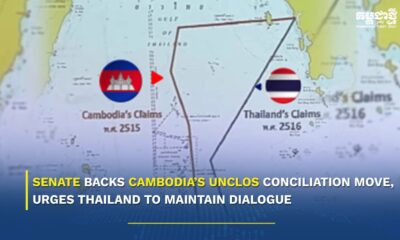
Senate backs Cambodia’s UNCLOS conciliation move, urges Thailand to maintain dialogue
-
 Opinion1 month ago
Op-Ed: A Decade of Dialogue, Yet Many Challenges Remain