Education
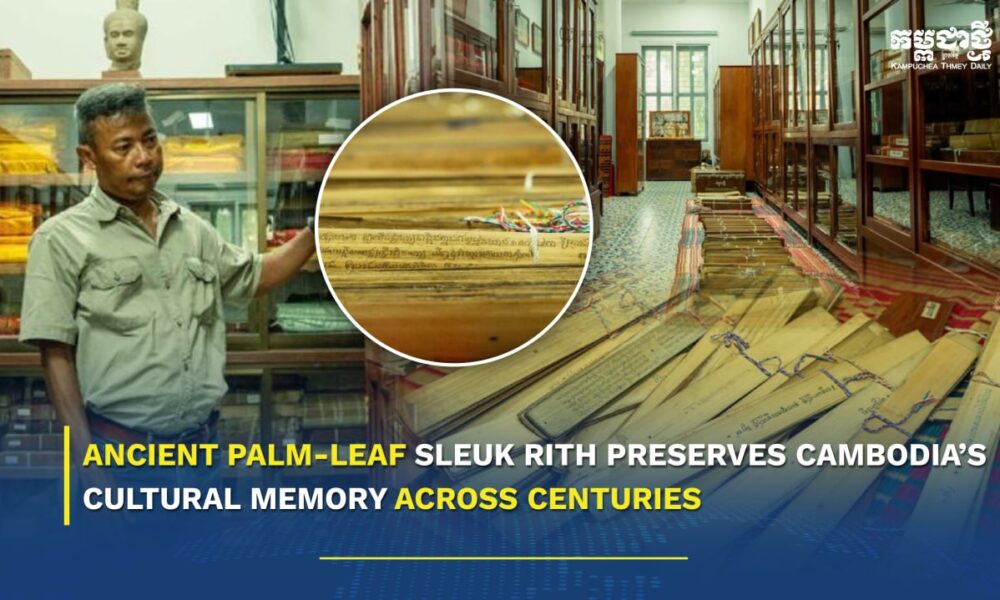
Ancient Palm-Leaf Sleuk Rith Preserves Cambodia’s Cultural Memory Across Centuries
PHNOM PENH, June 5, (KPT)— Long before the arrival of paper and modern printing, Cambodians safeguarded their knowledge, beliefs, and traditions on palm leaves known as Sleuk Rith. Today, these manuscripts remain among the nation’s most prized cultural treasures, offering a rare glimpse into its intellectual and spiritual past.
Crafted from the leaves of the Talipot Palm (Corypha umbraculifera), Sleuk Rith manuscripts have been used since at least the 5th or 6th century. Only the upper portion of the leaf is suitable for writing, and each undergoes a painstaking process of harvesting, drying, heat treatment, smoothing, cutting, inscribing, inking, and cleaning before becoming a manuscript.
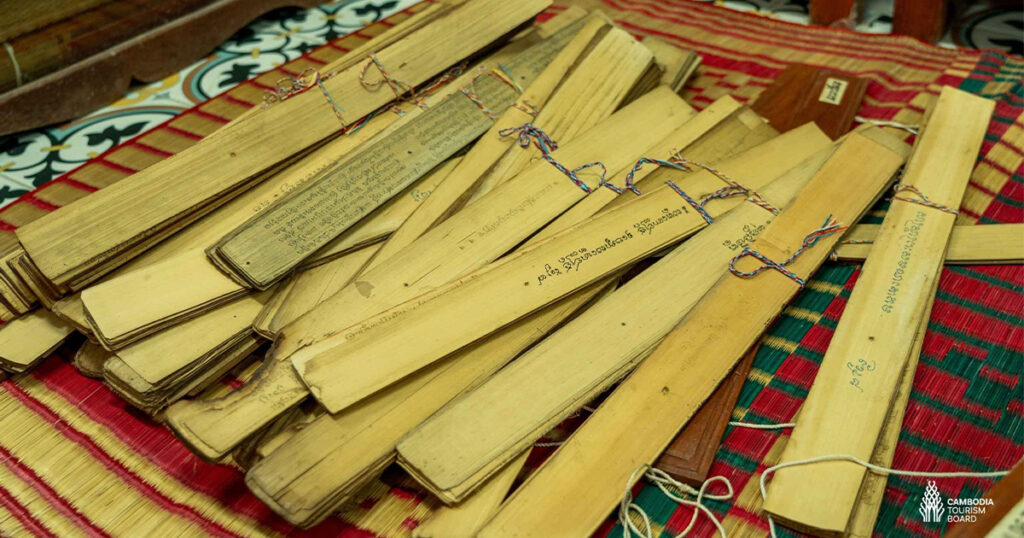
Known collectively as Sastra Sleuk Rith, the texts served as Cambodia’s primary medium for transmitting knowledge across generations. Their subjects range from poetry, literature, folktales, and traditional medicine to temple architecture, astrology, religious teachings, and horoscopes.
Beyond their practical role, Sleuk Rith manuscripts embody wisdom, learning, and Khmer identity. For centuries, Buddhist temples and scholars relied on them to preserve sacred texts and traditional knowledge.
Their survival is remarkable. During the Khmer Rouge regime, countless manuscripts and cultural artifacts were destroyed, erasing vast portions of Cambodia’s written heritage. Yet some collections endured, standing as witnesses to the nation’s resilience and determination to protect its cultural memory.
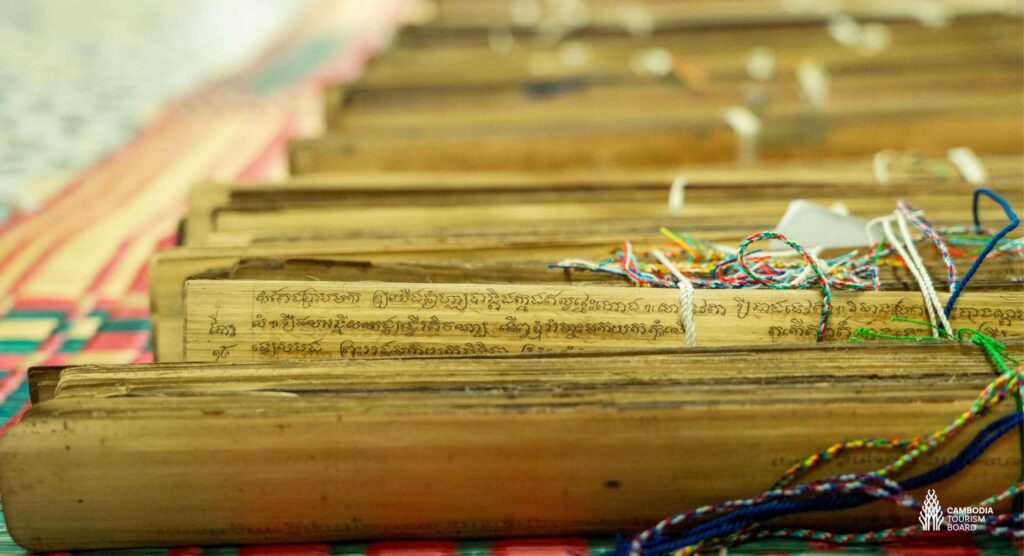
The manuscripts are written in Khmer, Pali, and Sanskrit. While Khmer remains the national language, many texts employ older forms with distinct vocabulary and spelling. Pali and Sanskrit—languages that deeply shaped Khmer culture—are now understood by only a small number of scholars and monks, heightening the urgency of preservation.
The Khmer script itself reflects this complexity, with more than 70 symbols including consonants, multiple vowels, diacritical marks, and special characters, all meticulously inscribed by skilled scribes.
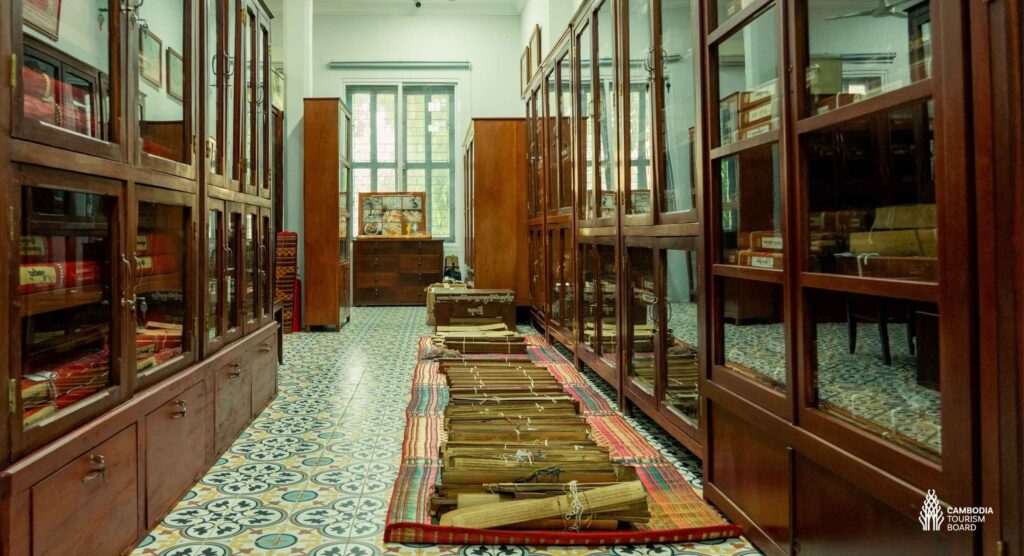
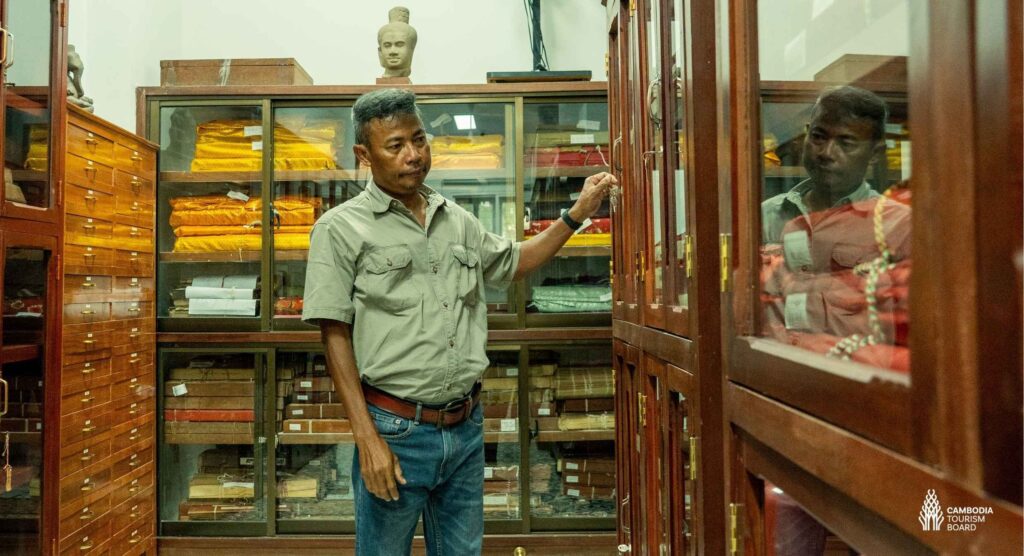
Today, institutions across Cambodia are working to safeguard and promote this manuscript tradition. Collections can be viewed at the FEMC Library at Wat Ounalom Monastery, the National Library of Cambodia, the National Museum of Cambodia, and the Queen Mother Library of the Documentation Center of Cambodia (DC-Cam), which also houses the Sleuk Rith Contemporary Art Gallery.
As Cambodia modernizes, Sleuk Rith stands as a reminder that cultural heritage is not only about preserving artifacts, but also about protecting the knowledge, values, and stories that define a nation.

-

 National2 months ago
Cambodia Expands Free ID Services While Introducing Clear Fee Structure for Administrative Documents
-

 National3 weeks ago
Cambodia proposes trilateral anti‑crime liaison mechanism with Laos, Vietnam
-

 National3 weeks ago
PM Hun Manet to visit China as trade surges and investment deepens
-

 National2 weeks ago
Cambodia says four soldiers injured in border blast, investigation launched
-

 National1 month ago
Samdech Techo Hun Sen Says Cambodia Can Meet Defence Needs Through Domestic Production
-

 National2 weeks ago
Cambodia opens new distribution hub to expand market access for local businesses
-

 Opinion2 months ago
From Connectivity to Resilience: How Japan’s Strategic Shift Could Transform Cambodia’s Next Development Phase
-

 Economy2 months ago
Cambodia Welcomes 1 Million Tourists in Q1, But Arrivals Fall Sharply Amid Regional Pressures