National
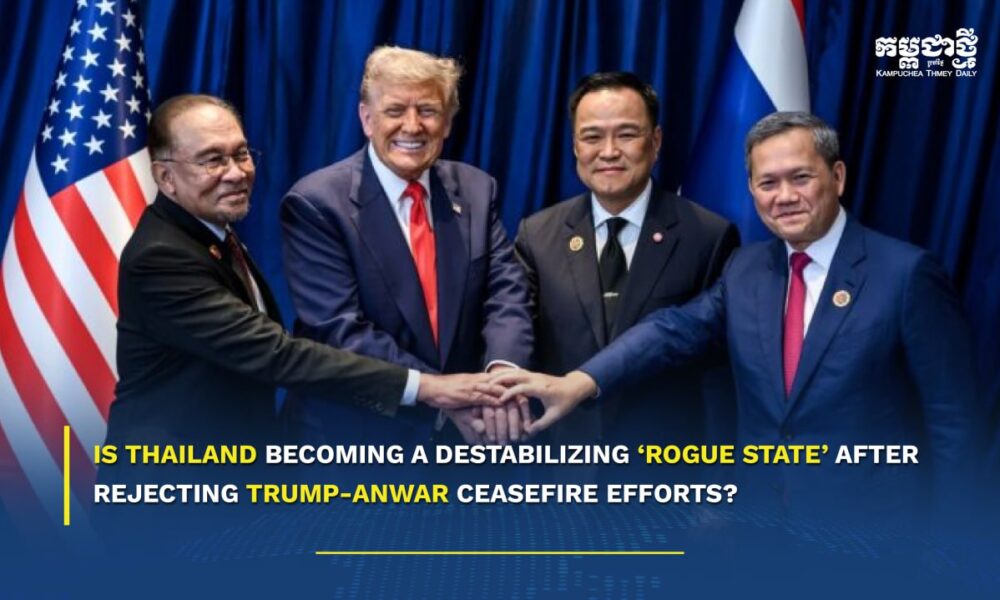
Is Thailand Becoming a Destabilizing ‘Rogue State’ After Rejecting Trump‑Anwar Ceasefire Efforts?
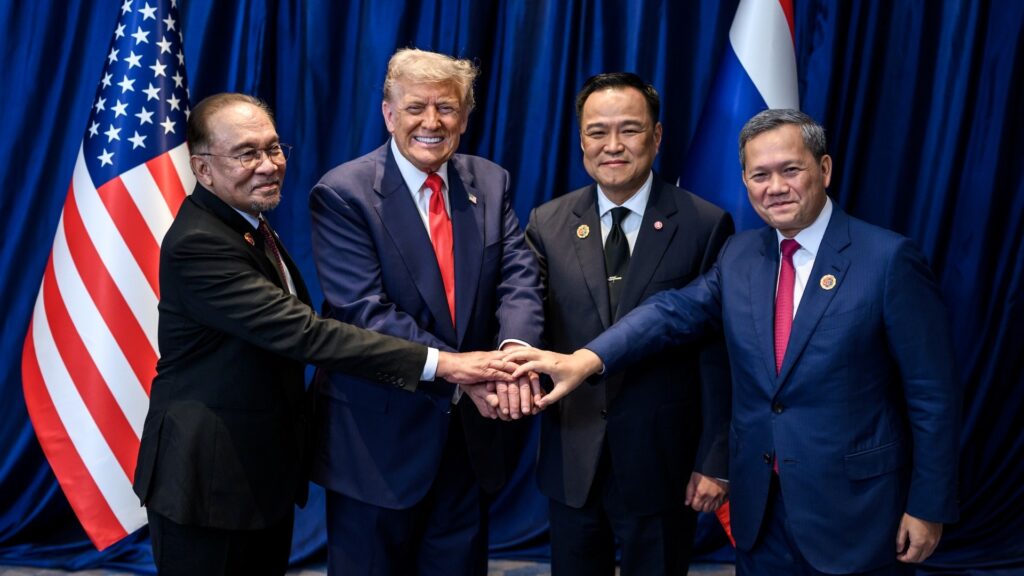
Regional analysts have sharply criticized Thailand’s refusal to support a proposed ceasefire with Cambodia, warning that Bangkok risks being viewed as a destabilizing force in Southeast Asia after rejecting mediation efforts led by U.S. President Donald J. Trump and Malaysian Prime Minister Anwar Ibrahim.
Geopolitical analyst Yang Peou described Thailand’s stance as a “rejection with scorn,” arguing the decision shows disregard for peace and regional responsibility. “Thailand’s leadership has gone beyond simply rejecting a ceasefire.
It shows a lack of respect for peace, international law, and the role of mediation in resolving conflicts,” Peou said.
According to Peou, Thailand’s actions undermine principles enshrined in the U.N. Charter, the ASEAN Charter and broader norms of international relations.
“This behavior reflects a brutal political posture that ignores international law and contributes to instability in the region,” he added.
He further accused Thai leaders of deliberately prolonging tensions for domestic political gain, suggesting military pressure may be used to rally public support ahead of elections.
Growing Diplomatic Concerns
Mengdavid Thong, deputy director of the China‑ASEAN Studies Centre, said Thailand’s refusal to recognize or support a ceasefire, particularly one publicly linked to a U.S. president, could damage Bangkok’s diplomatic standing.
“Thailand’s position risks portraying the country as rigid or inclined toward escalation, even as it claims a defensive posture,” Mengdavid said.
He cautioned that continued resistance could erode Thailand’s credibility among ASEAN members and international partners.
ASEAN and International Response
Analysts expect restraint, transparency and peaceful resolution to dominate the upcoming ASEAN Special Meeting, where leaders may push for renewed mediation. Calls are also growing for ASEAN‑led monitoring mechanisms and stronger opposition to unilateral actions that weaken international law.
Ceasefire Efforts and Rejection
On Dec. 13, Trump spoke with Cambodian Prime Minister Hun Manet and Thai Prime Minister Anutin Charnvirakul, saying both sides had agreed in principle to halt hostilities under a framework brokered with Anwar.
Malaysia later proposed a ceasefire with ASEAN observers and U.S. satellite monitoring. Cambodia welcomed the plan; Thailand rejected it.
Anutin said no agreement existed, citing Thailand’s first civilian death from a Cambodian rocket attack after eight days of fighting. “There was no plan nor agreement by the Thai government for a ceasefire with our enemy,” he said.
U.S. Pressure Mounts
Trump has warned tariffs could be imposed on both countries if hostilities continue. On Dec. 15, he reiterated Washington’s readiness to help resolve the conflict and stressed civilian casualties must end.
“We solved eight wars, and one was a little problem yesterday—Thailand and Cambodia,” Trump said at a White House event. “We will be able to straighten it out.”



-
 National2 months ago
Cambodia Expands Free ID Services While Introducing Clear Fee Structure for Administrative Documents
-
 National3 weeks ago
Cambodia proposes trilateral anti‑crime liaison mechanism with Laos, Vietnam
-
 National3 weeks ago
PM Hun Manet to visit China as trade surges and investment deepens
-

 National2 weeks ago
Cambodia says four soldiers injured in border blast, investigation launched
-
 National1 month ago
Samdech Techo Hun Sen Says Cambodia Can Meet Defence Needs Through Domestic Production
-

 National2 weeks ago
Cambodia opens new distribution hub to expand market access for local businesses
-
 Opinion2 months ago
From Connectivity to Resilience: How Japan’s Strategic Shift Could Transform Cambodia’s Next Development Phase
-

 Economy2 months ago
Cambodia Welcomes 1 Million Tourists in Q1, But Arrivals Fall Sharply Amid Regional Pressures