National
Cambodia condemns artillery attack on Preah Vihear Temple at UNESCO cultural summit, calls for global action to protect heritage
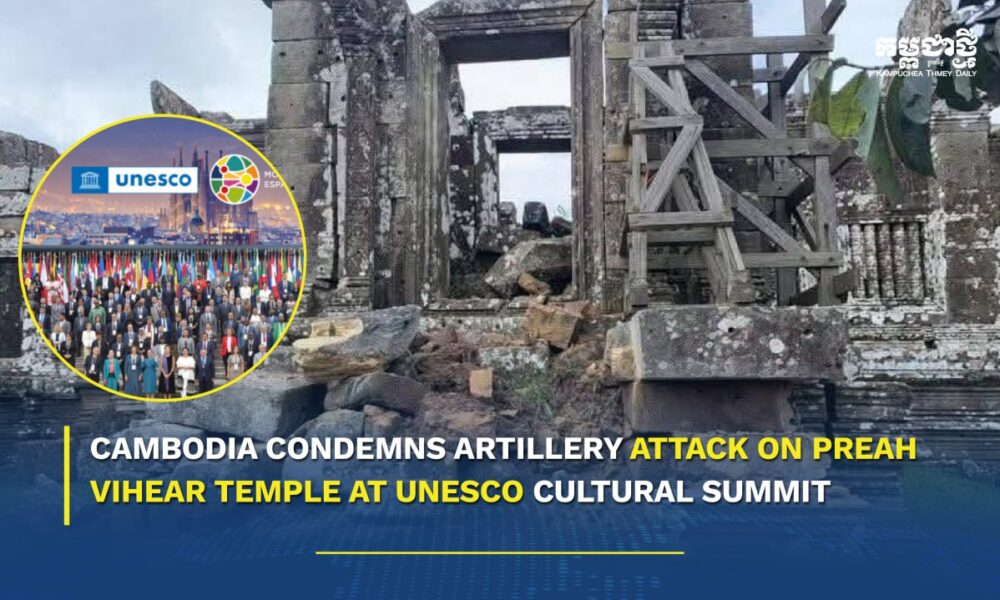
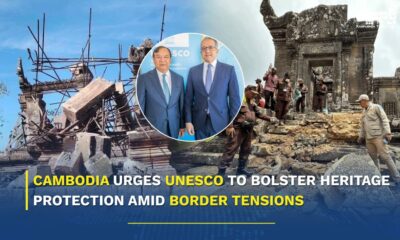
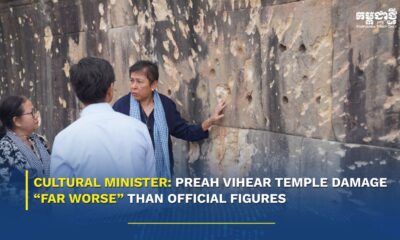
BARCELONA, Spain (Oct.02, 2025) — Cambodia has issued a strong condemnation of recent military aggression targeting the Preah Vihear Temple, a UNESCO World Heritage Site, describing it as a grave violation of international law and a threat to global cultural heritage.
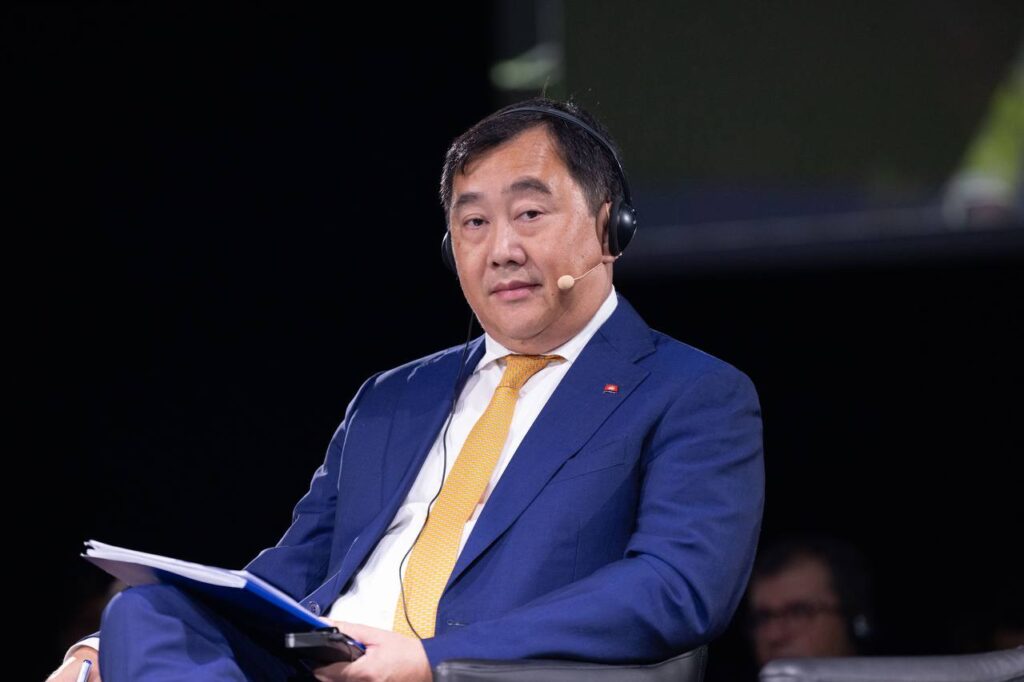
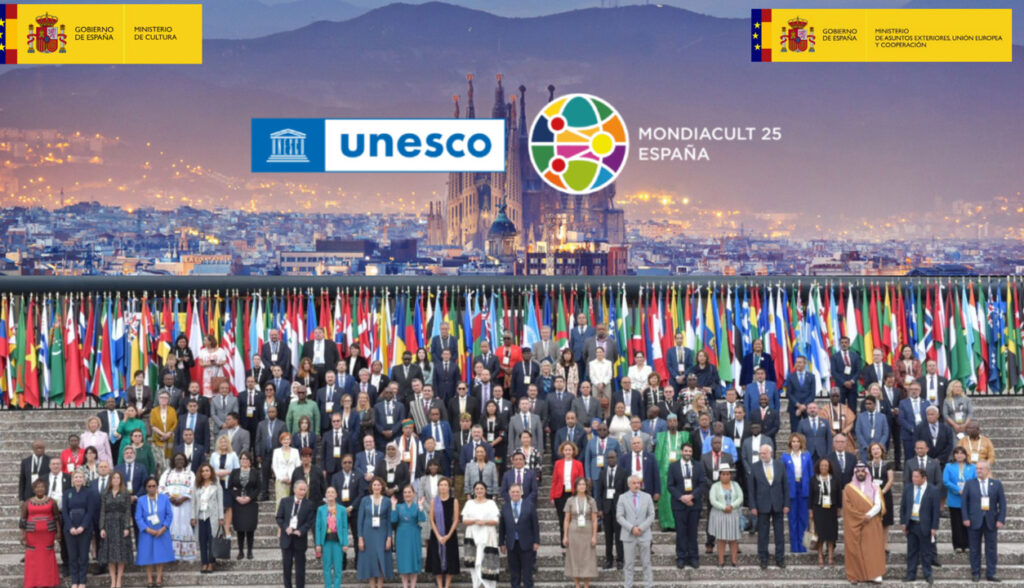
Speaking at the UNESCO World Conference on Cultural Policies and Sustainable Development (MONDIACULT 2025), Suos Yara, Chairman of the Asian Cultural Council and head of the National Assembly’s Commission on Foreign Affairs, confirmed that the ancient temple was struck by heavy artillery and internationally banned cluster munitions in July 2025.
Despite landmark rulings by the International Court of Justice in 1962 and 2013 affirming Cambodian sovereignty over the temple, Yara said the site continues to face repeated attacks, recalling similar escalations between 2008 and 2011. He described the assault as “not just a national loss, but a global tragedy,” warning that such actions undermine shared human heritage and the credibility of international legal mechanisms.
“UNESCO’s broader stance emphasizes that cultural heritage belongs to all humanity,” Yara told delegates. “The destruction of Preah Vihear Temple should alarm us all—it is a threat to peace, heritage, and human dignity.”
Yara called on the ASEAN Chair, the UN Secretary-General, and UNESCO to use their good offices to de-escalate regional tensions and prevent further attacks on heritage sites. He also urged pragmatic UN reforms to empower preventive diplomacy, enhance peacekeeping at cultural borders, and promote post-conflict recovery through innovation.
In his address, Yara emphasized that culture must never be weaponized, but instead serve as a bridge for reconciliation, identity, and sustainable development.
He highlighted Cambodia’s cultural diplomacy efforts through the Asian Cultural Council under ICAPP, which has partnered with UNESCO since 2018 to advance interfaith dialogue, creative development, and regional connectivity.
Initiatives such as the TECHO 100 Village Program, cultural corridor projects, and digital arts platforms were showcased as Cambodia’s contributions to inclusive cultural growth.
Yara also reaffirmed Cambodia’s support for the Universal Peace Charter adopted in 2024, which centers on five pillars: peacebuilding, conflict prevention, transitional justice, food security, and post-conflict reconstruction.
The charter has been endorsed by over 60 countries and acknowledged by AIPA, representing more than 670 million people across ASEAN.
In addition, Yara raised concerns about the misuse of artificial intelligence and digital technologies, stressing that “technology must serve—not replace—our cultural and ethical values.”
To support long-term peace efforts, Cambodia proposed the establishment of a UNESCO Category 2 Centre for Asia, under the Asian Cultural Council, to promote cultural diplomacy, heritage protection, and regional peacebuilding.
“Culture is not a casualty of conflict—it is a catalyst for peace,” Yara concluded.







-
 National2 months ago
Cambodia Expands Free ID Services While Introducing Clear Fee Structure for Administrative Documents
-
 National3 weeks ago
Cambodia proposes trilateral anti‑crime liaison mechanism with Laos, Vietnam
-
 National2 weeks ago
PM Hun Manet to visit China as trade surges and investment deepens
-
 National2 weeks ago
Cambodia says four soldiers injured in border blast, investigation launched
-
 National1 month ago
Samdech Techo Hun Sen Says Cambodia Can Meet Defence Needs Through Domestic Production
-

 National2 weeks ago
Cambodia opens new distribution hub to expand market access for local businesses
-
 Opinion2 months ago
From Connectivity to Resilience: How Japan’s Strategic Shift Could Transform Cambodia’s Next Development Phase
-
 Economy2 months ago
Cambodia Welcomes 1 Million Tourists in Q1, But Arrivals Fall Sharply Amid Regional Pressures