Uncategorized
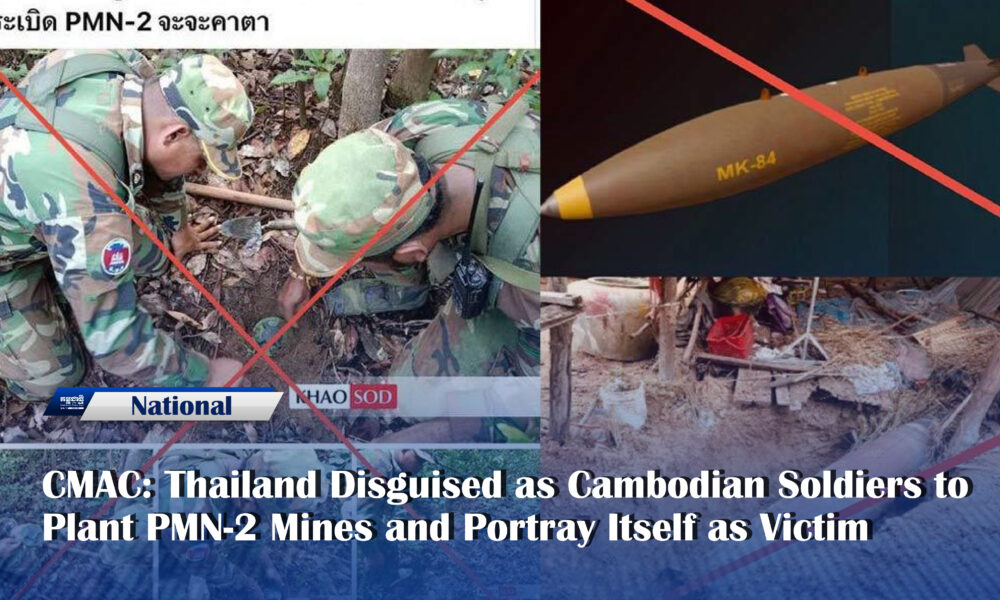
CMAC: Thailand Disguised as Cambodian Soldiers to Plant PMN-2 Mines and Portray Itself as Victim
Phnom Penh: Cambodian Mine Action Centre (CMAC) Confirms Thailand disguised as Cambodian Soldiers to Plant PMN-2 Mines. The clarification came after Thailand released a video accusing Cambodian troops of laying new mines along the border. In the footage, men wearing Cambodian military uniforms were speaking both Khmer and Thai, further raising suspicions that the video was fabricated.
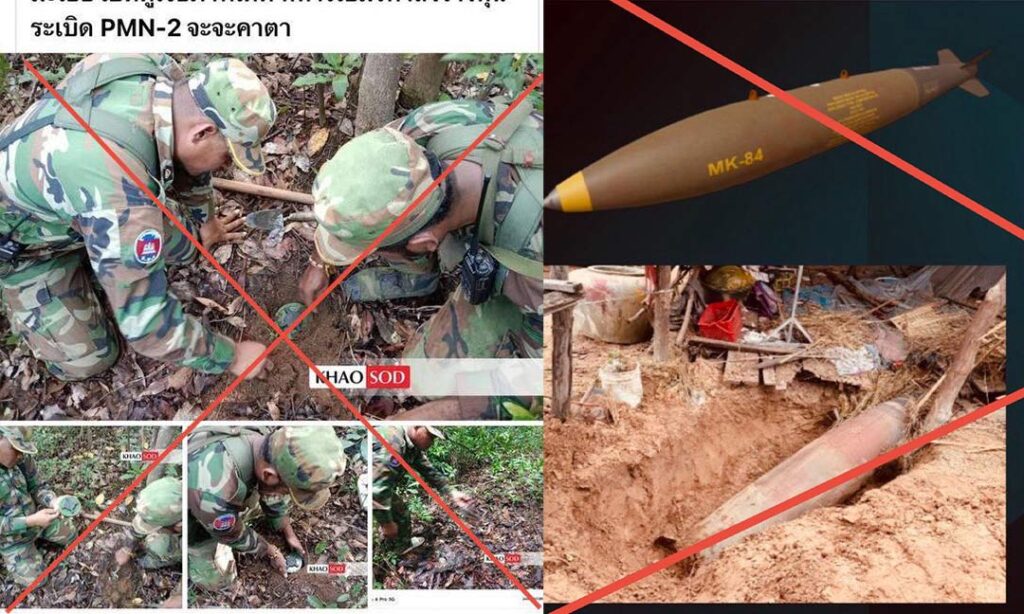
In response, CMAC has issued a clarification, revealing inconsistencies in Thailand’s recently released video. CMAC pointed out key evidence, such as the motorcycle in the video carrying a Thai license plate, and the alleged “Cambodian soldiers” also speaking Thai.
CMAC stated: “This kind of deception may fool only Thais who wish to provoke conflict with their neighbors, but it cannot distort the truth. The harder they try to disguised such performances, the more embarrassment they bring upon themselves before the world.”
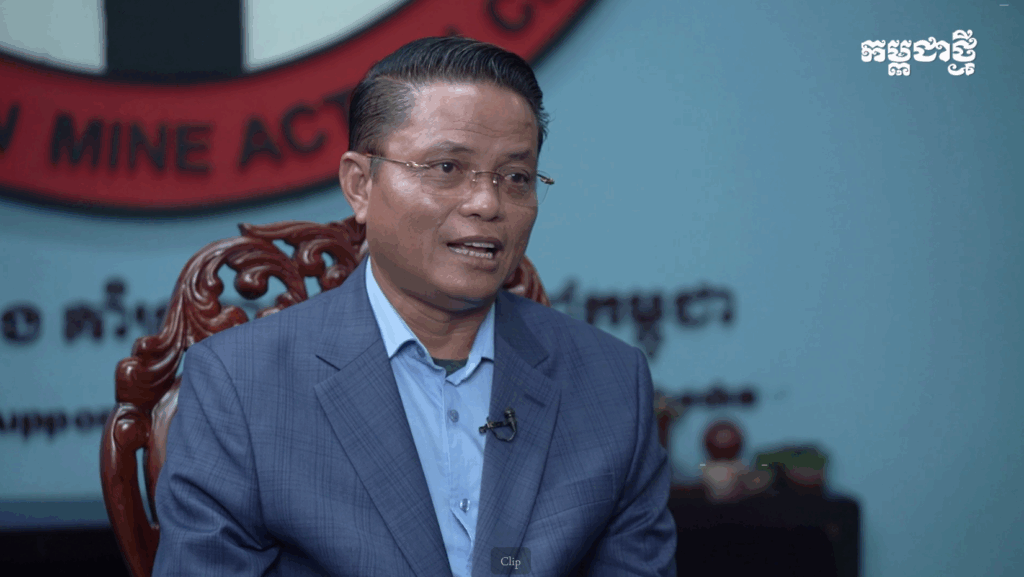
Regarding Thailand’s attempt to fabricate such disinformation, Heng Ratana, Director General of CMAC, condemned the act, saying Thailand was “trying to turn an elephant into an ant, and an ant into an elephant.”
He stressed that on the landmine problems, Thailand has been attempting to portray itself as a victim by accusing Cambodia of planting new PMN-2 mines inside Thai territory. He questioned, however, “How could these mines have been planted inside Thai soil, when the disputed land lies directly opposite and remains under contention?”
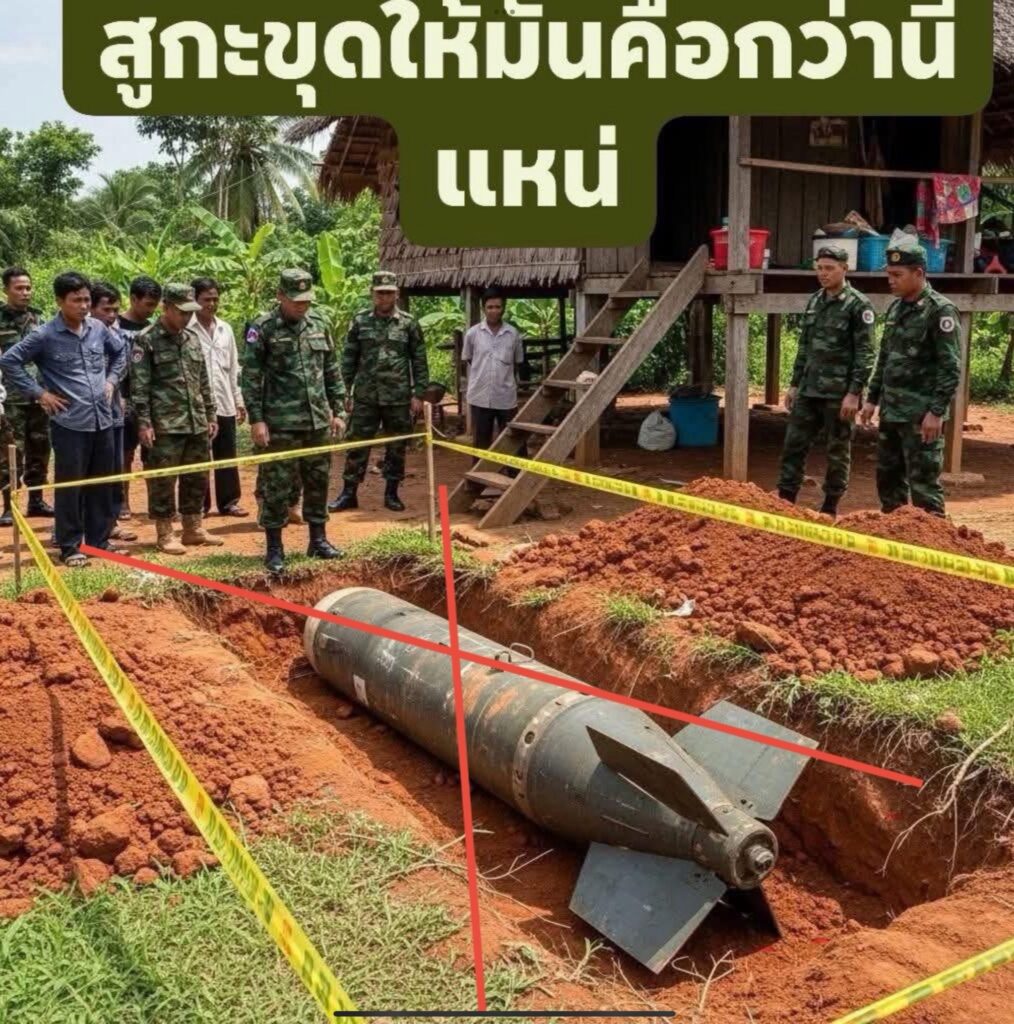
According to Mr. Heng Ratana, Thailand has been attempting to portray itself as a victim while accusing Cambodia of damaging Thailand’s image by displaying remnants of war as evidence. He noted that Thailand showcased MK-84 bombs, claiming they were remnants from the 1970–1973 war. However, he clarified that the MK-84 bomb found in Thmor Daun village, Kok Mon commune, was in fact manufactured in 1996, while an MK-82 bomb discovered at Ta Moan Sen Chey pagoda was manufactured in 2023.
Mr. Heng Ratana questioned Thailand’s claim, asking whether bombs produced in 1996 and 2023 could realistically be considered remnants of the 1970–1973 war. He further revealed that at the bomb drop site, five more bombs remain buried underground. These unexploded ordnances are still visible to the public and can be examined in the future once CMAC specialists proceed with their removal and clearance operations.
According to CMAC Director-General Heng Ratana, Preah Vihear Temple has been put at risk by 155mm artillery fired from Thailand, as well as grenades and various other types of unexploded ordnance. Observing the scattered explosives and the resulting damage to the temple, Thailand has reportedly accused Cambodia of deliberately placing the ordnance to tarnish Thailand’s reputation and portray itself as the victim.
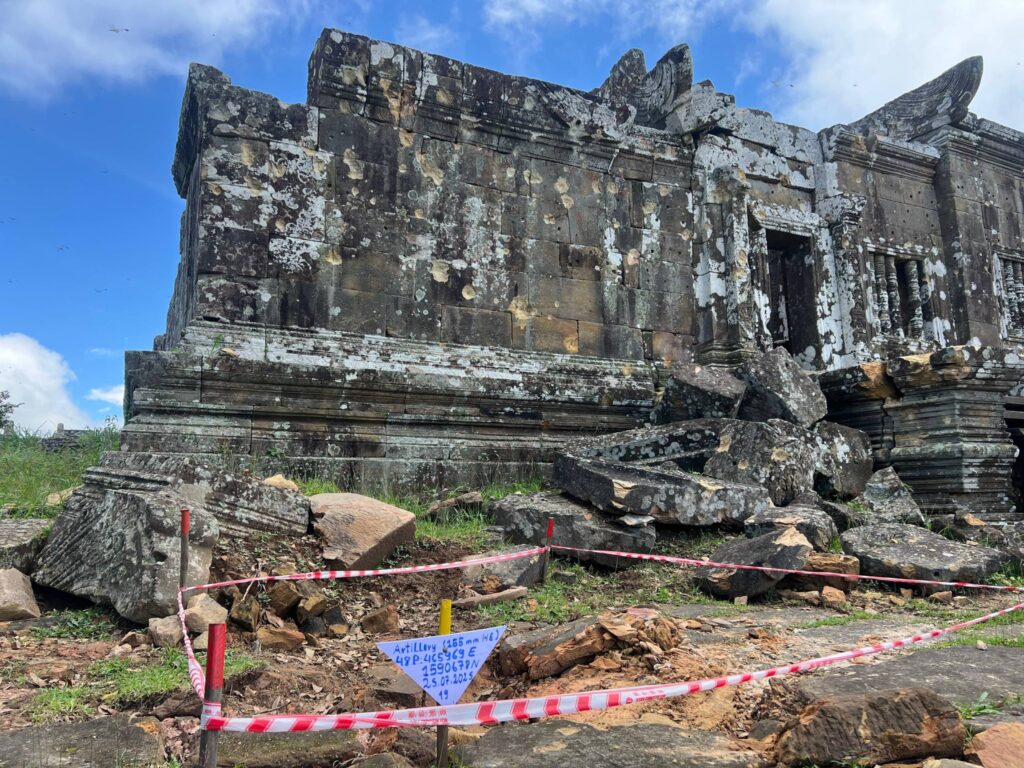
Heng Ratana emphasized: “In today’s era of AI and advanced technology, the international community has the capacity to accurately trace the origins of these explosives—whether MK-82 or MK-84 bombs, or grenades including their manufacturers, distributors, transporters, and users.”

-

 National2 months ago
Cambodia Expands Free ID Services While Introducing Clear Fee Structure for Administrative Documents
-
 National3 weeks ago
Cambodia proposes trilateral anti‑crime liaison mechanism with Laos, Vietnam
-

 National2 weeks ago
PM Hun Manet to visit China as trade surges and investment deepens
-
 National2 weeks ago
Cambodia says four soldiers injured in border blast, investigation launched
-

 National1 month ago
Samdech Techo Hun Sen Says Cambodia Can Meet Defence Needs Through Domestic Production
-

 National2 weeks ago
Cambodia opens new distribution hub to expand market access for local businesses
-

 Opinion2 months ago
From Connectivity to Resilience: How Japan’s Strategic Shift Could Transform Cambodia’s Next Development Phase
-

 Economy2 months ago
Cambodia Welcomes 1 Million Tourists in Q1, But Arrivals Fall Sharply Amid Regional Pressures