Opinion
Cambodia’s Quiet Resistance: Applying Satyagraha to Border Disputes
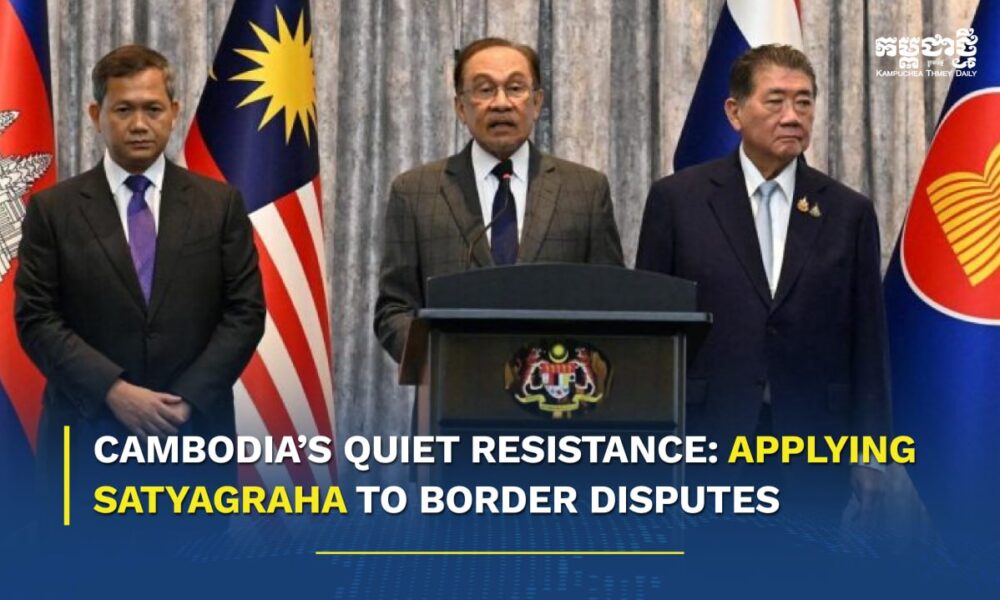
Thailand’s recent demand that Cambodia evacuate civilian populations from disputed border zones is not merely an administrative request, it is a direct challenge to Cambodia’s sovereignty, dignity, and right to security.
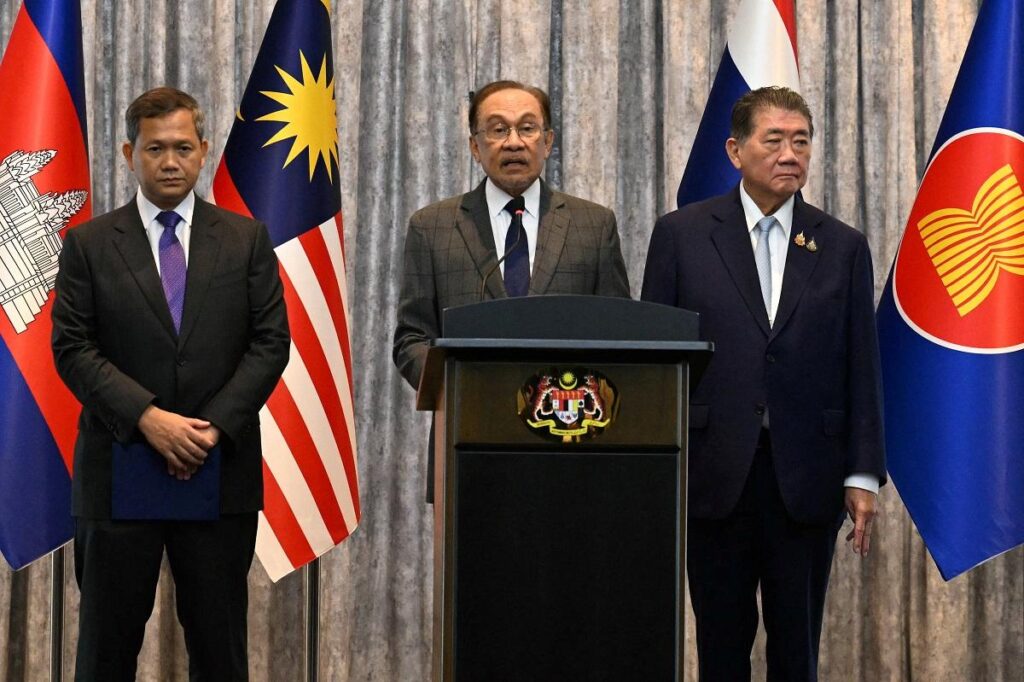
Thousands of Cambodian families who have lived peacefully for generations near the border now face the prospect of forced displacement, loss of livelihood, and deep psychological trauma. Economically, any disruption along the border will undermine local trade, agriculture, and cross-border labor flows that sustain both nations’ frontier communities.
Infrastructure and public services in these areas could also face damage or neglect, further worsening the living conditions of already vulnerable populations. On a regional scale, such unilateral actions strain ASEAN’s long-standing commitment to peaceful coexistence and mutual respect among member states.
In the face of this escalating tension, Cambodia must respond not with fear or retaliation but with resolute non-violence, anchored in the spirit of Satyagraha, the pursuit of truth and justice through moral strength. This means engaging Thailand and the international community with transparency, evidence, and diplomacy, while maintaining composure and refusing to descend into hostility
The Stakes Are High: Human and National Costs
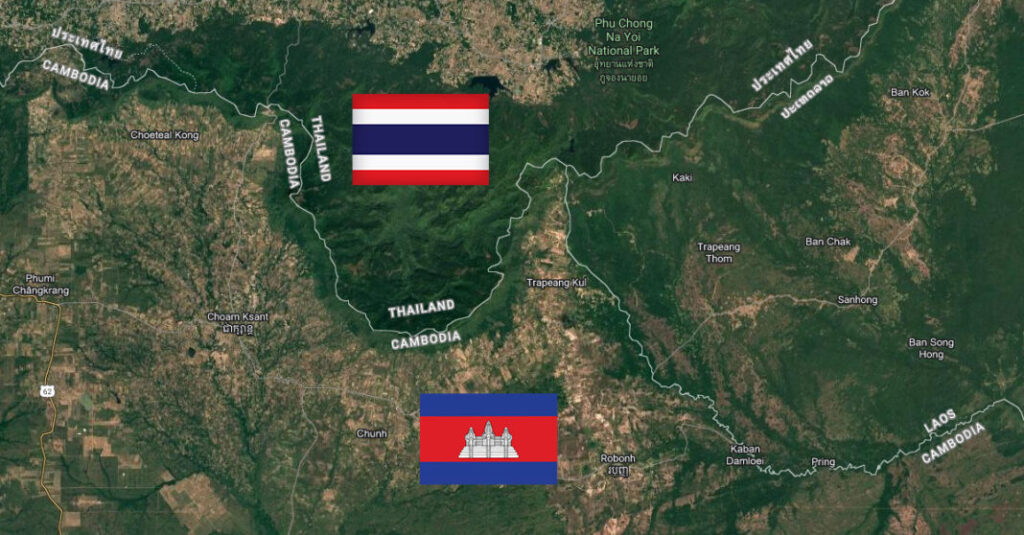
The border dispute is no abstract map exercise. Its human toll is real. Past clashes in 2025 displaced hundreds of thousands of people across both sides of the border. Thousands of civilians have been forced into temporary shelters, losing their homes, farmland, and livelihoods.
This displacement has created deep psychological distress, particularly among women, children, and the elderly, while damage to hospitals, schools, roads, and public services has further worsened the humanitarian toll. Economic disruption is inevitable. Border closures and restrictions have already been imposed, Thailand cut cross-border trade and travel, suspended checkpoints and blocked tourist movement.
Cambodia’s reliance on Thai imports led it to impose retaliatory measures, affecting businesses, farmers, and cross-border workers. The dispute also challenges ASEAN’s unity and credibility, as conflict between member states could undermine regional norms of peaceful resolution. Cambodia must act carefully to preserve ASEAN’s effectiveness.
Thailand’s Push for Evacuation and Encroachment: Evidence & Violations
Thailand’s First Army demanded Cambodia evacuate civilians from certain border villages or skip the RBC meeting. Cambodia rejected the demand, calling it a breach of past agreements and outside the RBC’s authority, emphasizing that only the Joint Boundary Commission (JBC) can handle border demarcation.
Moreover, several RBC meetings have been postponed or denied by Thailand unless Cambodia agrees to evacuation plans, a conditional tactic that undermines the RBC’s impartiality. Thailand has at times suspended RBC dialogues altogether when it feels pressure in its favor.
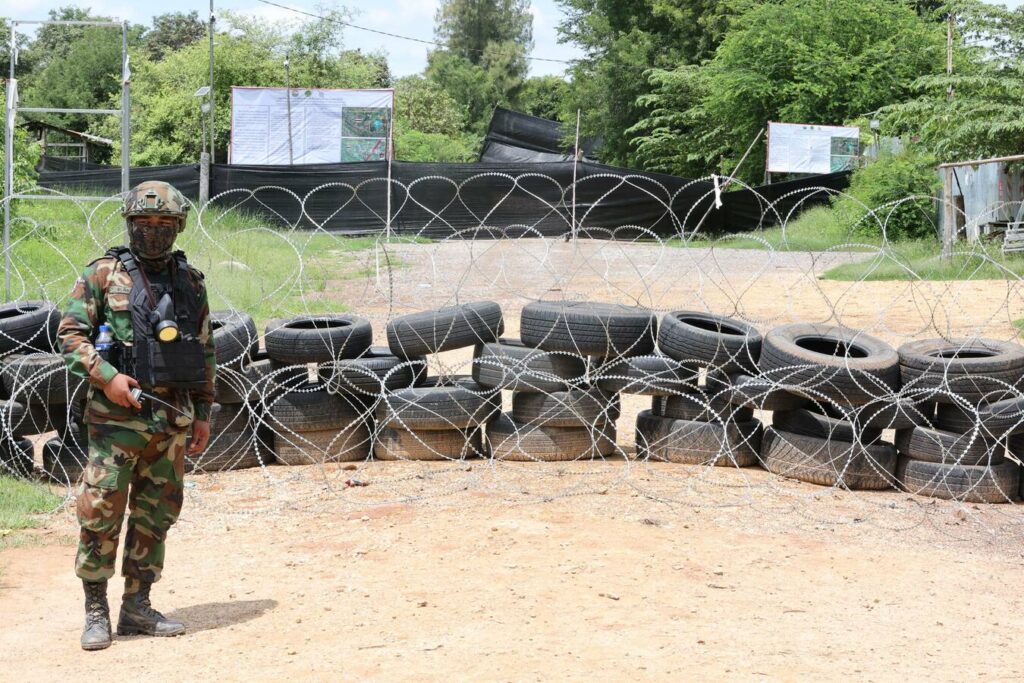
Thai internal planning even suggests a phased push to remove 200 Cambodian families from alleged “encroachment” areas using legal, administrative, and security pressure. Thailand’s recent actions, barbed wire deployment, evacuation demands, and conditional diplomacy, violate the 2000 MOU prohibiting changes to the status quo and new military construction. Cambodia sees these moves as coercive attempts to alter the ground reality and cannot comply without compromising its sovereignty.
Cambodia’s Peaceful Three-Pronged Response
To respond with strength, dignity, and adherence to moral principles, Cambodia should adopt a three-pronged strategy inspired by Satyagraha.
First, Cambodia must uphold diplomacy and legality by reaffirming that only the Joint Boundary Commission (JBC) has authority over border demarcation, not the RBC or GBC. All border meetings should comply with existing agreements such as the 13-point ceasefire and the 2000 MOU.
Phnom Penh should also invite neutral observers like ASEAN, the UN, or the ICG to ensure transparency, while publicizing official maps, treaties, and satellite images that expose Thai encroachments. An ASEAN special session should be convened to reinforce regional commitment to peaceful dispute resolution.
Second, Cambodia should promote civic resilience and nonviolent discipline among border communities. Residents must stay calm, document any military activity, and avoid provocative acts. Instead, they should display unity through peaceful demonstrations, flags, vigils, or prayer gatherings, reflecting both national dignity and Buddhist-inspired compassion. This peaceful stance will strengthen Cambodia’s moral authority and align with the spirit of Satyagraha, resisting aggression through truth and self-restraint.
Third, the government must address humanitarian and economic challenges by expanding emergency assistance programs, shelters, schools, clinics, and food aid, while integrating psychosocial support for displaced citizens. Economically, Cambodia should diversify trade routes and partnerships to minimize the impact of Thai border restrictions. Finally, the Ministry of Information, in coordination with journalists, should lead a factual media campaign to counter misinformation and project Cambodia’s image as a peaceful and law-abiding nation.
Through these combined efforts, Cambodia can defend its sovereignty without violence, strengthen its moral legitimacy, and rally both domestic and international support for its pursuit of justice through peace.
Truth and Compassion as Cambodia’s Defense
A morally grounded Cambodian response must reject both fear and aggression, standing firm on justice while avoiding any escalation into open conflict. This approach draws strength not from military power but from appealing to Thailand’s conscience and the judgment of international institutions that value legitimacy, restraint, and peace.
By adhering to transparency and truth, Cambodia can expose coercive tactics, such as evacuation orders and barbed-wire fencing, for what they truly are: acts of intimidation rather than legitimate negotiation. When confronted with evidence, diplomacy, and public exposure instead of retaliation, such measures quickly lose their moral and political force.
With support from ASEAN partners and the wider international community, Cambodia can redefine the narrative. This is not a temporary border skirmish, but a crucial test of Southeast Asia’s commitment to regional order, sovereignty, and the rule of law. Through disciplined nonviolence, Cambodia can demonstrate that moral courage, patience, and factual clarity are far more powerful than intimidation or aggression.
Strength Through Truth, Not Force
Thailand’s evacuation ultimatum is a dangerous escalation of border coercion, not a sincere security measure. Cambodia’s response must show that sovereignty is not given by gunpoint or threat, but defended by principle, civic courage, and diplomatic integrity.
This is Cambodia’s moment to stage a national Satyagraha, not with fists or force, but with steadfastness: refusing to evacuate on tyranny’s terms, resisting forced encroachment, and transforming conflict into a moral and legal appeal to equity.
If Cambodia can maintain composure, communicate truth, and garner ASEAN and international support, it may convert Thailand’s aggressive pressure into a moment of reckoning, not humiliation. In the long run, it is not the sharp edge of a border fence that secures a nation, it is the resolve to stand firm in justice without hatred.
THONG MENGDAVID
Geopolitical and International Security Analyst







-
 National2 months ago
Cambodia Expands Free ID Services While Introducing Clear Fee Structure for Administrative Documents
-
 National3 weeks ago
Cambodia proposes trilateral anti‑crime liaison mechanism with Laos, Vietnam
-
 National3 weeks ago
PM Hun Manet to visit China as trade surges and investment deepens
-
 National2 weeks ago
Cambodia says four soldiers injured in border blast, investigation launched
-
 National1 month ago
Samdech Techo Hun Sen Says Cambodia Can Meet Defence Needs Through Domestic Production
-

 National2 weeks ago
Cambodia opens new distribution hub to expand market access for local businesses
-
 Opinion2 months ago
From Connectivity to Resilience: How Japan’s Strategic Shift Could Transform Cambodia’s Next Development Phase
-
 Economy2 months ago
Cambodia Welcomes 1 Million Tourists in Q1, But Arrivals Fall Sharply Amid Regional Pressures