Economy
RMA Cambodia eyes full vehicle production, urges policy reforms to boost auto industry
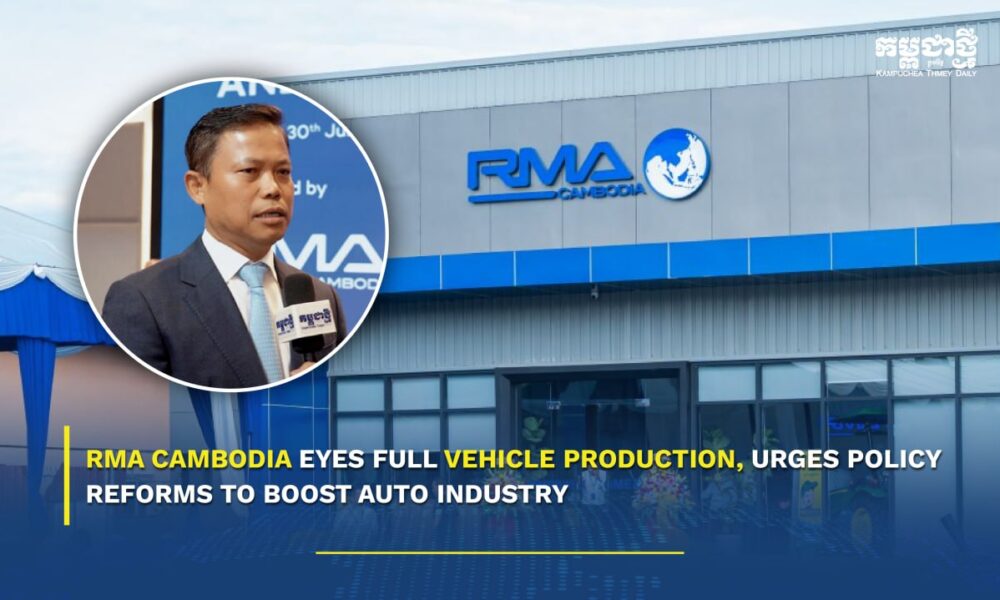
PHNOM PENH, June 30, 2026 (KPT) – RMA Cambodia says it plans to move beyond vehicle assembly to full‑scale local production, but warned that further investment will depend on stronger government policy support and tax reforms to make domestic manufacturing more competitive.
Speaking at a briefing on the automotive sector outlook, Chief Executive Officer Ngorn Saing said the company is prepared to deepen its investment if the regulatory environment becomes more supportive. “RMA will be looking to invest more and our plan is to extend beyond just assembly and move to real local production,” he said.

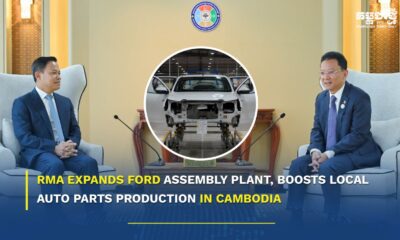
RMA is one of Cambodia’s largest automotive investors, producing around 10,000 vehicles annually and employing more than 500 workers. It has also begun manufacturing components locally, starting with vehicle seats, to strengthen domestic supply chains.
Saing said future investment will depend not only on market demand but also on government policies that encourage local manufacturing. He noted that while RMA assembles internal combustion vehicles, the current tax structure makes it cheaper to import fully built electric vehicles than to assemble them locally. “With the current tax structure, probably no company will produce EVs in the country. Everyone imports and sells,” he said.
A EuroCham case study presented at the briefing found assembling an EV locally costs about US$4,025 more per unit than importing it as a completely built vehicle. Cambodia currently has 12 automotive assembly plants with combined investments exceeding US$217 million.
Since launching operations in 2022, RMA has assembled around 16,000 Ford vehicles and is expanding its site from five to 12 hectares. Saing said continued policy reforms could help Cambodia attract greater investment and position itself as a competitive regional production hub.






-
 National2 months ago
Poll Finds Strong Cambodian Support for Closer China Ties
-
 Opinion2 months ago
Vienna Convention on the Law of Treaties (VCLT)’s ruling over the MoU 2001 Cancellation by Thailand against Cambodian Maritime Territories
-

 Economy2 months ago
Cambodia Bans Prize Promotions on Beer and Energy Drinks to Level Playing Field
-
 Education2 months ago
UK Pearson Edexcel Program Launched to Expand Cambodia’s International Education Standards
-
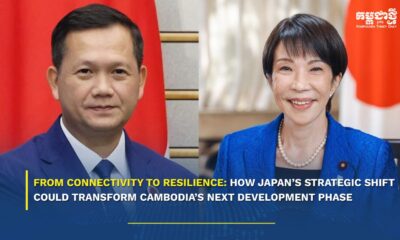
 Opinion1 month ago
From Connectivity to Resilience: How Japan’s Strategic Shift Could Transform Cambodia’s Next Development Phase
-

 National2 months ago
Senate backs Cambodia’s UNCLOS conciliation move, urges Thailand to maintain dialogue
-
 Opinion1 month ago
Op-Ed: A Decade of Dialogue, Yet Many Challenges Remain
-

 Opinion2 months ago
Opinion: The Poipet Raid: Sovereignty, Scams, and the Myth of “Detention”