Economy
Labour Compliance and Digital Wage Reforms Boost Garment Sector Competitiveness
PHNOM PENH, May 29, 2026 (KPT) — Efforts to strengthen labor compliance, workplace standards and digital wage reforms are being stepped up as part of a broader strategy to enhance the competitiveness of Cambodia’s garment and manufacturing industries in global supply chains, officials said Thursday.
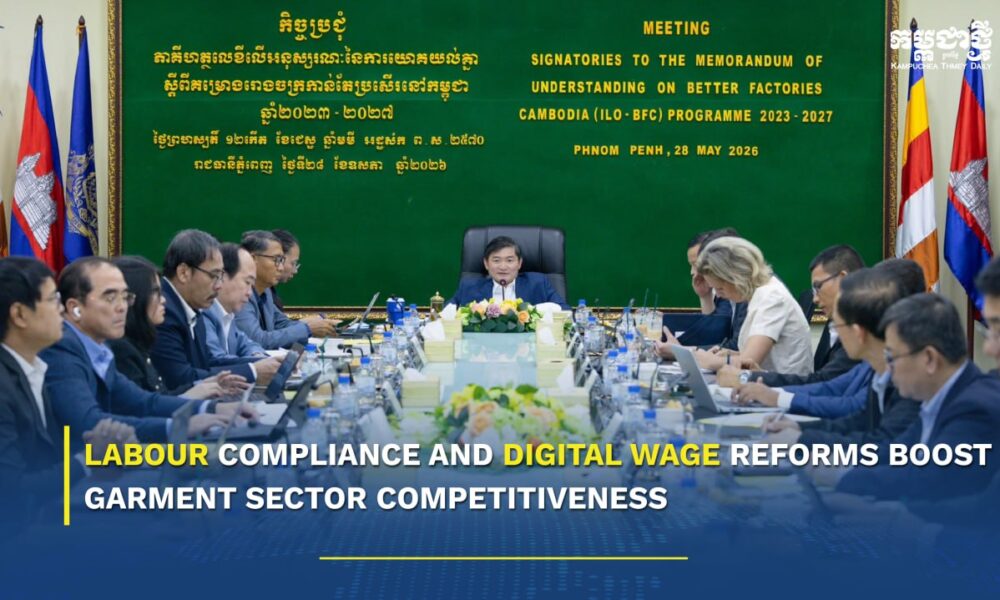
Labour Minister Heng Sour met industry stakeholders to review the Better Factories Cambodia (ILO‑BFC) Project 2023–2027 and highlighted progress in improving labor conditions while preparing the next phase of reforms for 2028–2032.
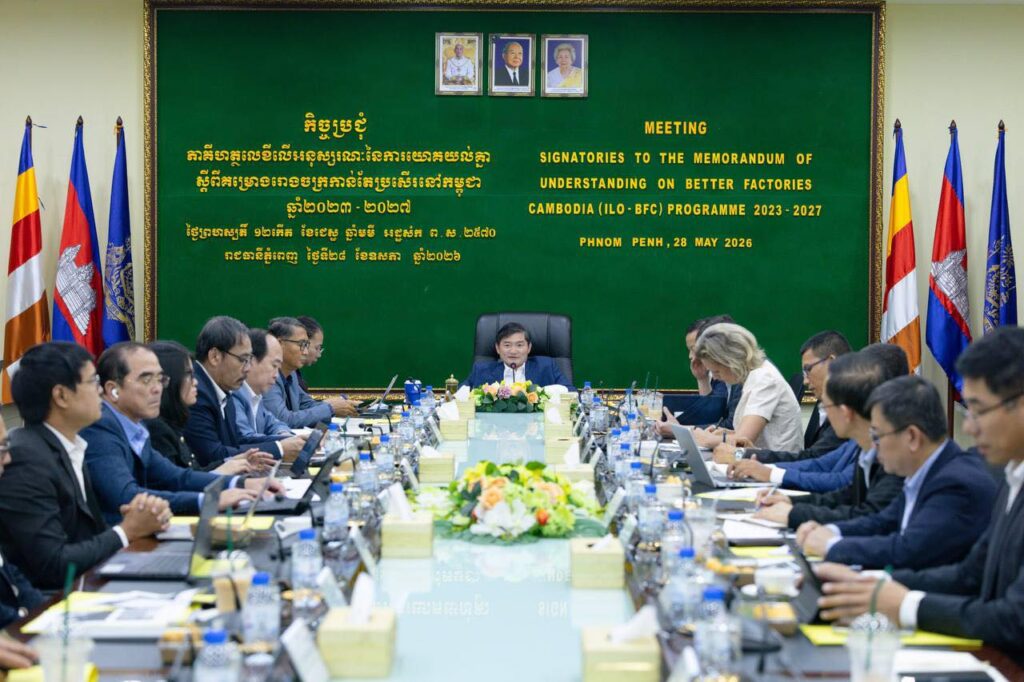
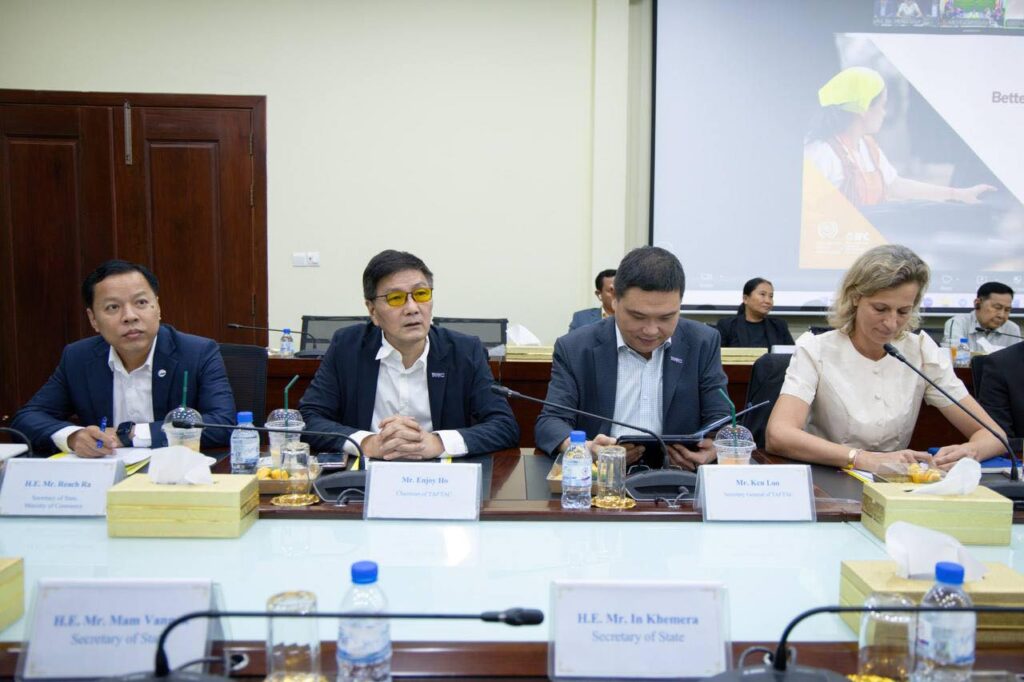
The meeting brought together representatives from the Ministry of Commerce, the Textile, Apparel, Footwear and Travel Goods Association in Cambodia (TAFTAC), the International Labour Organization (ILO) and labor unions.
Participants reaffirmed priority reform areas including occupational safety and health, working conditions, freedom of association, social security systems, social dialogue and the expansion of digital wage payment systems.
Sour said the Better Factories Cambodia program has helped improve compliance and strengthen the country’s reputation as a reliable sourcing destination for international brands. Sour emphasized the role of employer associations and unions in promoting harmonious industrial relations and supporting long‑term competitiveness.
The government and industry partners also stressed the importance of capacity‑building for factory management, HR personnel, union leaders and worker representatives to improve workplace cooperation.
Exports of garments, footwear and travel goods remain the backbone of the economy. According to data from Ministry of Commerce, the sector earned US$15.5 billion in 2025, up 15.7 percent from the previous year. Garment exports reached US$11.4 billion, footwear US$2.09 billion, and travel goods US$2.02 billion.
The industry accounted for about 50 percent of Cambodia’s total exports of US$31 billion, employing more than 2.14 million workers across 46,649 registered enterprises.
Union leaders said the surge came despite investor concerns over U.S. tariff measures and border tensions with Thailand, while TAFTAC noted new factories opened in 2025 as global buyers diversified supply chains away from China.









-

 National1 month ago
Cambodia Expands Free ID Services While Introducing Clear Fee Structure for Administrative Documents
-

 National3 weeks ago
Cambodia proposes trilateral anti‑crime liaison mechanism with Laos, Vietnam
-
 National2 weeks ago
PM Hun Manet to visit China as trade surges and investment deepens
-

 National2 weeks ago
Cambodia says four soldiers injured in border blast, investigation launched
-

 National1 month ago
Samdech Techo Hun Sen Says Cambodia Can Meet Defence Needs Through Domestic Production
-
 National2 weeks ago
Cambodia opens new distribution hub to expand market access for local businesses
-

 Opinion2 months ago
From Connectivity to Resilience: How Japan’s Strategic Shift Could Transform Cambodia’s Next Development Phase
-

 Economy2 months ago
Cambodia Welcomes 1 Million Tourists in Q1, But Arrivals Fall Sharply Amid Regional Pressures