Economy
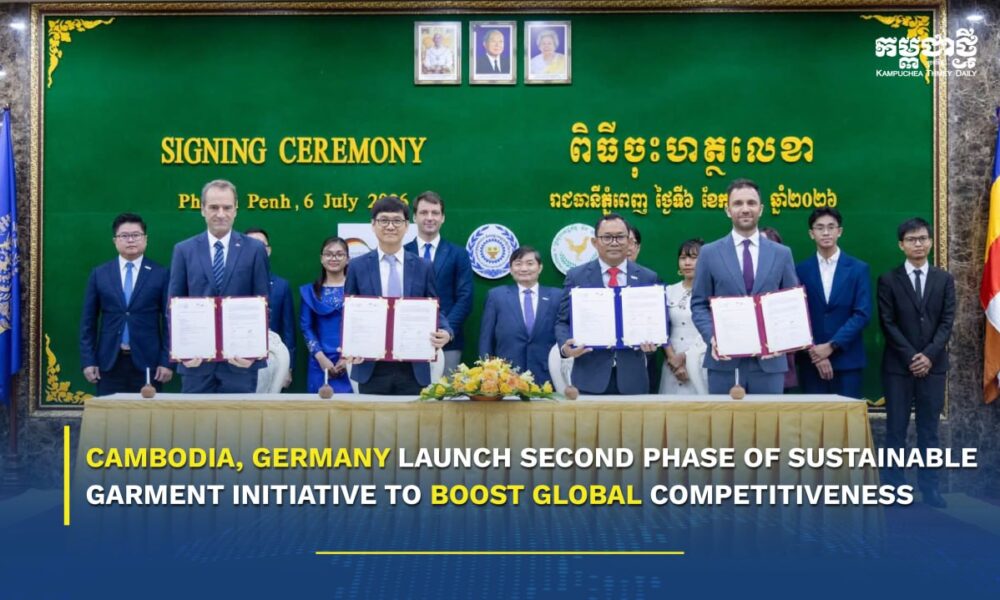
Cambodia, Germany launch second phase of sustainable garment initiative to boost global competitiveness
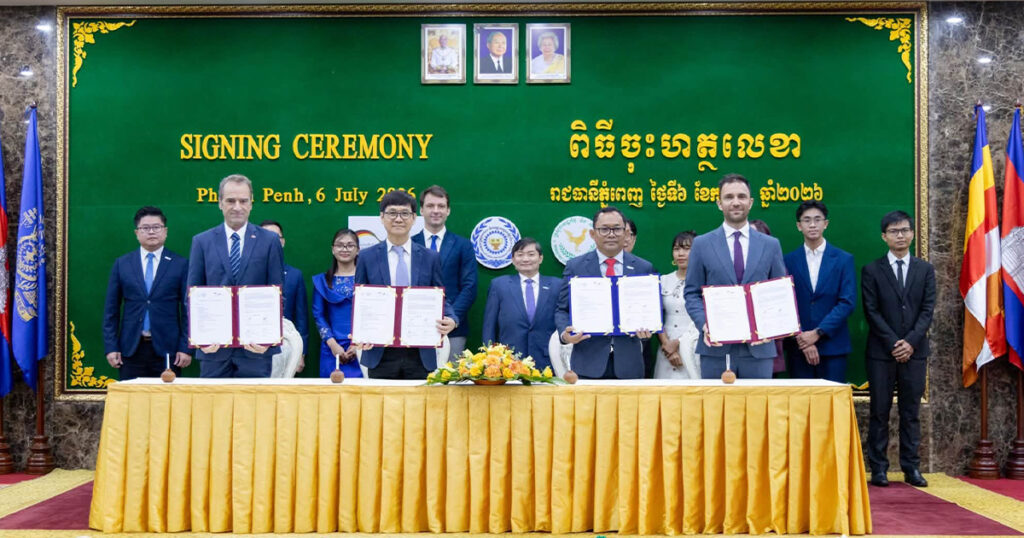
PHNOM PENH, July 7, 2026 (KPT) – Cambodia and Germany have launched the second phase of the Sustainable Textile Industry in Cambodia (FABRIC Cambodia II) project, aimed at promoting sustainable supply chains, strengthening labor and environmental standards, and enhancing the global competitiveness of Cambodia’s garment, footwear and travel goods (GFT) industry, officials said Monday.
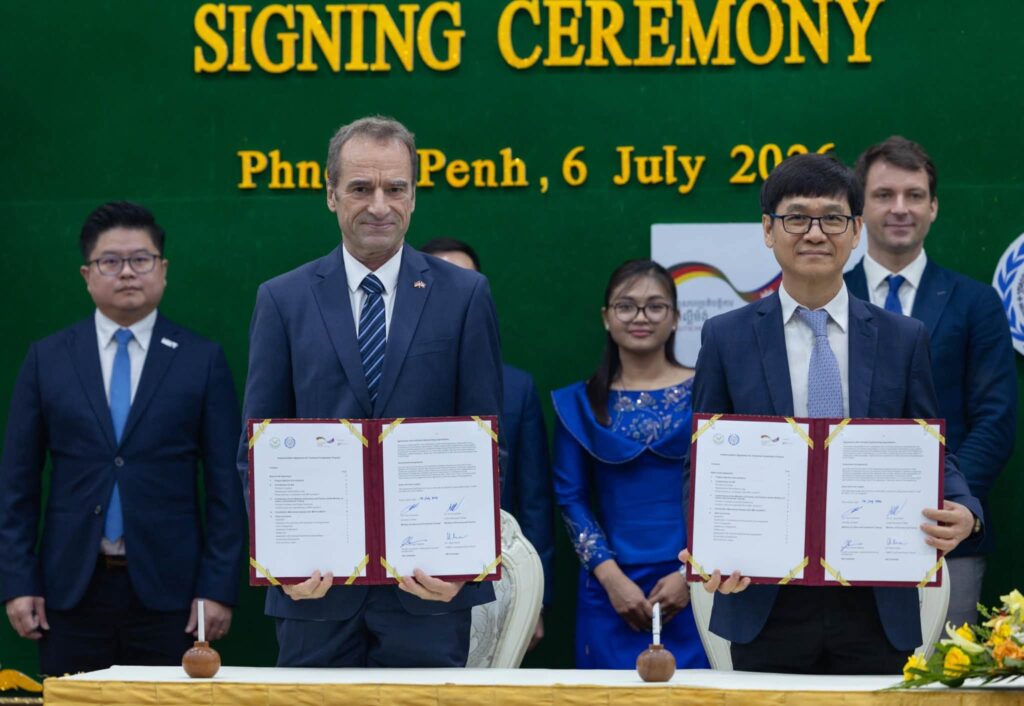
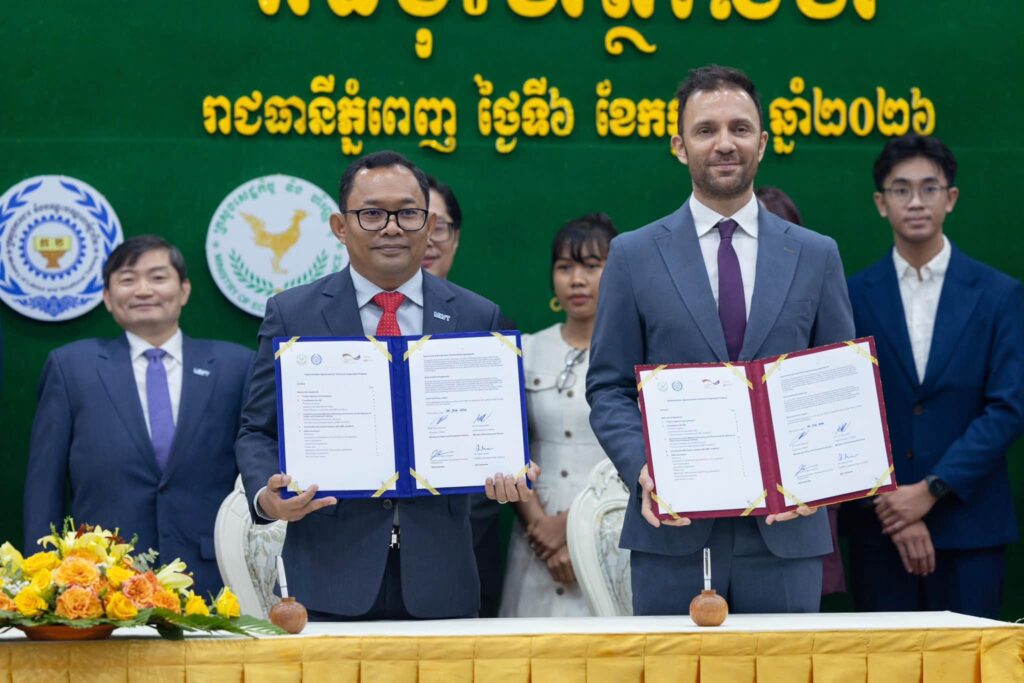
The implementation agreement was signed between the Ministry of Labour and Vocational Training, the Ministry of Economy and Finance, and the German Agency for International Cooperation (GIZ), in the presence of Labour Minister Heng Sour and Christof Weigelmeier, Deputy Head of Mission and Head of Development Cooperation at the German Embassy in Phnom Penh.
The project seeks to deepen collaboration between the public and private sectors, improve compliance with social and environmental standards, and prepare Cambodia’s GFT industry to meet rising global demands for sustainable production.
Speaking at the ceremony, Sour expressed appreciation to Germany for its continued support, saying the agreement reflects “our shared commitment to translating common goals into concrete actions that will bring tangible benefits to workers, enterprises and Cambodia’s economic foundation.”
He noted that the GFT sector remains a key driver of Cambodia’s economy, exports and employment, but faces growing pressure to adapt as international markets demand higher labor standards, environmentally sustainable practices and responsible business conduct.
Sour said the government considers decent work, productivity, sustainability and legal compliance as core priorities under the Pentagonal Strategy – Phase I and the Cambodia Garment, Footwear and Travel Goods Development Strategy 2022–2027.
The minister praised GIZ’s long-standing partnership, which he said extends beyond financial support to include knowledge sharing, institutional strengthening, policy dialogue and capacity building. He highlighted progress in labor inspection, occupational safety and health, responsible business conduct and workforce development.
Sour added that Cambodia will continue to promote digital transformation and enhance preparedness to comply with international frameworks such as Environmental, Social and Governance (ESG) standards and Human Rights and Environmental Due Diligence (HREDD) requirements. He stressed that success will require cooperation among government institutions, employers, workers’ organizations, civil society and international brands.
Weigelmeier said Germany is proud to continue supporting Cambodia’s GFT industry, noting that stronger labor, environmental and human rights standards would improve competitiveness in global supply chains. He reaffirmed Germany’s readiness to remain a strong partner as Cambodia prepares for graduation from Least Developed Country (LDC) status.







-
 Opinion1 month ago
From Connectivity to Resilience: How Japan’s Strategic Shift Could Transform Cambodia’s Next Development Phase
-
 Opinion2 months ago
Op-Ed: A Decade of Dialogue, Yet Many Challenges Remain
-
 Economy1 month ago
Cambodia Welcomes 1 Million Tourists in Q1, But Arrivals Fall Sharply Amid Regional Pressures
-
 National4 weeks ago
Samdech Techo Hun Sen Says Cambodia Can Meet Defence Needs Through Domestic Production
-
 Economy2 months ago
Cambodia Air Cargo Surges 36% Despite Dip in Passenger Traffic
-
 Education2 months ago
Cambodia Launches Nationwide Live Teaching Program to Narrow Education Gap
-
 Economy2 months ago
Cambodia’s Special Economic Zones Post Strong Export Growth in Early 2026
-

 Economy2 months ago
Cambodia Stock Exchange Seen as Key to Financing Growth