National
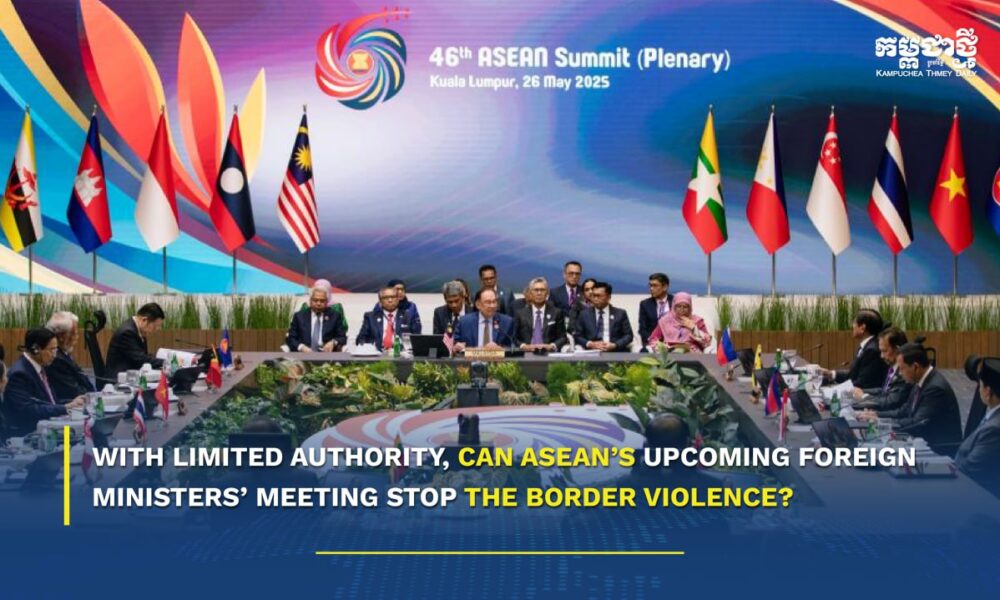
With Limited Authority, Can ASEAN’s Upcoming Foreign Ministers’ Meeting Stop the Border Violence?
ASEAN faces test of credibility as Cambodia–Thailand clashes escalate, humanitarian toll rises
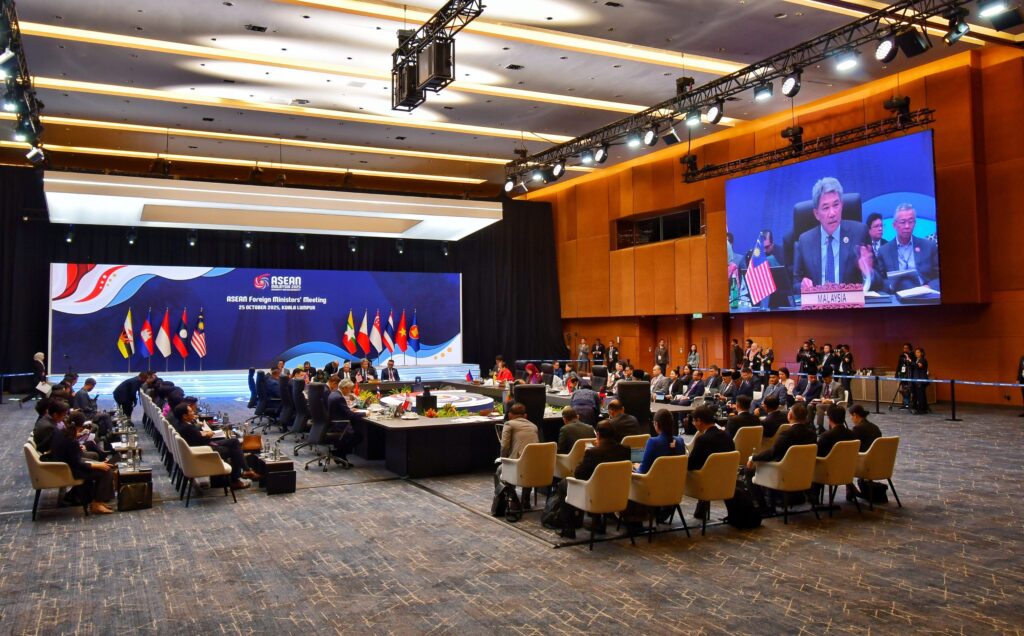
PHNOM PENH, Cambodia (Dec. 18, 2025) — As tensions mount along the Cambodia–Thailand border, a special ASEAN Foreign Ministers’ Meeting set for Dec. 22 in Kuala Lumpur has sparked cautious optimism among analysts and regional leaders, despite longstanding criticism of the bloc’s limited role in conflict mediation.
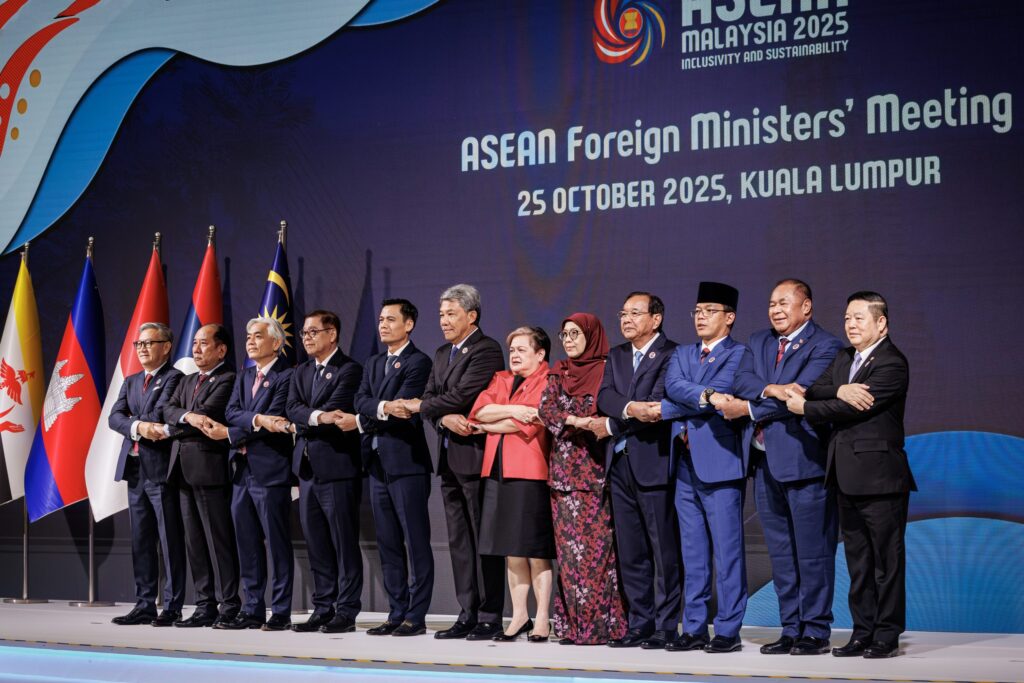
Geopolitical analyst Yang Peou told KPT English the meeting, led by Malaysia, marks a constructive step forward given ASEAN’s traditional reluctance to intervene in sensitive disputes.
“At least ASEAN has brought the Cambodia–Thailand conflict to the table for urgent discussion, rather than leaving this serious issue unresolved and remaining silent,” Peou said.
ASEAN’s Limits and Role as a Dialogue Platform
Peou cautioned that expectations should remain realistic. ASEAN, he said, is not a judicial body capable of assigning blame, nor does it possess a formal security mechanism to enforce decisions.
“ASEAN is not a special court for resolving disputes among its members,” he explained. “It functions primarily as a dialogue platform based on consensus, and it has no specific charter provisions to directly address regional security conflicts.”
Focus on Ceasefire and Observer Team
Peou stressed that the key outcome to watch is a renewed ceasefire backed by deployment of an ASEAN Observer Team (AOT).
“The AOT must observe strictly, report clearly and accurately, act quickly and on time, and most importantly, operate independently,” he said.
Analysts See Symbolic but Limited Breakthroughs
Mengdavid Thong, deputy director of the China–ASEAN Studies Centre, said the meeting could help unlock a longer-term ceasefire and lay groundwork for normalization, even if concrete breakthroughs remain unlikely.
“The meeting will likely reaffirm shared principles such as regional stability, unity, and adherence to ASEAN centrality, rather than deliver immediate solutions,” he said.
Malaysia Leads Diplomatic Push
Malaysian Prime Minister Anwar Ibrahim confirmed both Cambodia and Thailand will attend the Kuala Lumpur meeting. He said the objective is to halt frontline hostilities and move toward a truce.
“We are appealing to them to immediately stop the front-line offensive, and if possible, an immediate ceasefire,” Anwar said, noting both sides were hesitant to use the term “ceasefire.”
Cambodia and Thailand have agreed to the deployment of an ASEAN Observer Team, with Malaysia’s Chief of Defence Force expected to visit the border in coming days.
Cambodia Reaffirms Commitment; International Support Grows
Cambodian Foreign Minister Prak Sokhonn reaffirmed Phnom Penh’s commitment to the ceasefire and the framework outlined in the Kuala Lumpur Joint Declaration of Oct. 26, 2025.
International partners have stepped up engagement. EU foreign policy chief Kaja Kallas said the bloc is prepared to provide satellite imagery for monitoring. China announced shuttle diplomacy by its Special Envoy for Asian Affairs, urging both sides to exercise restraint.
Fighting Continues as Humanitarian Crisis Deepens
Despite diplomacy, clashes persist. Cambodian defense officials accused Thai forces of artillery and air assaults, alleging violations of sovereignty.
Between Dec. 7 and Dec. 18, shelling and airstrikes killed 18 civilians and injured 79 others, according to Cambodia’s Interior Ministry. The violence displaced 144,086 families — 476,224 people — including more than 240,000 women and 130,000 children.
Border provinces including Banteay Meanchey, Preah Vihear, Oddar Meanchey, and Siem Reap remain hardest hit, with families fleeing to non-border provinces such as Kandal, Kampong Speu, and Kampong Cham.
A Test for ASEAN Credibility
The Dec. 22 meeting will serve as a critical test of ASEAN’s relevance in managing regional crises. Analysts agree that sustained dialogue, effective monitoring, and genuine political will from both sides will be essential to prevent further bloodshed and pave the way toward lasting peace.

-
 National2 months ago
Cambodia Expands Free ID Services While Introducing Clear Fee Structure for Administrative Documents
-
 National3 weeks ago
Cambodia proposes trilateral anti‑crime liaison mechanism with Laos, Vietnam
-
 National3 weeks ago
PM Hun Manet to visit China as trade surges and investment deepens
-
 National2 weeks ago
Cambodia says four soldiers injured in border blast, investigation launched
-
 National1 month ago
Samdech Techo Hun Sen Says Cambodia Can Meet Defence Needs Through Domestic Production
-

 National2 weeks ago
Cambodia opens new distribution hub to expand market access for local businesses
-
 Opinion2 months ago
From Connectivity to Resilience: How Japan’s Strategic Shift Could Transform Cambodia’s Next Development Phase
-

 Economy2 months ago
Cambodia Welcomes 1 Million Tourists in Q1, But Arrivals Fall Sharply Amid Regional Pressures