National
Cambodia rallies communities to tackle plastic pollution along Mekong River

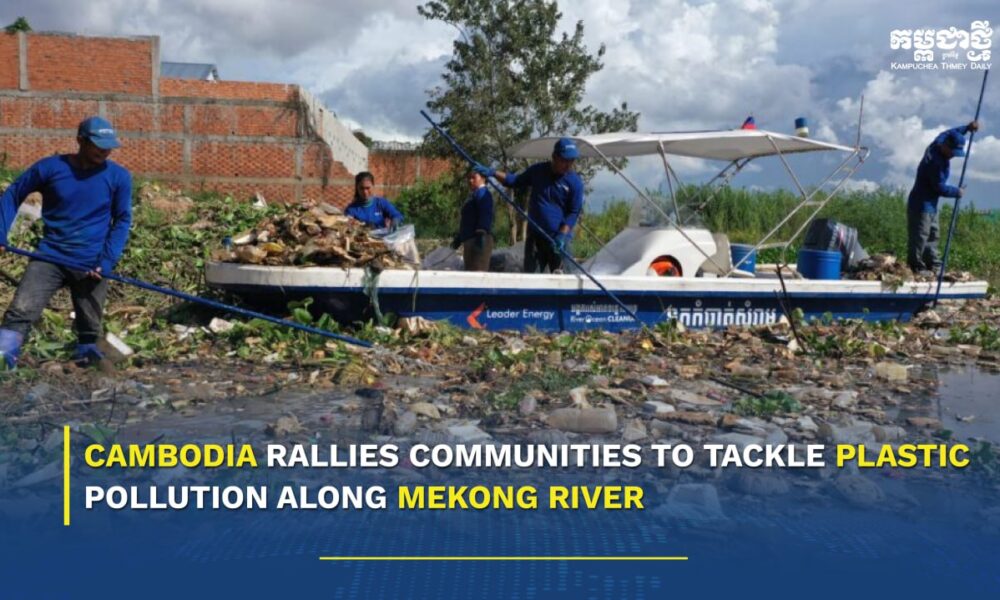
PHNOM PENH, March 18, 2026 (KPT) – Cambodia’s Ministry of Environment, together with community partners, has urged citizens to step up efforts to combat plastic pollution along the Mekong River, warning of its growing environmental and health impacts.
At a campaign held on March 17 at Koh Sotin High School in Kampong Cham province, residents were encouraged to reduce plastic use, separate and recycle waste, and adopt sustainable alternatives.
Kup Raly, Undersecretary of State at the Ministry of Environment, stressed the importance of collaboration between government, civil servants and local communities to build a cleaner and more sustainable environment.
He also highlighted health risks linked to plastic waste and outlined community-level solutions.
The initiative was supported by the Mekong-Lancang Special Fund through the Embassy of China, with coordination from Cambodia’s Ministry of Foreign Affairs and International Cooperation, underscoring international cooperation in tackling environmental challenges.
Officials said such campaigns form part of broader efforts to raise awareness and strengthen community participation in sustainable practices nationwide.
Stretching more than 4,800 km through six countries, the Mekong River is a vital source of water, food, transport and livelihoods for millions. But in recent years it has come under mounting pressure from plastic pollution, driven by rapid urbanisation, single-use plastics and cross-border waste flows.
Cambodia has partnered with regional bodies and international donors, including the Mekong-Lancang Cooperation initiative, to improve waste management and promote recycling. Community campaigns such as the one in Koh Sotin are designed to complement these wider efforts.
Addressing plastic pollution in the Mekong is seen as critical not only for environmental protection but also for food security, public health and the long-term sustainability of river-dependent communities.






-
 National1 month ago
Cambodia Expands Free ID Services While Introducing Clear Fee Structure for Administrative Documents
-
 National3 weeks ago
Cambodia proposes trilateral anti‑crime liaison mechanism with Laos, Vietnam
-
 National2 weeks ago
PM Hun Manet to visit China as trade surges and investment deepens
-

 National2 weeks ago
Cambodia says four soldiers injured in border blast, investigation launched
-

 National1 month ago
Samdech Techo Hun Sen Says Cambodia Can Meet Defence Needs Through Domestic Production
-
 National2 weeks ago
Cambodia opens new distribution hub to expand market access for local businesses
-
 Opinion2 months ago
From Connectivity to Resilience: How Japan’s Strategic Shift Could Transform Cambodia’s Next Development Phase
-
 Economy2 months ago
Cambodia Welcomes 1 Million Tourists in Q1, But Arrivals Fall Sharply Amid Regional Pressures