National
ASEAN Discusses Supply Chain and Security Concerns Amid Middle East Conflict
PHNOM PENH, April 17, 2026 (KPT) – Southeast Asian foreign ministers have welcomed a temporary ceasefire between the United States and Iran, voicing hope it will ease tensions and bolster diplomacy in the Middle East.
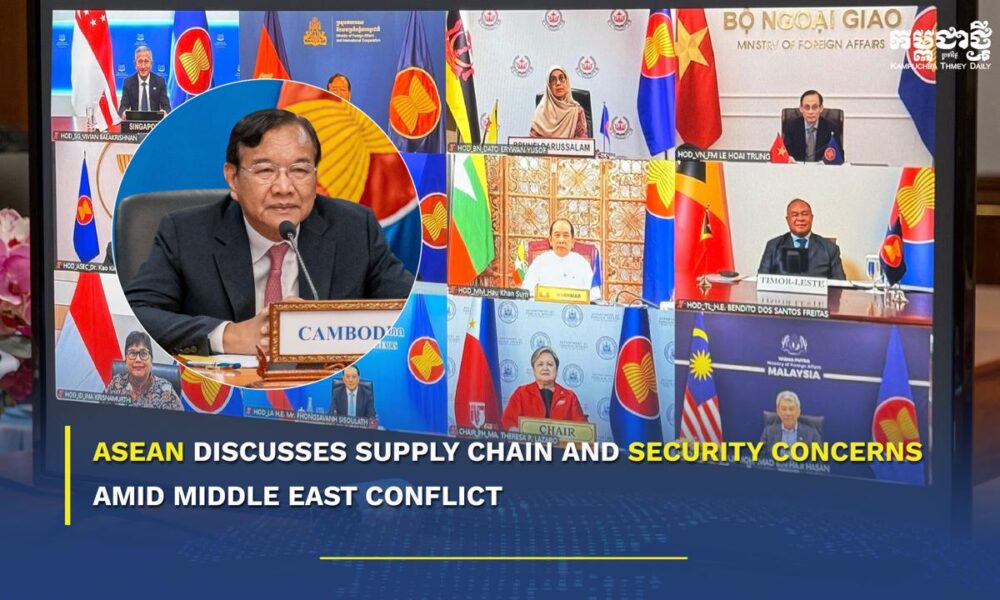
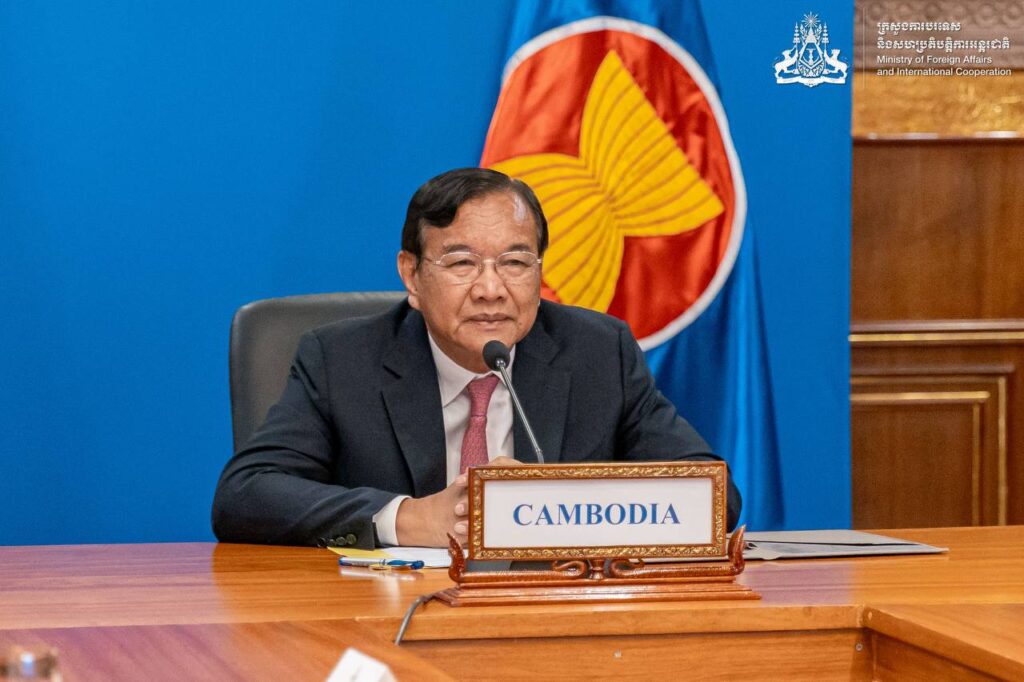
Meeting by videoconference on April 13, the Second Special ASEAN Foreign Ministers’ Meeting – attended by Cambodia’s Deputy Prime Minister and Foreign Minister Prak Sokhonn – focused on the wider impact of the conflict on energy, food security and supply chains.
Ministers highlighted the need to strengthen resilience, citing projects such as the Trans-ASEAN Gas Pipeline, the ASEAN Petroleum Security Agreement and the ASEAN Power Grid, alongside investment in renewable energy.
Sokhonn warned that rising energy costs could disrupt food production and fertiliser supplies, driving up prices and hitting vulnerable populations.
He urged stronger coordination through mechanisms including the ASEAN Plus Three Emergency Rice Reserve and the ASEAN Food Security Information System.
Cambodia reaffirmed its commitment to regional cooperation and stressed the importance of dialogue in line with the UN Charter and international law.














-

 National1 month ago
Cambodia Expands Free ID Services While Introducing Clear Fee Structure for Administrative Documents
-

 National3 weeks ago
Cambodia proposes trilateral anti‑crime liaison mechanism with Laos, Vietnam
-

 National2 weeks ago
PM Hun Manet to visit China as trade surges and investment deepens
-

 National2 weeks ago
Cambodia says four soldiers injured in border blast, investigation launched
-

 National1 month ago
Samdech Techo Hun Sen Says Cambodia Can Meet Defence Needs Through Domestic Production
-

 National2 weeks ago
Cambodia opens new distribution hub to expand market access for local businesses
-

 Opinion2 months ago
From Connectivity to Resilience: How Japan’s Strategic Shift Could Transform Cambodia’s Next Development Phase
-

 Economy2 months ago
Cambodia Welcomes 1 Million Tourists in Q1, But Arrivals Fall Sharply Amid Regional Pressures