National
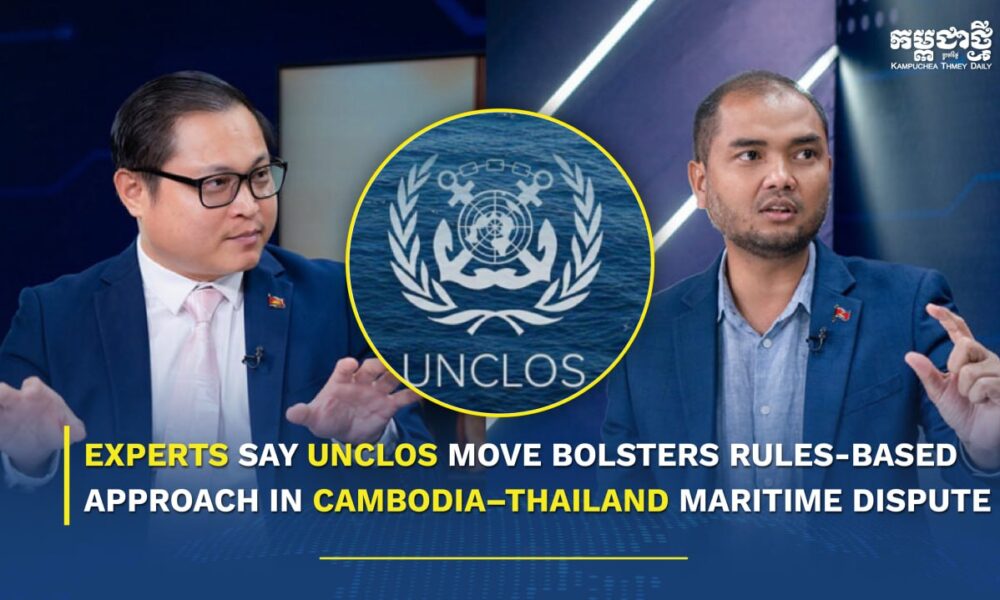
Experts Say UNCLOS Move Bolsters Rules-Based Approach in Cambodia–Thailand Maritime Dispute

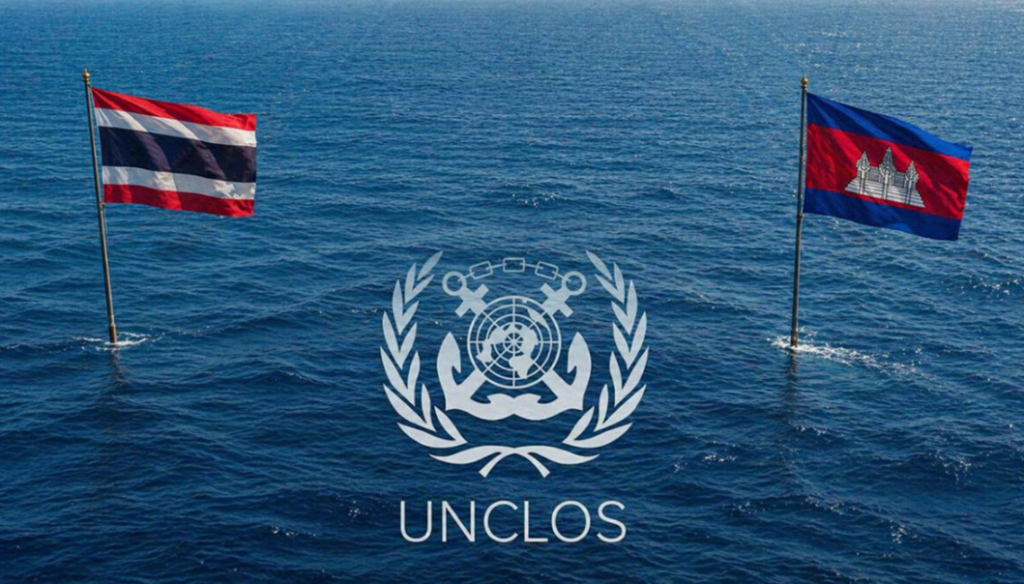
PHNOM PENH, June 11, 2026 (KPT) — Cambodia is placing international law at the centre of its strategy to resolve a long‑running maritime dispute with Thailand, pursuing a United Nations‑backed conciliation process that officials and legal experts say could shape future management of overlapping claims in the Gulf of Thailand.
Prime Minister Hun Manet told the ASEAN Future Forum in Hanoi this week that Cambodia’s decision to initiate compulsory conciliation proceedings under the UN Convention on the Law of the Sea (UNCLOS) demonstrated its commitment to a peaceful and lasting settlement.
He welcomed Thailand’s readiness to engage under the framework, saying resolution was in the mutual interest of both countries and contributed to regional stability.
The dispute concerns overlapping maritime claims in resource‑rich waters believed to contain significant energy reserves, making the issue strategically important for both sides.
Cambodian legal experts argue the UNCLOS process offers an internationally recognised avenue when bilateral talks fail to produce a breakthrough.
International law specialist An Pasty, a former Cambodian diplomat, said the government’s decision reflected confidence in legal institutions and reinforced principles of the UN Charter, the ASEAN Charter and the broader rules‑based order.
“By choosing peaceful and lawful mechanisms over confrontation, Cambodia demonstrates that true leadership is measured not by the ability to escalate disputes, but by the capacity to resolve them with vision, restraint and principle,” he said.
Geopolitical analyst Gnel Rattha noted that compulsory conciliation under Annex V of UNCLOS proceeds even if one party is reluctant, ensuring the process cannot be easily stalled.
He argued that the mechanism offers an alternative pathway for managing disputes and reducing the risk of escalation.
Government spokesman Pen Bona defended the decision as a peaceful and lawful means of addressing unresolved claims, reiterating Cambodia’s rejection of force.
Analysts say the case could attract wider international attention as a test of UNCLOS mechanisms at a time when maritime disputes continue to challenge stability in several regions worldwide.
As Cambodia advances its case, regional observers will be watching closely to see whether the UNCLOS process can help narrow differences between the two neighbours and establish a foundation for a durable settlement in one of Southeast Asia’s most sensitive maritime disputes.


-
 National1 month ago
Poll Finds Strong Cambodian Support for Closer China Ties
-

 Economy2 months ago
Cambodia Moves to Boost Green Economy with $30 Million Climate Financing Deal
-
 Opinion2 months ago
Opinion: The “Scambodia” Fallacy: Editorial Malpractice and the Erosion of Journalistic Ethics
-

 National2 months ago
Cambodia Condemns ‘Scambodia’ Label in Wall Street Journal Report
-

 Economy1 month ago
Cambodia Bans Prize Promotions on Beer and Energy Drinks to Level Playing Field
-
 Opinion1 month ago
Vienna Convention on the Law of Treaties (VCLT)’s ruling over the MoU 2001 Cancellation by Thailand against Cambodian Maritime Territories
-

 Economy1 month ago
Cambodia Caps Fuel Price Rise as Global Oil Surge Hits Domestic Market
-
 Politics2 months ago
Cambodian Embassy in France Rejects ‘Politicization’ Claims, Affirms Neutral Role