Opinion
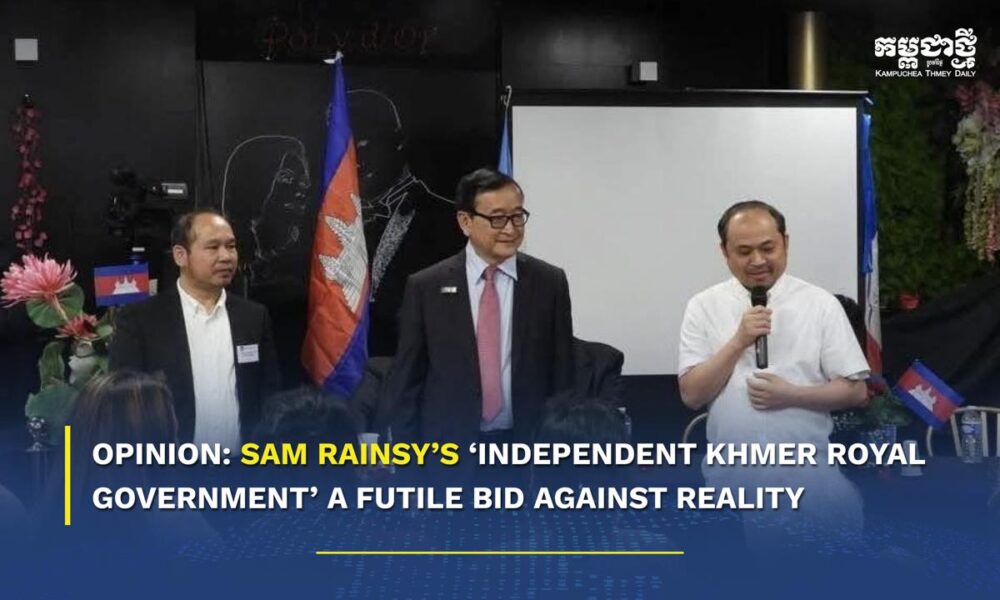
Opinion: Sam Rainsy’s ‘Independent Khmer Royal Government’ a Futile Bid Against Reality
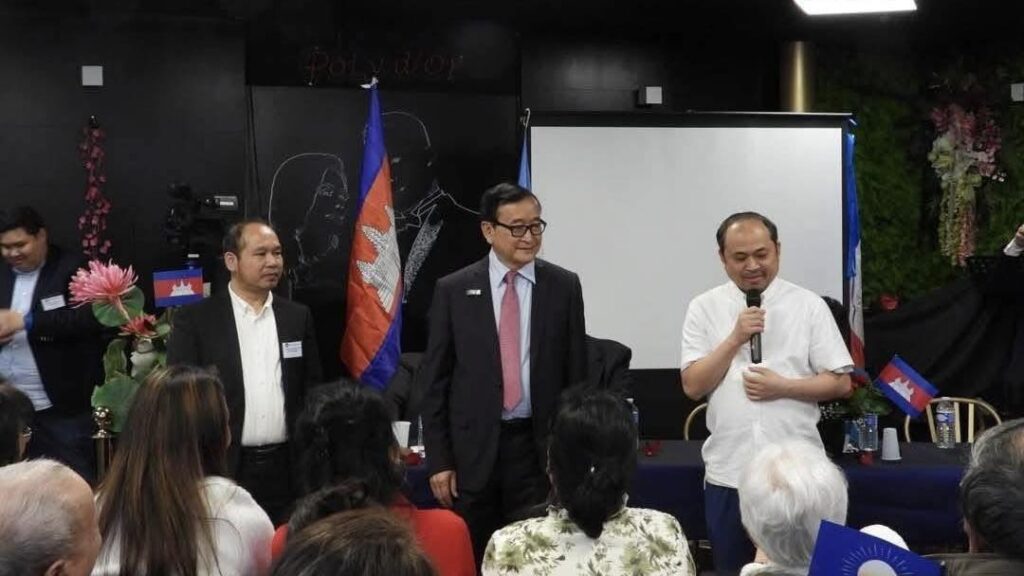
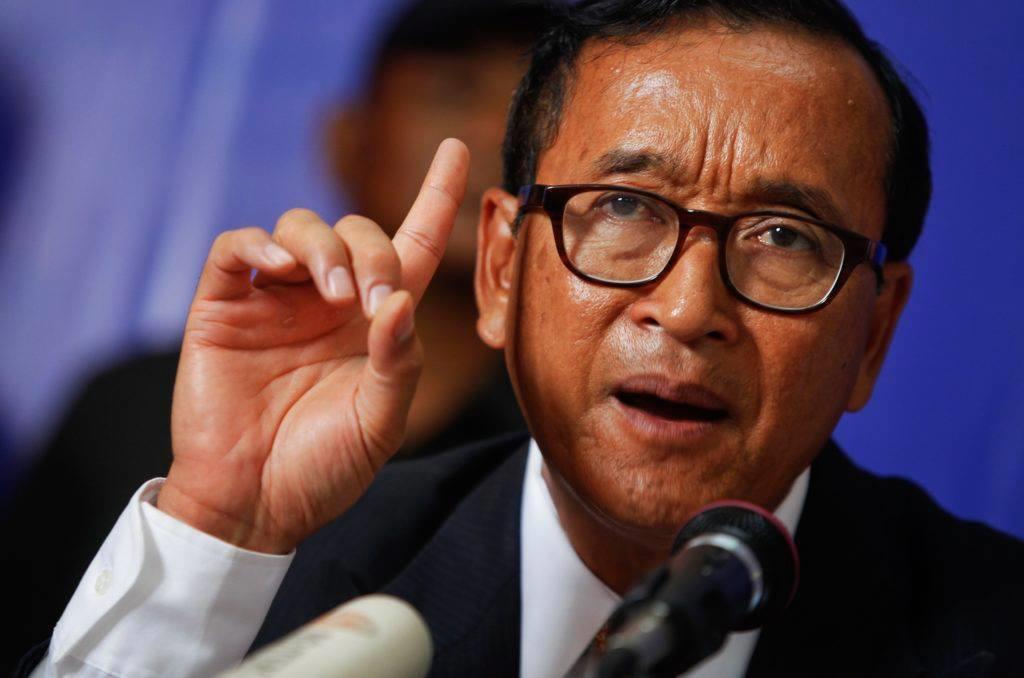
PHNOM PENH, Cambodia (Nov.08, 2025) — The recent declaration by longtime opposition figure Sam Rainsy of an “Independent Khmer Royal Government of October 23” has once again thrust Cambodian politics into the international spotlight. Announced from abroad with a handful of loyalists, the self-proclaimed administration presents itself as a challenge to the established government in Phnom Penh. Yet beyond its dramatic unveiling, it appears to be another episode in Rainsy’s long-running political theatre—one that has failed to resonate with the Cambodian public at home or overseas.
A declaration without legitimacy
At its core, this so-called “government” lacks both constitutional and popular legitimacy. Cambodia’s Constitution clearly states that power is exercised through the National Assembly, Senate, Royal Government, and Judiciary. It does not permit the creation of parallel authorities outside these institutions. Declaring a rival government abroad is not symbolic defiance—it directly contravenes the country’s supreme law and undermines institutions chosen through national elections.
A familiar political performance
Rainsy’s announcement follows a familiar pattern of grand declarations after political setbacks. These tactics have rarely gained traction. Many Cambodians, including those overseas, have grown weary of what they see as empty promises. The absence of significant public support—both offline and on social media—is telling.
Legal implications
Cambodia’s Criminal Code treats attempt to overthrow the government as serious offenses. Articles 451 to 453 outline prison terms ranging from 15 years to life for those involved in such efforts. Rainsy’s declaration could be interpreted as incitement or an attempted coup, with potential charges under counter-terrorism laws.
Public sentiment and political stability
The timing of the announcement appears disconnected from national sentiment. Under Prime Minister Hun Manet, Cambodia has projected continuity and stability. Public confidence in the new administration is reflected in local development and social welfare initiatives. For many, especially younger Cambodians, the focus is on progress—not political confrontation.
The international dimension
While Rainsy has long drawn attention from Western governments and rights groups, symbolic gestures are increasingly seen as inadequate substitutes for credible engagement. Without a base inside Cambodia or diplomatic recognition abroad, the “Independent Khmer Royal Government” remains largely performative.
The broader message
Actions taken outside legal frameworks risk undermining democratic values. True reform must come through lawful channels—dialogue, elections, and policy engagement. For most Cambodians, peace and development remain the priority.
A warning and a call for vigilance
Authorities have warned citizens against involvement with the self-proclaimed government, citing potential legal consequences. These warnings reflect the government’s zero-tolerance stance and the delicate balance between stability and pluralism.
Conclusion: rhetoric versus reality
Rainsy’s latest initiative is unlikely to shift Cambodia’s political trajectory. Without legal standing, public support, or international recognition, it remains a personal statement—not a credible challenge. As Cambodia moves forward under Hun Manet’s leadership, the public appears to favor pragmatic engagement over political grandstanding. For Rainsy, regaining relevance would require more than declarations—it would demand reconnection with the people and a willingness to engage within the system he continues to reject.
By Dr. Chin Chesta, Analyst of Politics, Law, and Society, Phnom Penh


-
 National2 months ago
Cambodia Expands Free ID Services While Introducing Clear Fee Structure for Administrative Documents
-
 National3 weeks ago
Cambodia proposes trilateral anti‑crime liaison mechanism with Laos, Vietnam
-
 National2 weeks ago
PM Hun Manet to visit China as trade surges and investment deepens
-
 National2 weeks ago
Cambodia says four soldiers injured in border blast, investigation launched
-
 National1 month ago
Samdech Techo Hun Sen Says Cambodia Can Meet Defence Needs Through Domestic Production
-
 National2 weeks ago
Cambodia opens new distribution hub to expand market access for local businesses
-
 Opinion2 months ago
From Connectivity to Resilience: How Japan’s Strategic Shift Could Transform Cambodia’s Next Development Phase
-
 Economy2 months ago
Cambodia Welcomes 1 Million Tourists in Q1, But Arrivals Fall Sharply Amid Regional Pressures