Economy
Cambodia positions itself as ASEAN’s green manufacturing hub
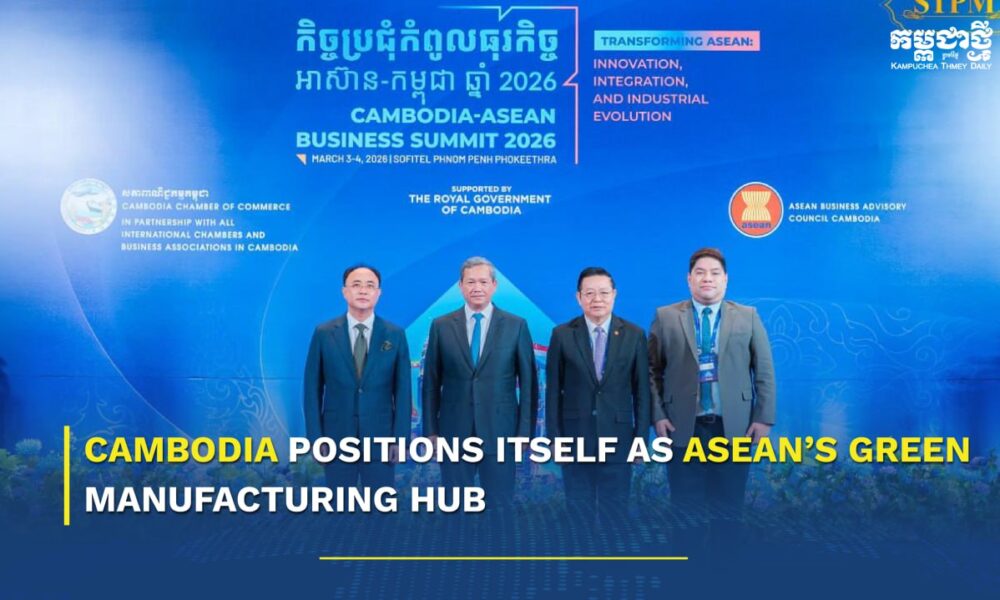
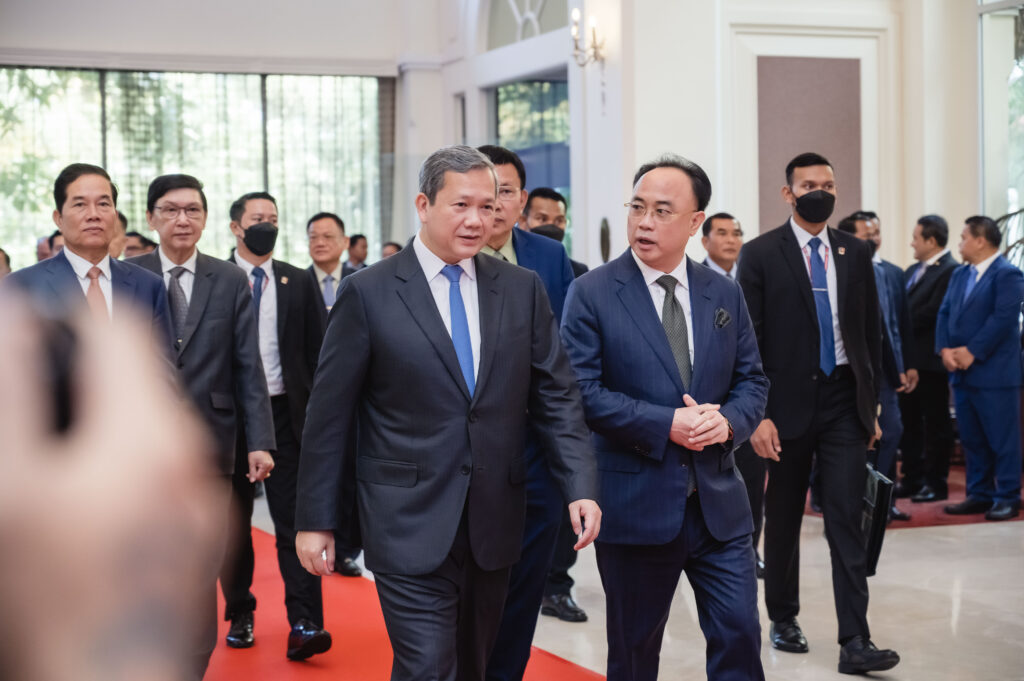
PHNOM PENH, March 4, 2026 (KPT) – Cambodia is positioning itself as a new hub for green manufacturing and regional supply chains in Southeast Asia, Prime Minister Samdech Thipadei Hun Manet told investors and business leaders at the Cambodia–ASEAN Business Summit on Wednesday.
Samdech Thipadei Hun Manet said Cambodia is moving beyond low-cost production toward higher-value industries such as electronics, automotive components and digital services. The economy grew 5.2 percent in 2025, with continued expansion expected, supported by reforms to boost competitiveness and investment.
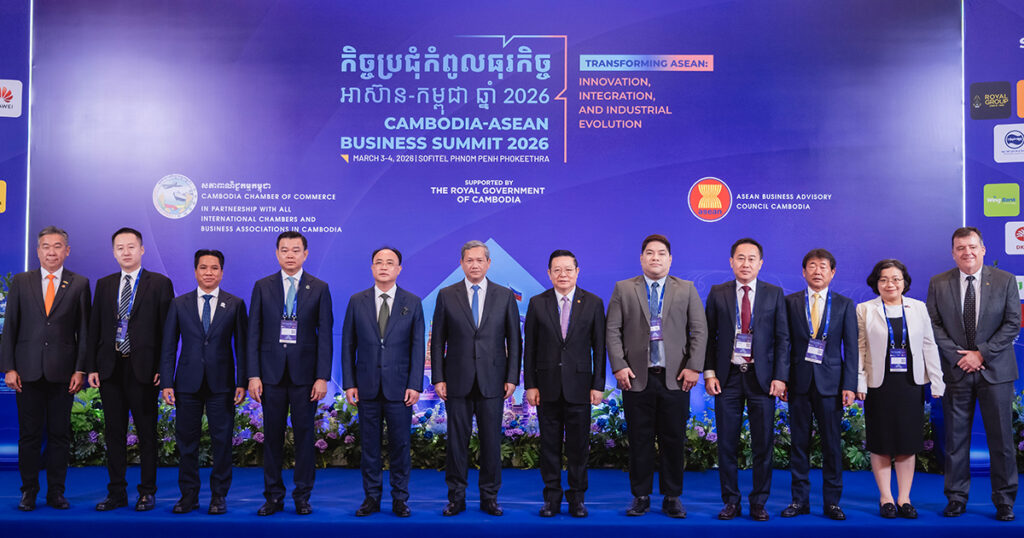
“Cambodia complements the industrial base of ASEAN member countries by offering a seamless extension of the regional supply chain,” he said, highlighting pro-business policies including 100 percent foreign ownership, a fully digitalized regulatory system and tax incentives of up to 15 years for priority sectors.
He noted that about 62 percent of Cambodia’s electricity mix comes from renewable energy, with a target of 70 percent by 2030. The clean-energy transition, combined with special economic zones and improved logistics, is creating a favorable ecosystem for multinational firms, he added.
In 2025, the Council for the Development of Cambodia approved around US$10 billion in new investment projects, a 45 percent increase from the previous year, reflecting a shift toward high-value manufacturing, agro-industry and infrastructure. Major projects include the new Techo International Airport and expanded logistics networks aimed at strengthening regional connectivity.
“Whether in green energy, digital infrastructure or high-value manufacturing, Cambodia offers the stability, regulatory support and strategic location for sustainable growth,” Samdech Thipadei Hun Manet said.
Kith Meng, president of the Cambodia Chamber of Commerce and chair of ASEAN-BAC Cambodia, echoed the remarks, describing the country as undergoing one of its most significant economic transformations in decades.
“For many years, Cambodia was viewed mainly through the lens of post-conflict recovery or garment manufacturing. Today, that narrative no longer reflects reality,” he said, pointing to demographic advantages, with more than 65 percent of the population under 35, providing a young and adaptable workforce.
Meng said Cambodia is embracing a strategy of “strategic openness,” aiming to strengthen its role in ASEAN and global supply chains while promoting innovation and industrial modernization.









-

 National2 months ago
Cambodia Expands Free ID Services While Introducing Clear Fee Structure for Administrative Documents
-
 National3 weeks ago
Cambodia proposes trilateral anti‑crime liaison mechanism with Laos, Vietnam
-
 National2 weeks ago
PM Hun Manet to visit China as trade surges and investment deepens
-

 National2 weeks ago
Cambodia says four soldiers injured in border blast, investigation launched
-

 National1 month ago
Samdech Techo Hun Sen Says Cambodia Can Meet Defence Needs Through Domestic Production
-
 National2 weeks ago
Cambodia opens new distribution hub to expand market access for local businesses
-
 Opinion2 months ago
From Connectivity to Resilience: How Japan’s Strategic Shift Could Transform Cambodia’s Next Development Phase
-
 Economy2 months ago
Cambodia Welcomes 1 Million Tourists in Q1, But Arrivals Fall Sharply Amid Regional Pressures