Economy
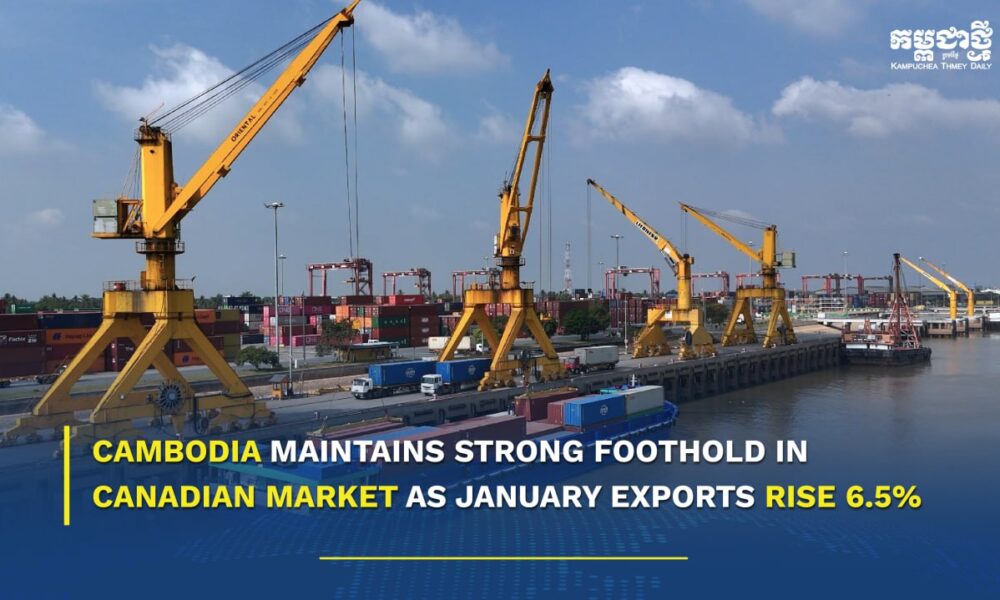
Cambodia maintains strong foothold in Canadian market as January exports rise 6.5%
PHNOM PENH, Feb 19, 2026 (KPT) – Cambodia’s exports to Canada rose 6.5 percent in January to more than $116 million, underscoring the Kingdom’s continued strength in one of its key North American markets, official data showed Thursday.
The General Department of Customs and Excise said total bilateral trade reached $118 million in January, up 7.6 percent year-on-year. Cambodian exports dominated the flow at $116 million, while imports from Canada stood at just over $2 million.

Officials said Canada’s preferential trade treatment for least developed countries has supported growth, making Canada Cambodia’s sixth-largest export destination.
Commerce Ministry spokesman Penn Sovicheat said recently the Kingdom continues to maintain stable access to major global markets, reinforcing buyer confidence and its role in international value chains.
Key exports include garments, footwear, travel goods, bicycles and electronic components, while imports from Canada mainly consist of electronics and vehicles.
In 2025, bilateral trade reached $1.3 billion, marking nearly 14 percent growth from the previous year.













-

 National2 months ago
Cambodia Expands Free ID Services While Introducing Clear Fee Structure for Administrative Documents
-

 National3 weeks ago
Cambodia proposes trilateral anti‑crime liaison mechanism with Laos, Vietnam
-

 National2 weeks ago
PM Hun Manet to visit China as trade surges and investment deepens
-

 National2 weeks ago
Cambodia says four soldiers injured in border blast, investigation launched
-

 National1 month ago
Samdech Techo Hun Sen Says Cambodia Can Meet Defence Needs Through Domestic Production
-

 National2 weeks ago
Cambodia opens new distribution hub to expand market access for local businesses
-

 Opinion2 months ago
From Connectivity to Resilience: How Japan’s Strategic Shift Could Transform Cambodia’s Next Development Phase
-

 Economy2 months ago
Cambodia Welcomes 1 Million Tourists in Q1, But Arrivals Fall Sharply Amid Regional Pressures