Economy
Cambodian Processor Signs 6,000 Ton Cashew Deal to Boost Local Value Addition and Farmer Income
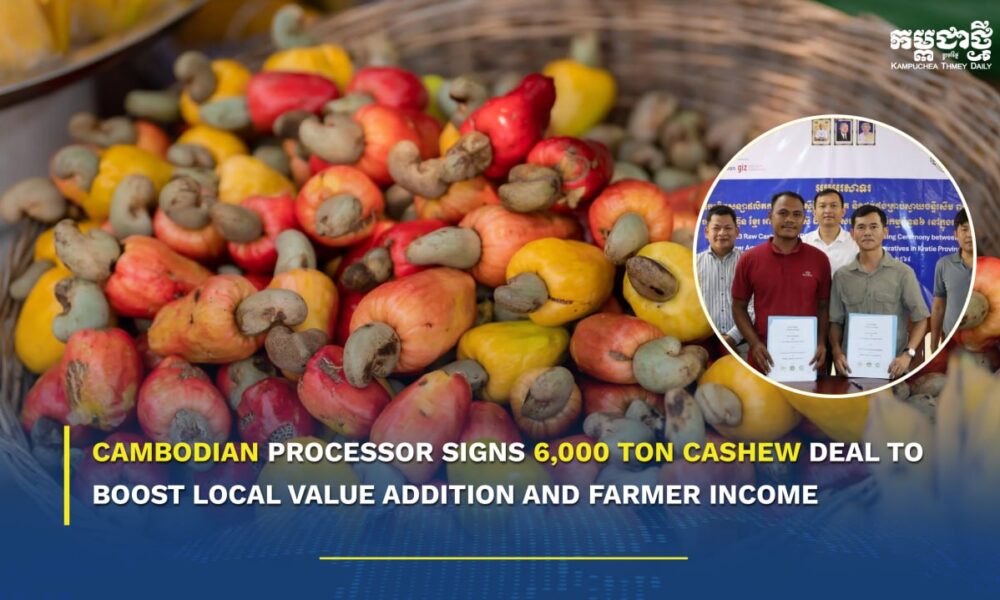
KRATIE, Feb 17, 2026 (KPT) – A newly established Cambodian agribusiness has signed a contract to purchase 6,000 tons of fresh cashew nuts from farming communities, aiming to strengthen domestic processing and raise rural incomes, officials said Tuesday.
Khmer Agro Cashew Co Ltd reached a two month production agreement earlier this month with six agricultural communities in Prek Prasab district, Kratie province, covering supply of the M23 cashew variety during the 2026 harvest season.
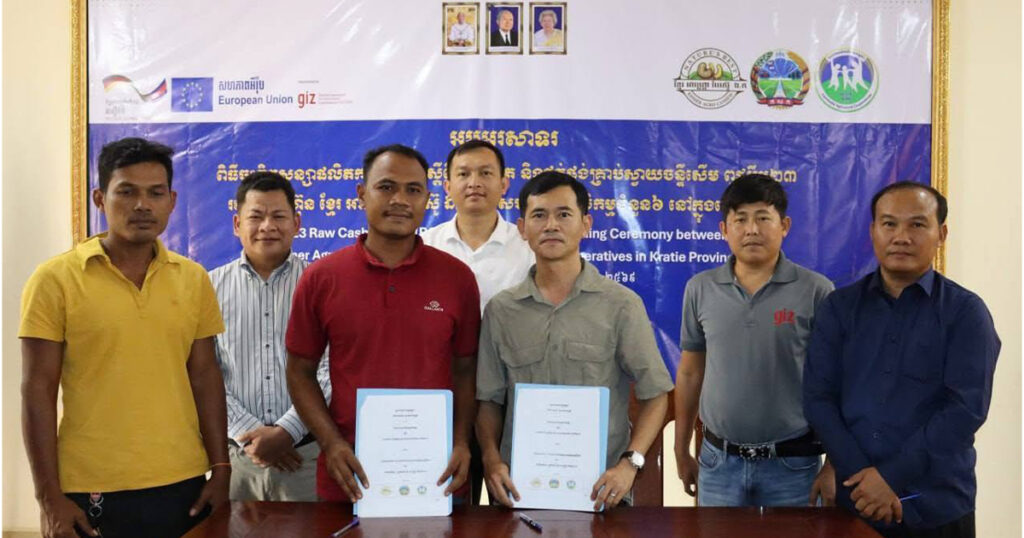
Founded in 2025, the company has a processing capacity of 50 tons per day and plans to begin full operations by mid 2026. Managing Director Ea Kokchheng said the firm intends to buy quality standard cashews for processing and export to markets including Japan, Taiwan and Europe.
Officials said the deal is based on market pricing comparable to intermediaries, but contracting directly with farmer groups is expected to provide stable demand and improve livelihoods.
According to the Cashew Association of Cambodia, the country earned US$1.5 billion in 2025 from exporting one million tons of raw cashews, a 27 percent increase year on year.












-

 National2 months ago
Cambodia Expands Free ID Services While Introducing Clear Fee Structure for Administrative Documents
-

 National3 weeks ago
Cambodia proposes trilateral anti‑crime liaison mechanism with Laos, Vietnam
-

 National2 weeks ago
PM Hun Manet to visit China as trade surges and investment deepens
-

 National2 weeks ago
Cambodia says four soldiers injured in border blast, investigation launched
-

 National1 month ago
Samdech Techo Hun Sen Says Cambodia Can Meet Defence Needs Through Domestic Production
-

 National2 weeks ago
Cambodia opens new distribution hub to expand market access for local businesses
-

 Opinion2 months ago
From Connectivity to Resilience: How Japan’s Strategic Shift Could Transform Cambodia’s Next Development Phase
-

 Economy2 months ago
Cambodia Welcomes 1 Million Tourists in Q1, But Arrivals Fall Sharply Amid Regional Pressures