Opinion
Opinion: Promoting the Rule-of-Law-based World Order is a Way Forward for Cambodia
Recently, there have been many debates on the future outlook of Cambodia’s national imperatives, especially with the ongoing border conflict with Thailand. Many people have called for enhancing defense capabilities by increasing military expenditures after expressing the frustration of the principles of international laws and other peaceful dispute settlement mechanisms.
Indeed, I understand with the sentiment completely. I understand the disappointment and I think it is important that Cambodia enhances its defense capabilities. However, supporting multilateralism and the world order based on the rule of law is a way forward to advance Cambodia towards the direction of enhancing its capabilities including in the area of defense. Abiding by these principles are the best available option for small states, like Cambodia since it needs to utilize its resources and open up spaces to maneuver to strengthen its capabilities. In addition, doing so also foster Cambodia’s integration to regional and international system, strengthening its regional and international cooperation, especially with friendly partners which attach strong importance to the rules-based international order.
So, why does Cambodia need to adhere to the rules-based international order?
First, we should be aware that the existence of Cambodia’s current statehood since the independence in 1953 and the contemporary chapter of nation-building efforts since 1993 is the product of tireless efforts of our leadership, but also in a combination of the support by the international community. The international support can be reflected through the international recognition and protection of the UN Charter back in the 1950s and moving on the 1990s. Cambodia’s sovereignty was guaranteed by the 1991 Paris Peace Agreements (PPAs). Within the PPAs, besides the agreement on political settlements within Cambodia, there are also two other instruments, namely, agreement concerning the sovereignty, independence, territorial integrity and inviolability, neutrality and national unity of Cambodia as well as the declaration of the international community commitment to rehabilitate and reconstruct Cambodia.
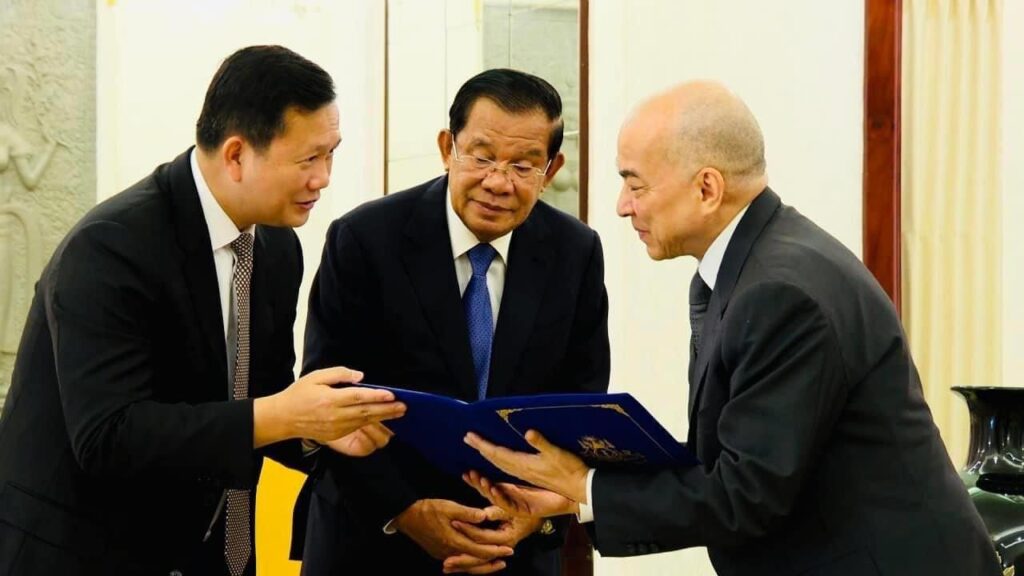
Alluding from the Paris Peace Agreements, of which this year is 35th anniversary, Cambodia has enjoyed plenty of favorable conditions, normatively and materialistically. Normatively, in term of external engagement, PPAs mark the end of the Cold War in Southeast Asia. The wall that divided ideologically the region was shattered, which paved the way for the regional integration. Cambodia eventually joined ASEAN in 1999.
Materialistically, through the Declaration on the Rehabilitation and Reconstruction of Cambodia, many friends of Cambodia have pooled the resource to help through various shapes and forms. From 1992 until the present days, Cambodia has received almost USD 30 billion in term of aid across nearly 5,000 projects according to the Council for the Development of Cambodia (CDC). As stated by CDC, Japan, for example, has provided development assistance for 861 projects, which is among the largest donors to the Kingdom since 1992.
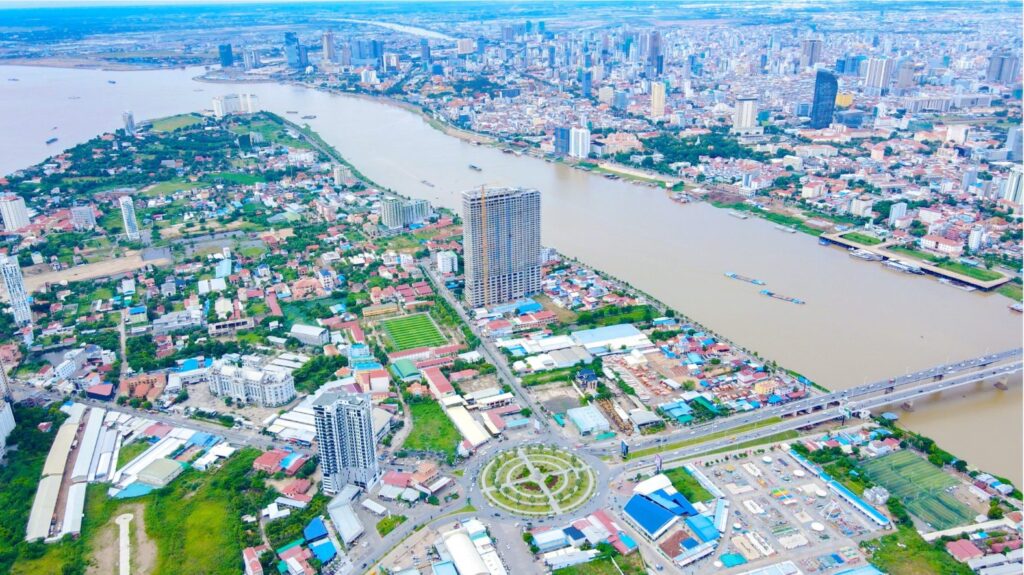
I can even argue the favorable conditions in the post-Cold War world order and strong commitment by Cambodian leaders towards national development have contributed significantly to Cambodia’s progress. Cambodia has transformed from a fragile state into a viable country eager to embrace growing roles in the regional and international stages, like these days.
Nonetheless, we cannot deny that this kind of world order has been in the mode of transition. The geopolitical competition has been intensified, while the trust and confidence on multilateralism and international laws have been declined. We probably could not enjoy these favorable conditions any longer.
The international community has provided assistance to us, be it technical or development, for more than three decades now. Speaking about rule of law, Cambodia has been supported by Japan, one of many partners, which has been implementing the “Legal and Judicial Development Project” since 1999 through the Japan International Cooperation Agency (JICA), in order to establish the Civil Code, Civil Procedure Code, and relevant rules almost anew. Internationally, we have utilized international instruments, like the International Court of Justice to deal with disputes, like the Temple of Preah Vihear back in the day.

Thus, it is fair to say that Cambodia needs to contribute to the international community based on our affordability. And yes, the country has indeed made some contributions. Cambodia has contributed more than 10,000 soldiers to the UN Peacekeeping Force to various countries, like Sudan, South Sudan, Lebanon, Syria, Cyprus, among others. For example, in collaboration with Japan, we have worked on the humanitarian demining training for Ukraine through a trilateral cooperation framework among Japan, Cambodia and Ukraine, and humanitarian assistance on the situation in Palestine through the framework called as “Cooperation among East Asian Countries for Palestinian Development (CEAPAD)”. Cambodia also endorsed any initiatives that could bring peace, like the support of China’s Global Security Initiative (GSI) and the recent US President Donald Trump’s initiative, Board of Peace (BOP).
Other than that, Cambodia is in the process of ratifying the United Nations Convention on the Law of the Sea (UNCLOS). Friendly states such as Japan, which advocate for the rules-based international order in general, and in particularly, maintaining regional peace and prosperity based on the rule of law, have supported actively Cambodia’s ratification process, particularly through public dissemination as well as capacity building efforts. Cambodia’s decision to ratify UNCLOS represents the country’s commitment through close international partnerships towards upholding the principles of international laws. Hopefully, Cambodia can utilize this international convention to the best of its ability, not only for its own maritime interests, but also share the concerns on regional and international issues related to maritime domains.
Upholding these normative values is important for Cambodia. The international order based on the rule of law helps Cambodia minimize constraints as a small state and provides spaces for it to enhance its capabilities. It promotes Cambodia’s standing regionally and internationally, and fostering friendly relations especially with key partners that strongly support and anchor the rules-based international order. Supporting such an order is crucial for enhancing Cambodia’s sovereignty and broadening avenues for its own national development.
Mr.Him Rotha, Deputy Director, Cambodian Center for Regional studies (CCRS)







-
 National1 month ago
Cambodia Expands Free ID Services While Introducing Clear Fee Structure for Administrative Documents
-
 National3 weeks ago
Cambodia proposes trilateral anti‑crime liaison mechanism with Laos, Vietnam
-
 National2 weeks ago
PM Hun Manet to visit China as trade surges and investment deepens
-
 National2 weeks ago
Cambodia says four soldiers injured in border blast, investigation launched
-
 National1 month ago
Samdech Techo Hun Sen Says Cambodia Can Meet Defence Needs Through Domestic Production
-

 National2 weeks ago
Cambodia opens new distribution hub to expand market access for local businesses
-
 Opinion2 months ago
From Connectivity to Resilience: How Japan’s Strategic Shift Could Transform Cambodia’s Next Development Phase
-
 Economy2 months ago
Cambodia Welcomes 1 Million Tourists in Q1, But Arrivals Fall Sharply Amid Regional Pressures