National
Thai Political Leaders Condemn Psychological Intimidation Along Cambodian Border
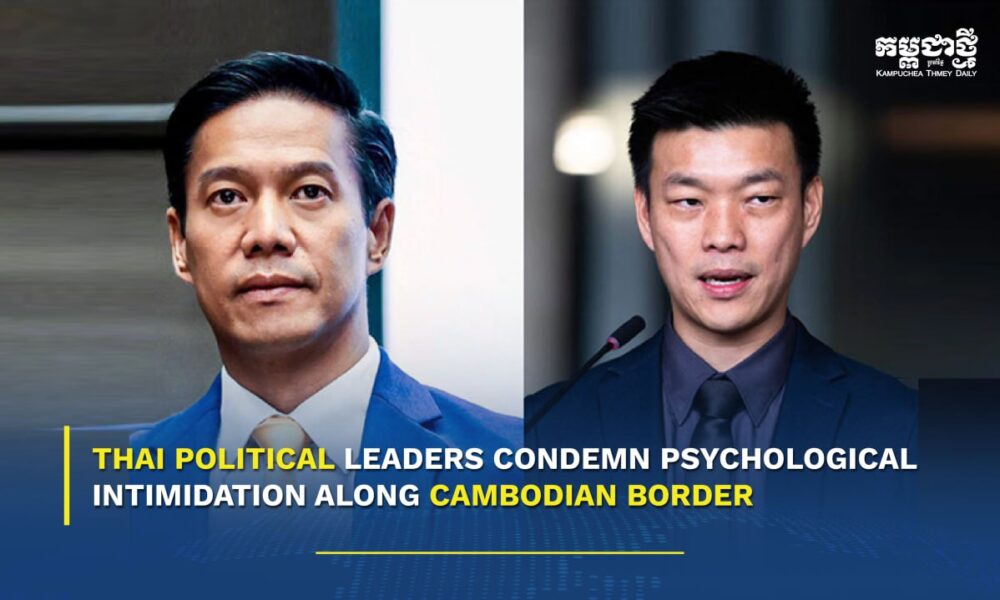
PHNOM PENH, Cambodia (Oct.16, 2025) — The Cambodian Human Rights Committee has welcomed recent statements by two Thai political party leaders condemning the reported use of disturbing sounds as psychological harassment against Cambodian civilians near the Cambodia-Thailand border.

According to an Oct. 14 report by Khaosod English, Justice Party leader Kannavee Suebsaeng and People’s Party leader Natthapong Ruangpanyawut criticized the alleged use of loudspeakers to broadcast ghost and fighter jet sounds, calling the tactic a violation of human rights and international law.
Their comments follow similar concerns raised by Thai Senator Angkhana Neelapaijit, a senior official from the Office of the Prosecutor General, and Sunai Phasuk, senior adviser at Human Rights Watch Thailand. All have described the tactic as a breach of the Convention Against Torture and Other Cruel, Inhuman or Degrading Treatment or Punishment.
“The use of loudspeakers to play ghost sounds is a violation of human rights and a trampling on human dignity,” Kannavee said. “We should return to following the ceasefire agreement and utilize international forums effectively. Influencers, military personnel and the government must not support such actions.”
Natthapong warned that the psychological impact on Cambodian civilians, regardless of intent, could escalate tensions and damage Thailand’s international reputation.
“Since the area is under martial law, the government and military are responsible for preventing such actions,” he said.
The Cambodian Human Rights Committee said the reported use of psychological intimidation violates international norms and urged authorities to take the matter seriously. The committee reiterated its call for respect for human rights and adherence to international law in resolving cross-border tensions.







-
 National2 months ago
Cambodia Expands Free ID Services While Introducing Clear Fee Structure for Administrative Documents
-
 National3 weeks ago
Cambodia proposes trilateral anti‑crime liaison mechanism with Laos, Vietnam
-
 National2 weeks ago
PM Hun Manet to visit China as trade surges and investment deepens
-
 National2 weeks ago
Cambodia says four soldiers injured in border blast, investigation launched
-
 National1 month ago
Samdech Techo Hun Sen Says Cambodia Can Meet Defence Needs Through Domestic Production
-

 National2 weeks ago
Cambodia opens new distribution hub to expand market access for local businesses
-
 Opinion2 months ago
From Connectivity to Resilience: How Japan’s Strategic Shift Could Transform Cambodia’s Next Development Phase
-

 Economy2 months ago
Cambodia Welcomes 1 Million Tourists in Q1, But Arrivals Fall Sharply Amid Regional Pressures