National
Agreement To Purchase Advanced Fighter Jets From Sweden May Turn Into A Major Disappointment For Thailand
Opinion: After the outbreak of border clashes between Cambodia and Thailand, which escalated into heavy-weapon confrontations from July 24 to 28, the world’s attention turned to observe what was unfolding between the two neighboring countries that share more than 800 kilometers of land border.

The recent border conflict has had a profound impact both regionally and internationally, particularly within ASEAN, prompting many nations to express their willingness to help ease tensions. Notably, the United States has directly stepped in to play a role in the Cambodia–Thailand dispute.
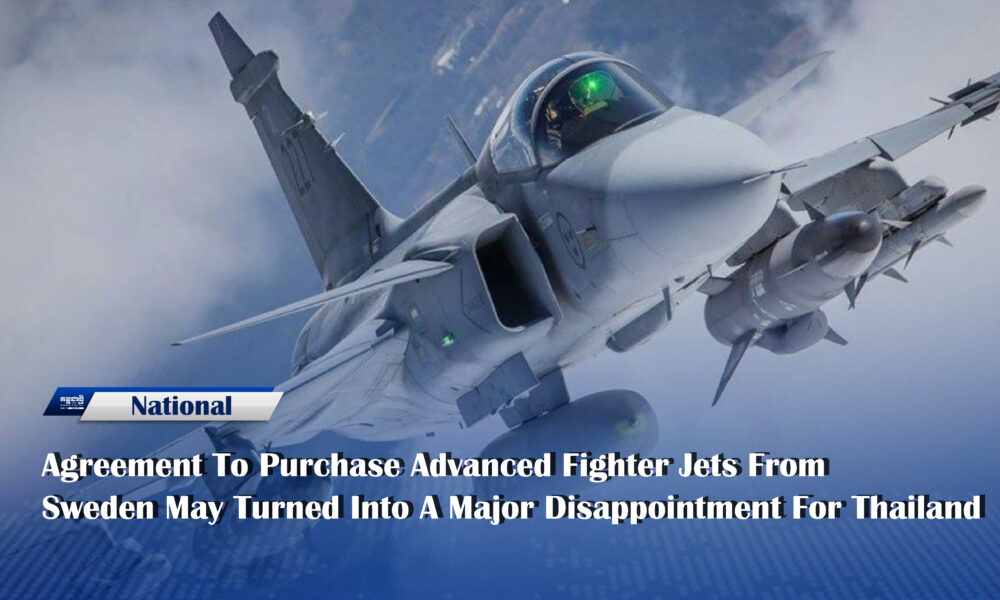
Moreover, the conflict has also affected Thailand’s ambition to modernize its military, most notably the planned purchase of Saab JAS-39 Gripen E and F fighter jets. The deal has become a sensitive issue not only for Thailand and Cambodia, but one that has drawn global attention including from Sweden itself.

Indeed, on August 25, Thailand and Sweden officially signed an agreement for the purchase of four advanced 4.5 generations fighter jets from Sweden, three Gripen E models and one Gripen F in total value exceeding 19 billion baht, equivalent to approximately 556 million U.S. dollars.
However, the agreement has not been a source of satisfaction for Thailand, as it falls short of the country’s expectations. In this context, ongoing conflict and military developments have highlighted several factors that contribute to Thailand’s disappointment with the Saab JAS-39 Gripen fighter jet deal from Sweden.
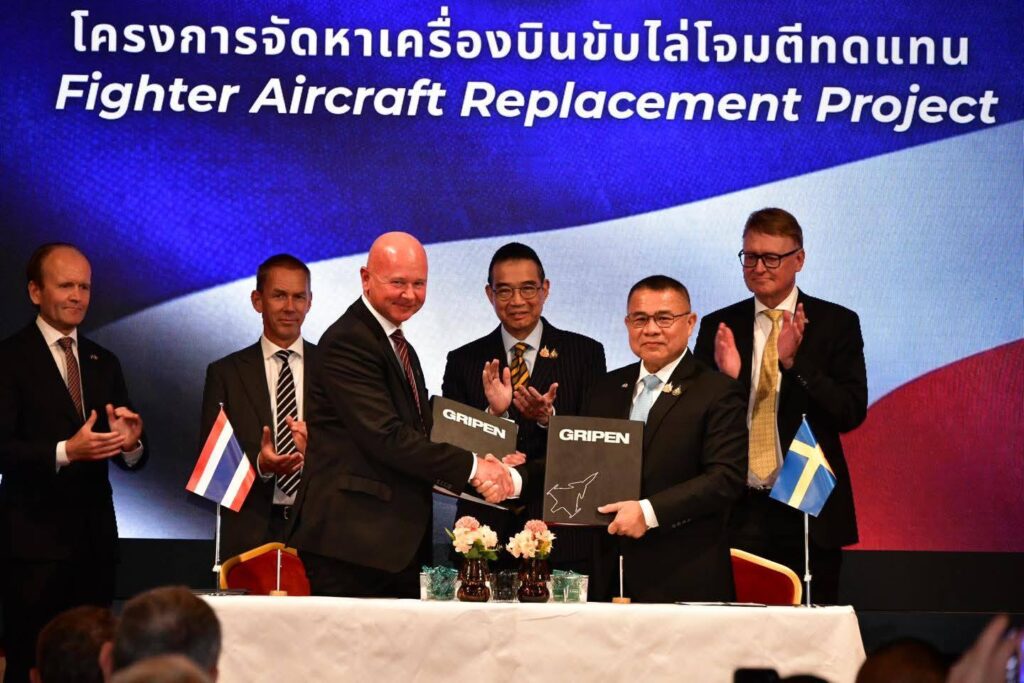
Earlier in 2025, major Thai media outlets reported that the Thai government had decided to purchase 12 Saab JAS-39 Gripen fighter jets from Sweden. The initial stage of negotiations reportedly proceeded smoothly, with the aim of gradually replacing the country’s aging F-16 fleet.
In June 2025, the Royal Thai Air Force officially announced plans to deploy these advanced fighter jets on Thai soil, confirming that 4 of 12 Saab JAS-39 Gripen E/F would be delivered to Thailand within 2025 and later Thai parliament approved the budget for the purchase earlier in August 2025.
However, the agreement signed on August 25 clearly stipulates that Sweden will sell only 4 Gripen E/F to Thailand. It also specifies that these 4 Gripen jets cannot be delivered within 2025 as previously expected; instead, the deliveries will likely be carried out in two phases (2 jets per year) between 2029 and 2030.
Contrary to earlier statements by the Thai government and Thai Air Force that the Saab JAS-39 Gripen would arrive in 2025, there are several reasons for the delay. Especially the official signing of the purchase agreement only took place on August 25, making immediate delivery of the fighter jets to Thailand impossible.
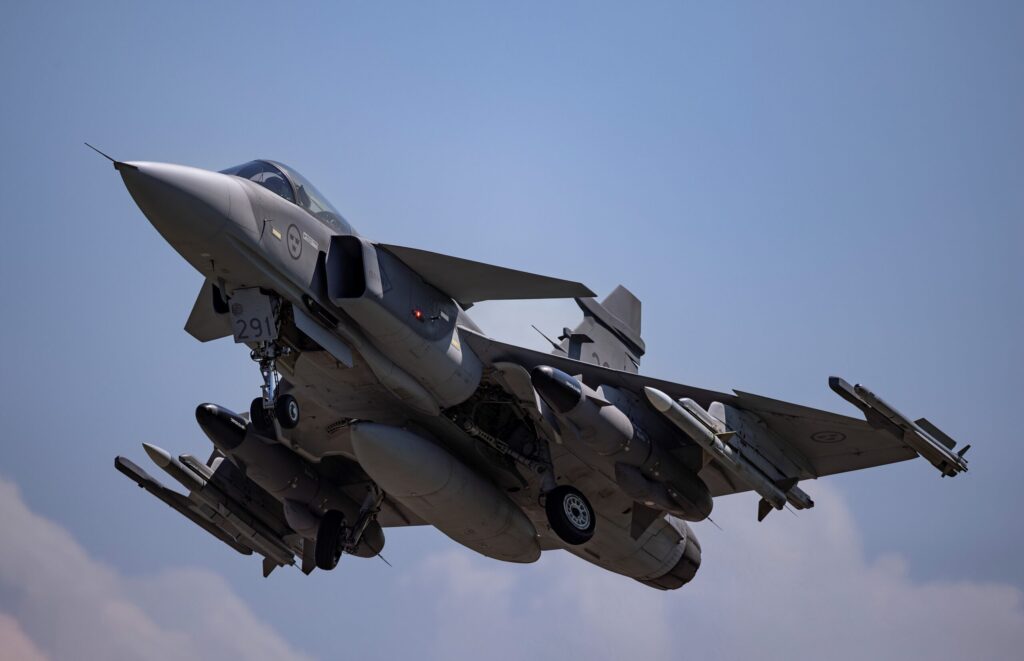
Additionally, these 4.5 generation fighter jets require years of production and integration of technology in accordance with the agreement. The specific technologies requested by Thailand must be developed and customize over a lengthy period, meaning the jets cannot be bought and delivered immediately like regular goods. This process takes at least 3 to 4 years, making it impossible for Sweden to deliver the Saab JAS-39 Gripen to Thailand before 2029.
Furthermore, the delay is also linked to the sensitivities arising from the recent Cambodia–Thailand border conflict. Under the terms set by Sweden’s Arm Export Framework, Thailand must strictly comply with the purchase agreement: the Saab JAS-39 Gripen is to be used solely for training and defensive operations within Thai territory, and cannot be employed to launch offensives or provoke conflicts with neighboring countries.
The delay in delivering fighter jets to Thailand is also due to Sweden conducting an investigation into issues previously raised by the Cambodian government, particularly allegations that Thailand used the Saab JAS-39 Gripen to drop munitions on civilian residential areas.
This means that during the 4 years period before the jets are delivered to Thailand, Sweden must evaluate its arms exports in advance, including reviewing various reports—particularly the situation of the conflict with Cambodia. If it is found that Thailand has indeed used its fighter jets to violate Cambodian sovereignty, breach international law, commit acts of war crimes, or cause harm to civilians, the agreement could be delayed or even canceled entirely.
The points outlined above are precisely what have caused Thailand’s dissatisfaction, particularly for Thai acting Prime Minister and Thai Air Force whose earlier promises made to the Thai citizen that the country would receive these advanced fighter jets in 2025 and now become a source of new frustration.
Although the agreement may not appear favorable from Cambodia’s perspective, it reflects the concerns of many people around the world who are seeking to ease tensions along the Cambodia–Thailand border and to prevent any Thai ambitions from encroaching on Cambodia’s territorial sovereignty.
Today, only five countries have purchased Sweden’s 4.5 generation Saab JAS-39 Gripen fighter jets for their air defense operations, including Thailand. Notably, Thailand is the first country to have deployed this type of fighter jet in an offensive operation against a neighboring country.










-
 National2 months ago
Cambodia Expands Free ID Services While Introducing Clear Fee Structure for Administrative Documents
-

 National3 weeks ago
Cambodia proposes trilateral anti‑crime liaison mechanism with Laos, Vietnam
-

 National2 weeks ago
PM Hun Manet to visit China as trade surges and investment deepens
-
 National2 weeks ago
Cambodia says four soldiers injured in border blast, investigation launched
-

 National1 month ago
Samdech Techo Hun Sen Says Cambodia Can Meet Defence Needs Through Domestic Production
-

 National2 weeks ago
Cambodia opens new distribution hub to expand market access for local businesses
-
 Opinion2 months ago
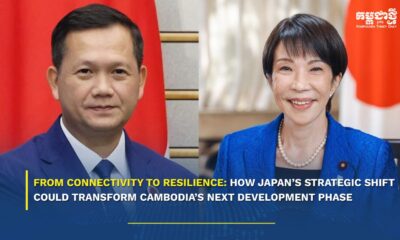
From Connectivity to Resilience: How Japan’s Strategic Shift Could Transform Cambodia’s Next Development Phase
-

 Economy2 months ago
Cambodia Welcomes 1 Million Tourists in Q1, But Arrivals Fall Sharply Amid Regional Pressures