Opinion
Opinion: The International Relations System Needs a “Great Reset” While the World is Enveloped by Tension and Discord
PHNOM PENH, June 23, 2026 (KPT)- The contemporary international system appears to be entering a period that could be described as a “The Great Reset.” This is not merely an economic recovery or policy adjustment but a profound transformation of the ideas, institutions, and power structures—as well as the rebuilding of mutual trust among superpowers—that have governed globalisation since the end of the Cold War (1991–present).
The COVID-19 pandemic exposed deep structural vulnerabilities in global supply chains, fiscal systems, the global healthcare system, and governance models, triggering one of the most severe economic recessions in recent history.
Rather than reinforcing confidence in globalisation, the crisis accelerated doubts about interdependence and encouraged states to prioritise resilience over efficiency, sovereignty over openness, and national interests over collective action.
Furthermore, rapidly escalating geopolitical tensions have led many analysts and the international community to worry that the world may be drifting closer to the flashpoint of a “Third World War.”
The sharp, multi-dimensional rivalry between the global superpowers of China and the United States has not only fractured political blocs, but has also pushed critical strategic regions—such as the Taiwan Strait, the South China Sea, and Eastern Europe—into highly volatile situations.
As diplomatic mechanisms stall and military communication channels break down, the potential for “miscalculation” could serve as a catalyst, triggering a large-scale, uncontrollable armed conflict.
This progression toward the brink of a global war is also a direct consequence of a total collapse of trust in global cooperation, the erosion of the collective security system, the multilateral framework, and global conflict resolution mechanisms.
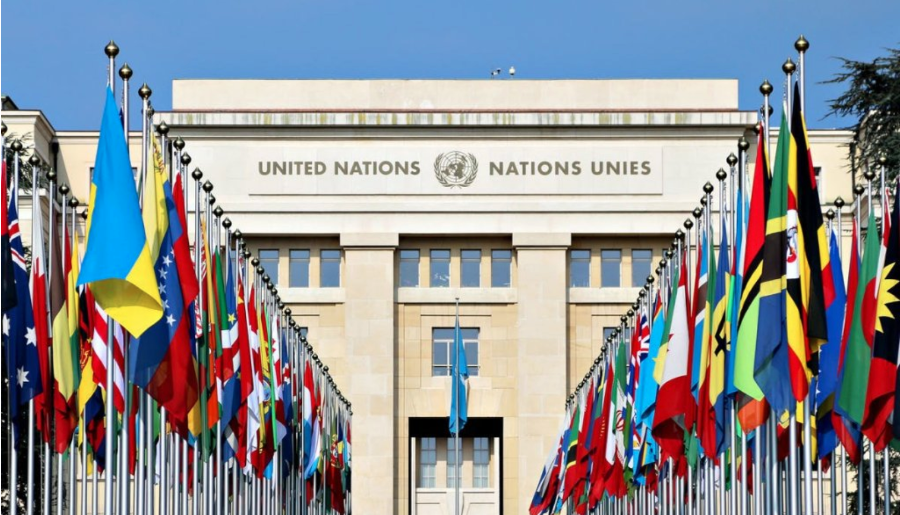
These frameworks were originally built with the intention of fostering multilateral cooperation and resolving inter-state disputes peacefully through international law. As multilateral institutions like the United Nations lose their influence and effectiveness in preventing conflict, the world has become increasingly disorderly and lawless (anarchy).
Consequently, nations no longer rely on international agreements, turning instead to increasing arms sales, forming defence alliances for self-preservation, and modernising their military and nuclear capabilities.
In an environment completely dominated by mutual suspicion, any regional conflict carries a high potential to draw nuclear powers into direct confrontation, turning the dark shadow of a new global war into a real and terrifying threat to all of humanity.
Beyond economics and geopolitics, this transition reflects a deeper philosophical shift in human behaviour. For decades, globalisation rested on the assumption that cooperation, mutual dependence, and economic liberalisation would foster peace and shared prosperity.
Increasingly, however, nations and societies are retreating into strategic competition, protectionism, and “zero-sum thinking” to achieve their political agendas and pressure weaker states into falling in line with superpower interests.
Trust is giving way to suspicion, and collaboration is being replaced by rivalry. The rise of “mercantilism” and economic nationalism suggests that humanity is moving away from the ideals of collective progress toward a world where power, security, and self-preservation often take precedence over openness and mutual benefit.
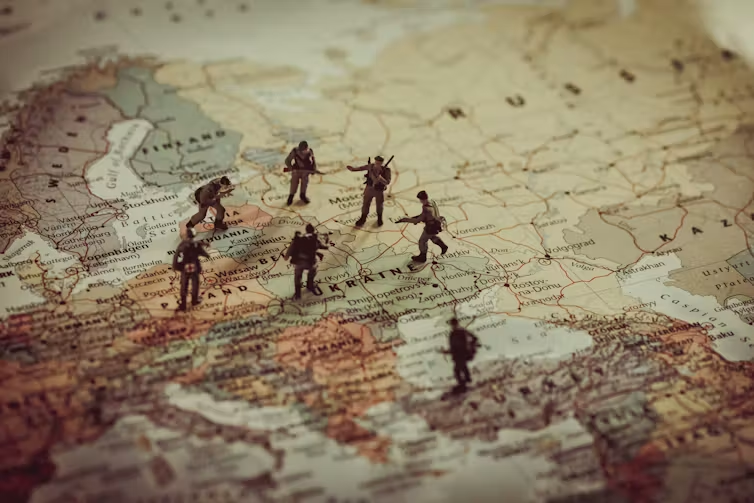
This shift has coincided with the resurgence of mercantilism and protectionism. Governments increasingly view trade, technology, and industrial policy through the lens of strategic competition rather than comparative advantage and mutual benefit.
Tariffs, export controls, industrial subsidies, and restrictions on strategic technologies have become tools of statecraft and populist politics. In this environment, economics is no longer separate from politics; rather, economic policy has become an extension of national security and geopolitical competition.
At the same time, uncertainty surrounding the consistency of United States leadership has contributed to a more fragmented global landscape. Questions over the future of American engagement have encouraged countries to protect their foreign policy positions (hedging and balancing) and pursue greater autonomy.
This has accelerated the emergence of a more multipolar world in which middle powers and regional actors play increasingly influential roles. China, in particular, has expanded its economic, diplomatic, and technological influence, while many smaller states seek to diversify partnerships to avoid excessive dependence on any single great power and to promote the building of a new world order focused on peace, prosperity, good neighbourliness, mutual respect, and shared benefits.
Another defining feature of this new era is the growing competition over strategic resources, particularly “rare earth minerals” and critical materials essential for advanced manufacturing, artificial intelligence (AI), semiconductors, and the green energy transition.
Control over these resources is becoming a source of geopolitical leverage, increasing the likelihood that economic competition will intersect with military modernisation and regional conflicts. The pursuit of resource security has reinforced militarism and intensified strategic rivalries across several regions.
The emerging global reset may therefore involve not only a redistribution of power but also a redefinition of international norms. Middle powers, especially China and other influential regional actors, together with agile smaller states, are increasingly shaping alternative frameworks for trade, finance, technology, and diplomacy.
Rather than a single dominant order, the future may be characterised by overlapping institutions and competing visions of governance, requiring states to be more adaptive and strategically flexible.
From a Buddhist perspective, however, this trajectory also serves as a reminder of the consequences of greed (lobha), attachment (upadana), and fear (bhaya). The Buddha taught that suffering arises when individuals and societies become consumed by craving and the pursuit of dominance at the expense of wisdom and compassion.
Lasting peace cannot be achieved solely through military strength or economic accumulation but through ethical conduct, mutual respect, and right intention (samma-sankappa). The principles of peace (santi), non-harm, integrity, moderation, and interdependence encourage dialogue over confrontation and cooperation over conflict. In a world increasingly driven by strategic competition, these teachings remain relevant as moral guidance for both leaders and nations.
For Cambodia, this period of uncertainty calls for preparation that extends beyond economic planning and national security. Cambodia should strengthen its resilience by diversifying economic partnerships, investing in human resources, enhancing technological capabilities and job skills, and improving institutional governance.
At the diplomatic level, Cambodia should preserve its strategic autonomy while actively supporting regional stability through ASEAN and participating in building multilateral mechanisms focused on security, stability, and the creation of a highly resilient and inclusive region.
Equally important, it can draw upon its own cultural and Buddhist heritage to promote a foreign policy rooted in peaceful coexistence, integrity, moderation, and constructive dialogue.
Ultimately, “The Great Reset” should not be viewed solely as a struggle for power but as a test of humanity’s values and morality. If nations continue to drift away from cooperation and embrace division and rivalry, the international system risks becoming increasingly unstable and fragmented, making war inevitable.
Yet, if states can balance national interests with shared responsibility and combine strategic pragmatism with ethical principles rooted in peace, integrity, and mutual respect, this period of transformation may become an opportunity to build a new global order—one that is more resilient, inclusive, sustainable, and genuinely considerate of humanity.
For Cambodia, success in this new era will depend not only on strategic adaptability but also on preserving the wisdom that genuine security and prosperity are strongest when anchored in trust, cooperation, and moral responsibility.
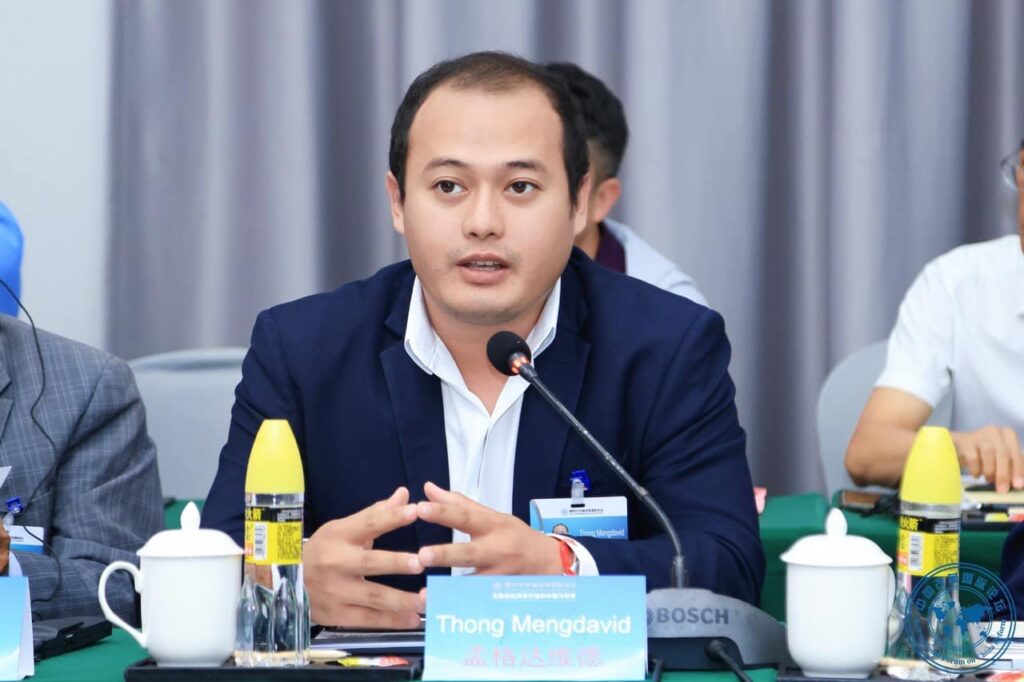
By: Lecturer Thong Mengdavid of the Royal University of Phnom Penh. The views expressed in this article are solely his own and do not represent those of KPT English.

-
 National2 months ago
Poll Finds Strong Cambodian Support for Closer China Ties
-
 Opinion2 months ago
Vienna Convention on the Law of Treaties (VCLT)’s ruling over the MoU 2001 Cancellation by Thailand against Cambodian Maritime Territories
-

 Economy2 months ago
Cambodia Bans Prize Promotions on Beer and Energy Drinks to Level Playing Field
-

 Economy2 months ago
Cambodia Caps Fuel Price Rise as Global Oil Surge Hits Domestic Market
-
 Politics2 months ago
Chinese Embassy Warns Citizens Over High Paid Job Scams in Thailand
-
 Opinion4 weeks ago
From Connectivity to Resilience: How Japan’s Strategic Shift Could Transform Cambodia’s Next Development Phase
-
 Education2 months ago
Cambodia Deepens Japan Backed Education Cooperation
-
 Education2 months ago
UK Pearson Edexcel Program Launched to Expand Cambodia’s International Education Standards