
Economy
Prasat Suor Prat Sheds Light on Angkor’s Ancient Governance and Justice
Siem Reap, June 8, 2026 (KPT) – Prasat Suor Prat, a striking complex of twelve towers lining the eastern side of the Terrace of the Elephants in Angkor Thom, is offering fresh insights into the political and judicial traditions of the Khmer Empire, the Apsara National Authority said Monday.
Built of laterite with sandstone decoration, the towers have long puzzled scholars. With no inscriptions to confirm their original name or date, researchers have relied on historical records, local traditions and archaeological evidence to piece together their role.

Studies suggest the towers may have symbolized the authority of the empire’s twelve provinces or vassal states, serving as sanctuaries for sacred objects or deities. They are thought to have been linked to royal tribute ceremonies, where subordinate rulers reaffirmed allegiance to the king.
The complex may also have functioned as a judicial site. Chinese envoy Zhou Daguan, who visited Angkor in 1296, wrote that disputing parties were confined to separate towers when judges could not decide a case. Illness was interpreted as divine judgment of guilt, while those who remained healthy were deemed innocent.
These accounts indicate Prasat Suor Prat was more than ceremonial, embodying imperial authority while serving as a venue for resolving disputes through faith and customary law.
The towers are also tied to Khmer folklore, notably the legend of the Twelve Princesses, leading locals to call the site “Prasat Neang 12.”
Over centuries, the structures deteriorated due to age, vegetation and conflict. Restoration began in 1955 under the French School of Asian Studies, but civil war and the Khmer Rouge era brought further damage before conservation resumed.
Today, Prasat Suor Prat stands as a reminder of Angkor’s sophisticated governance, offering rare insight into how the Khmer Empire maintained loyalty, exercised authority and administered justice.









-
 National2 months ago
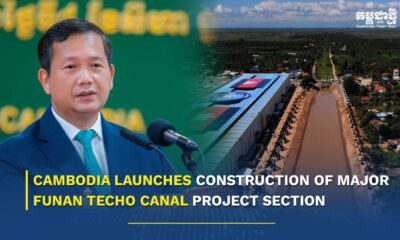
Cambodia launches construction of major Funan Techo canal section
-
 National1 month ago
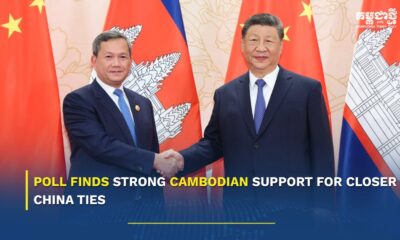
Poll Finds Strong Cambodian Support for Closer China Ties
-

 Economy2 months ago
Cambodia Moves to Boost Green Economy with $30 Million Climate Financing Deal
-

 Opinion2 months ago
Opinion: The “Scambodia” Fallacy: Editorial Malpractice and the Erosion of Journalistic Ethics
-

 National2 months ago
Cambodia Condemns ‘Scambodia’ Label in Wall Street Journal Report
-

 Economy1 month ago
Cambodia Bans Prize Promotions on Beer and Energy Drinks to Level Playing Field
-

 Opinion1 month ago
Vienna Convention on the Law of Treaties (VCLT)’s ruling over the MoU 2001 Cancellation by Thailand against Cambodian Maritime Territories
-

 Economy1 month ago
Cambodia Caps Fuel Price Rise as Global Oil Surge Hits Domestic Market