National
Indigenous Families in Mondulkiri Preserve Tradition of Hand-Harvesting Rice
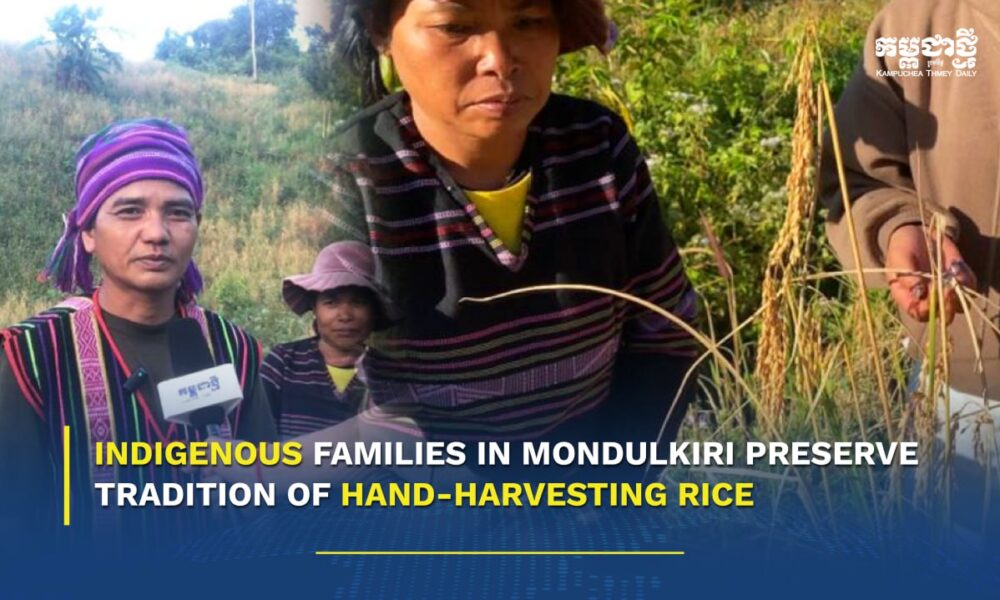
MONDULKIRI, Cambodia (Dec. 4, 2025) — As farming across Cambodia rapidly modernizes, indigenous communities in Mondulkiri province continue to preserve the ancestral tradition of hand-harvesting rice, a practice passed down through generations.
Most households in Mondulkiri rely on mixed farming—growing pepper, cassava, rice, corn and seasonal crops. But some families still choose to harvest rice without machinery, using a method known as Bot Srov, in which each stalk is plucked by hand.
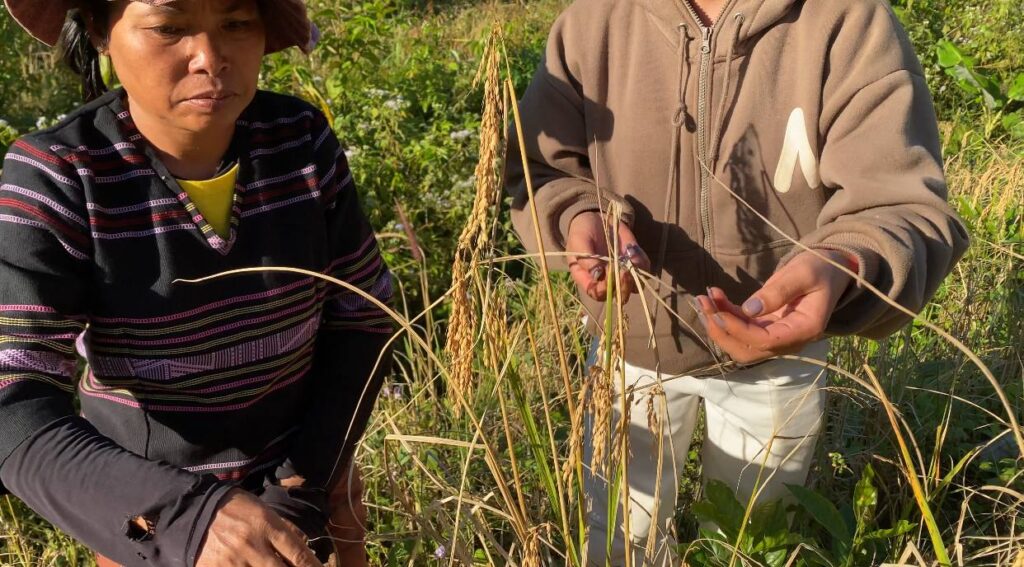
For these communities, hand-harvesting is more than an agricultural technique. It is a cultural heritage they view as central to their identity and vital to safeguard for future generations.
Maogn Thoeun, a 48-year-old farmer from Putrou village in Senmonorom commune, Ou Reang district, said his family has cultivated rice on about one hectare for many years. Each harvest season, they gather to hand-pluck between 20 and 30 sacks of rice.
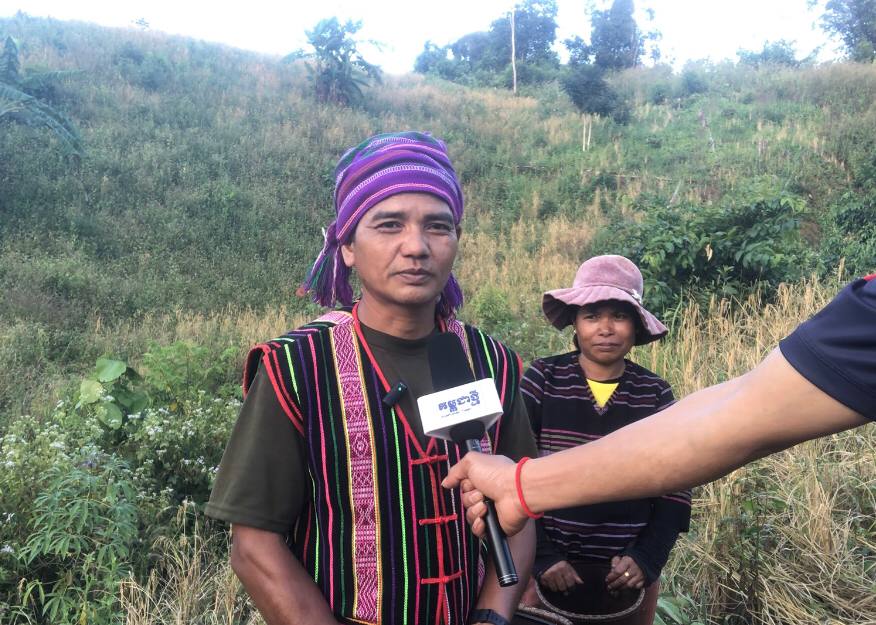
“Hand-harvesting is our traditional way, passed down from our ancestors,” he said. “We don’t use modern machines to harvest the rice.”
Thoeun explained that rice cultivation follows three spiritual and practical stages: planting, ripening and harvesting—when the rice is brought into the granary. These steps are believed to ensure good yields, bring peace and protect the community from illness.
He added that hand-plucking can be more convenient, avoiding the cost of hiring machines for cutting or threshing. More importantly, he said, “We want to keep the tradition of our ancestors alive so it will not disappear.”
As Cambodia’s agricultural sector advances toward greater mechanization, the traditions upheld by indigenous families in Mondulkiri remain a reminder of cultural resilience and the deep connection between people, land and heritage.








-
 National1 month ago
Cambodia Expands Free ID Services While Introducing Clear Fee Structure for Administrative Documents
-
 National3 weeks ago
Cambodia proposes trilateral anti‑crime liaison mechanism with Laos, Vietnam
-

 National2 weeks ago
PM Hun Manet to visit China as trade surges and investment deepens
-

 National2 weeks ago
Cambodia says four soldiers injured in border blast, investigation launched
-

 National1 month ago
Samdech Techo Hun Sen Says Cambodia Can Meet Defence Needs Through Domestic Production
-
 National2 weeks ago
Cambodia opens new distribution hub to expand market access for local businesses
-
 Opinion2 months ago
From Connectivity to Resilience: How Japan’s Strategic Shift Could Transform Cambodia’s Next Development Phase
-

 Economy2 months ago
Cambodia Welcomes 1 Million Tourists in Q1, But Arrivals Fall Sharply Amid Regional Pressures