National
The Quiet Strategist: Profiling Prime Minister Hun Manet’s Leadership Through Technocratic Modesty
I. Introduction: A Subtler Style of Power
In a region shaped by towering personalities and political spectacle, Cambodia’s transition of leadership in 2023 followed a seemingly familiar script. Hun Manet, the son of long-serving Prime Minister Hun Sen, stepped into office under the weight of dynastic expectation.
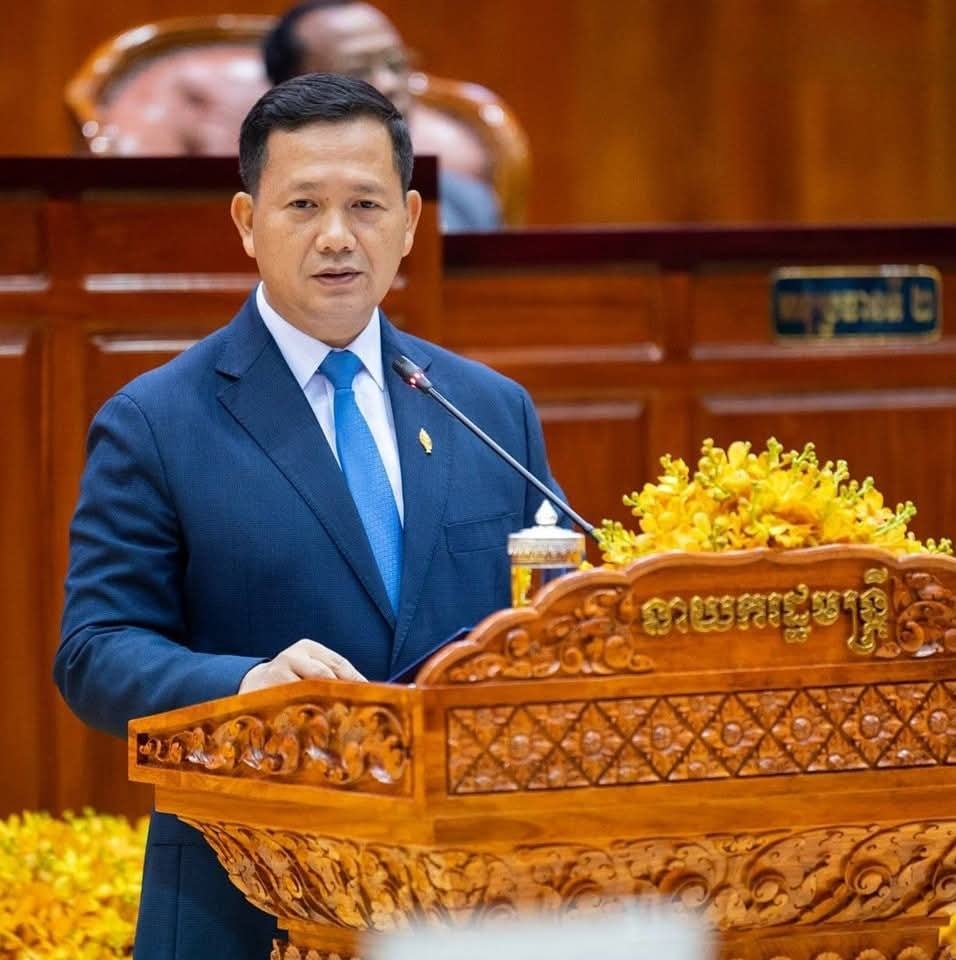
But his first year in office has quietly departed from the expected. There have been no rallies, no fiery speeches, no sweeping ideological pronouncements. Instead, there is restraint. What has emerged is a leadership style marked by technocratic modesty, a strategic blend of discipline, deference, and data-driven governance that speaks more through process than performance.
Hun Manet’s bet appears to be this: that in post-pandemic, geopolitically sensitive Cambodia, quiet competence is more sustainable than loud charisma.
Note: This article is not a comprehensive assessment of Cambodia’s political system or democratic record. It is a focused leadership profile examining one behavioral trait, intellectual modesty, as it manifests in Hun Manet’s public decision-making and communication style. Broader questions around press freedom, opposition rights, and electoral competitiveness fall outside the scope of this analysis, though they remain essential for full contextual understanding.
II. Formed by Discipline, Guided by Systems
Hun Manet’s biography offers familiar elements of elite preparation, he was educated at West Point, earned a master’s degree at NYU, and completed a PhD in economics at the University of Bristol. But what he chose to study matters as much as where he studied.
His doctoral work focused on firm size distribution and structural integration, a technical subject grounded in systems design and economic mechanics. This academic path suggests a mindset oriented toward complexity, coordination, and realism, rather than ideology or political branding.
In that light, his leadership style, disciplined, restrained, process-driven, feels less like personal temperament and more like applied worldview.
III. A Governance Strategy of Quiet Execution
Since assuming office, Hun Manet has placed institutional modernization at the center of his public agenda. His rhetoric consistently avoids populism and focuses instead on technical development and cross-sector coordination.
In February 2025, he issued 11 digital governance recommendations to Cambodia’s Ministry of Posts and Telecommunications. These focused on cybersecurity frameworks, digital inclusion, and inter-ministerial infrastructure, not slogans, but systems [1].
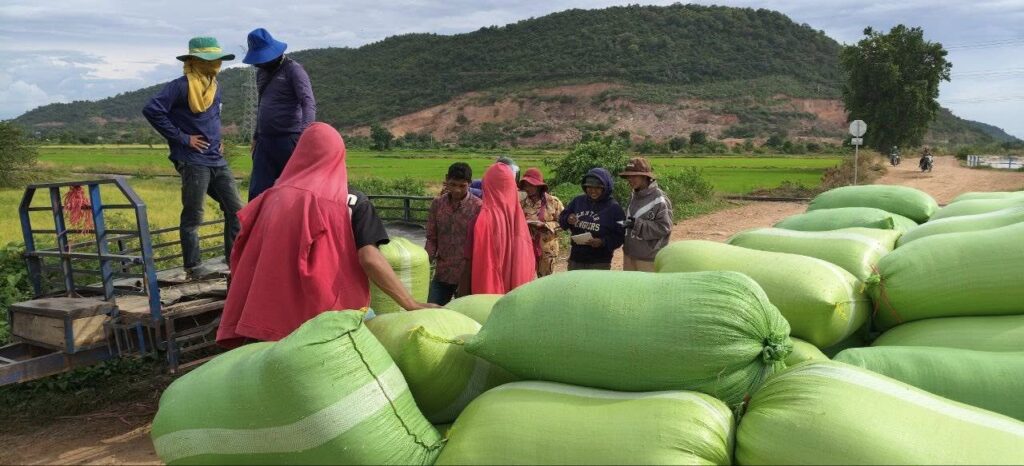
His 2024–2030 Strategic Plan for Teacher Education Reform frames educators as “human capital developers,” emphasizing quality standards, school accountability, and curriculum innovation [2].
Additionally, he has overseen the national rollout of a digital student information system (DSIS), aimed at tracking student attendance, performance, and teacher effectiveness in real time across public schools [3].
This pattern reflects technocratic priorities: improvement by infrastructure, not ideology.
IV. Diplomatic Moderation in a High-Risk Environment
Hun Manet’s technocratic tone extends to foreign policy. In July 2025, a border incident with Thailand escalated to military tensions. Instead of resorting to nationalist rhetoric, he requested international mediation and publicly thanked China, the United States, and Malaysia for facilitating peace [4][5].
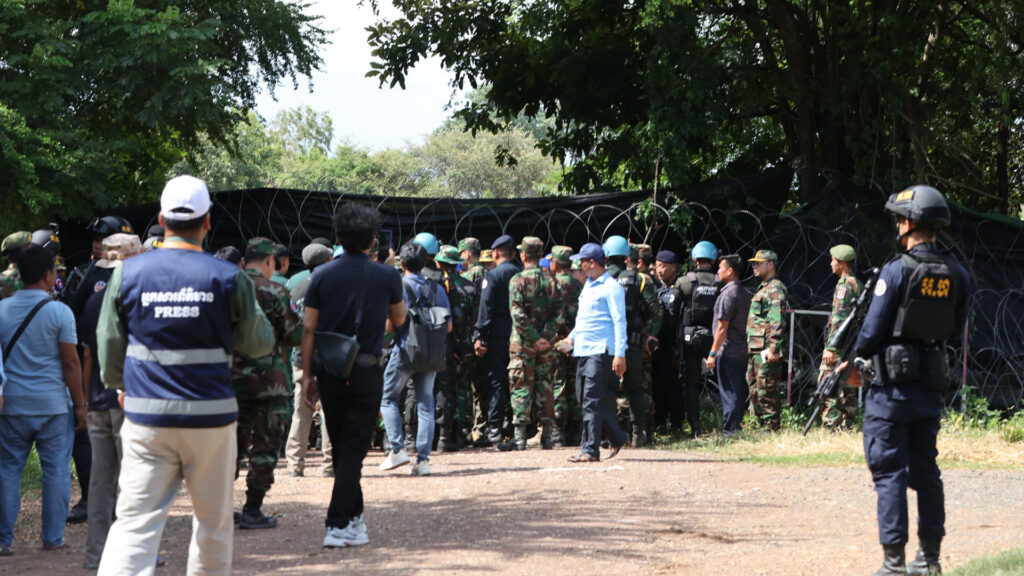
This balanced, multilateral language stood in contrast to his father’s historic posture during similar events. Regional observers described it as strategically humble, reflecting a leader aware of Cambodia’s limited leverage but growing complexity.
It was not a call for global attention. It was a request for practical resolution.
V. Public Minimalism by Design
Hun Manet rarely invokes personal stories, legacy language, or emotional appeals. He does not reference his lineage in speeches. He avoids dramatic gestures. His public persona is almost bureaucratic in tone, low-key meetings, formal directives, team-oriented phrasing.
Academic voices, including Professor Sophal Ear, have described this approach as “technocratic and measured,” noting the contrast with the more personalized and centralized style of his father [6].
This is not modesty as shyness. It is modesty as political shielding, a way to build maneuvering space in a system that is still cautious, hierarchical, and often skeptical of reform.
His style stands apart even from regional heirs like Paetongtarn Shinawatra in Thailand or Lawrence Wong in Singapore, both of whom navigate high expectations with more public-facing charisma. Hun Manet’s restraint is almost algorithmic by comparison.
VI. Modesty as Navigation
This intellectual modesty, then, is not purely ethical. It is strategic adaptation.
In a country with deep-rooted patronage networks and centralized authority, overt reformism can trigger institutional resistance. By adopting a posture of competence rather than confrontation, Hun Manet has carved a niche that allows him to operate inside constraints without drawing fire.
His silence on issues like corruption, electoral openness, and political opposition may be disappointing to reformists. But within his behavioral pattern, this silence appears calculated, not incidental.
Where noise draws risk, modesty buys time.
VII. The Limits of the Quiet Strategy
Yet modesty alone cannot carry a state forward indefinitely. In moments of economic crisis, social unrest, or external pressure, technocratic restraint may be perceived as hesitation. If public expectations for transparency, accountability, or justice rise faster than institutional responsiveness, even a precise and well-managed leadership style can appear detached, or complicit.
Furthermore, modest leadership demands a high-functioning bureaucracy to translate vision into execution. In systems with weak institutional memory or limited capacity, quiet leadership risks being drowned out by louder internal actors or lost in inertia. Modesty is most effective when supported by momentum.
VIII. Conclusion: The Architecture of Restraint
Hun Manet’s first year as prime minister does not promise revolution. Nor does it romanticize continuity. What it offers is a controlled, deliberate, and sometimes enigmatic form of leadership, one that sees governance as engineering, not oratory.
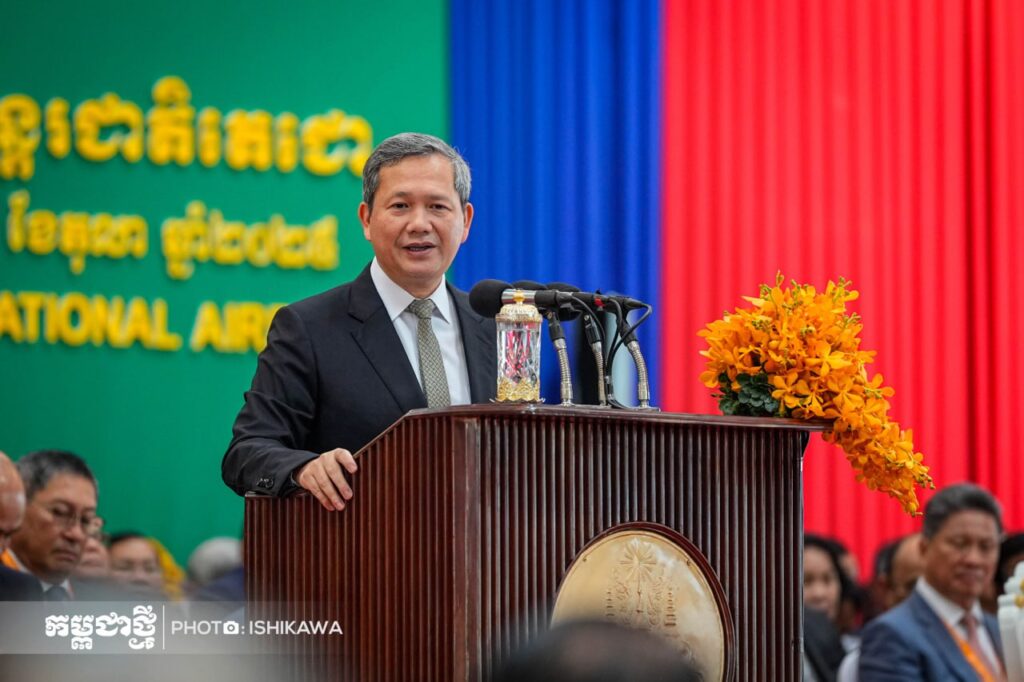
His intellectual modesty is not weakness. It is a kind of calibrated intelligence, a strategy that allows room to move where political space is limited. It may not fulfill the demands of liberal democracy, but it may represent a more adaptive form of control in a state still defined by hierarchy and inertia.
Cambodia’s challenges remain vast. But in Hun Manet, the country has found a leader who governs with precise tools, and who knows when not to wield them.
This article was written in reflection on Prime Minister Hun Manet’s leadership and is released to coincide with his birthday, October 20, 2025, just over two years since he assumed office.
By Arnaud Darc, Former President of EuroCham Cambodai
October 20, 2025
Endnotes
[1] PM Hun Manet Charts Cambodia’s Digital Future, EAC News
[2] Strategic Plan for Teacher Education Reform, Ministry of Education
[3] Cambodia Launches DSIS Nationally, Ministry Briefing (2025)
[4] Thailand–Cambodia Border Ceasefire Agreement, Asia Media Centre
[5] Cambodia’s Border Diplomacy in 2025, IAD News
[6] Sophal Ear Interview, Thai PBS World
[7] World Report 2025: Cambodia, Human Rights Watch
[8] Cambodia’s Political Landscape in 2025, The Diplomat







-
 National1 month ago
Cambodia Expands Free ID Services While Introducing Clear Fee Structure for Administrative Documents
-
 National3 weeks ago
Cambodia proposes trilateral anti‑crime liaison mechanism with Laos, Vietnam
-
 National2 weeks ago
PM Hun Manet to visit China as trade surges and investment deepens
-

 National2 weeks ago
Cambodia says four soldiers injured in border blast, investigation launched
-
 National1 month ago
Samdech Techo Hun Sen Says Cambodia Can Meet Defence Needs Through Domestic Production
-

 National2 weeks ago
Cambodia opens new distribution hub to expand market access for local businesses
-
 Opinion2 months ago
From Connectivity to Resilience: How Japan’s Strategic Shift Could Transform Cambodia’s Next Development Phase
-
 Economy2 months ago
Cambodia Welcomes 1 Million Tourists in Q1, But Arrivals Fall Sharply Amid Regional Pressures