Opinion
Thailand: Gateway to Human Trafficking and Cyber Scams
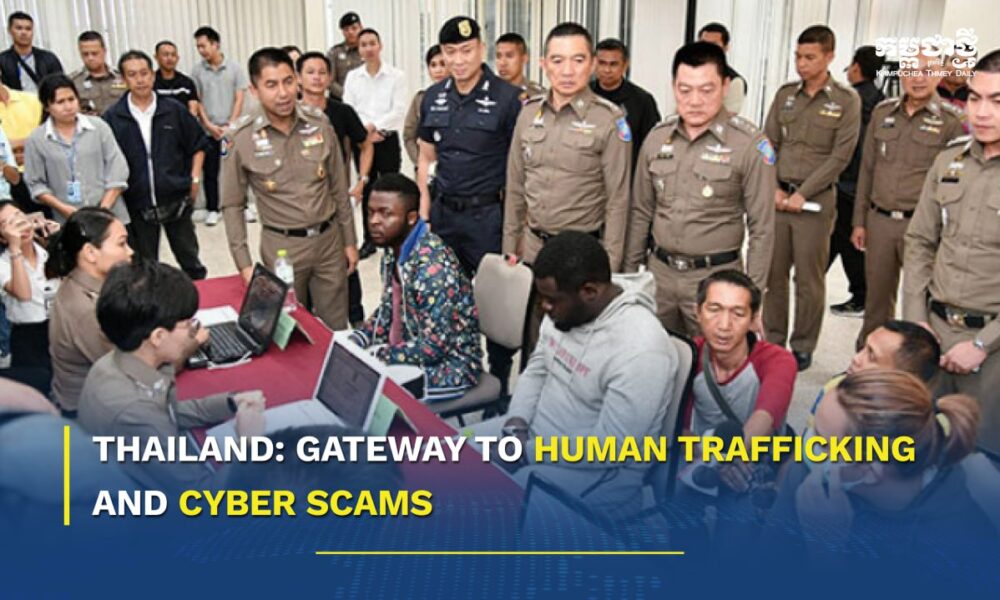
In recent years, Thailand has emerged as a regional hub for criminal syndicates involved in human trafficking and large-scale online fraud. These organized, transnational networks exploit porous borders, weak enforcement, and gaps in official oversight to trap tens of thousands in debt bondage, abuse, and forced scams.
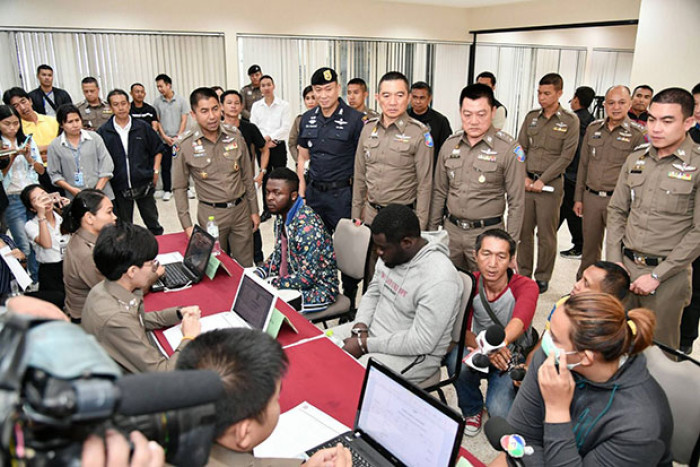
The evidence is stark and mounting. A multi-part investigation by Reuters found victims who “traveled to Thailand” only to be processed through criminal networks and forced into scam compounds, often ending up in Myanmar facilities accessible via the Thai border.
Victims reported abduction, confinement, and coercion into online fraud, often after being lured by fake job offers. Some said they were escorted through Bangkok airports by individuals posing as Thai immigration officials before being taken to Myanmar.
Kenya’s ambassador confirmed this pattern, claiming Thai authorities were given detailed information but failed to respond. Thailand’s Foreign Ministry denied receiving such reports but pledged to investigate if credible evidence emerged. In early 2025, Chinese actor Wang Xing went missing in Thailand and was later found near the Myanmar border in an area notorious for scam operations.
Thai police confirmed he was a trafficking victim, lured by a fake casting job and taken into Myanmar to work in a call scam targeting Chinese nationals. He was rescued and returned to Thailand for questioning, with reports showing him in Mae Sot, head shaved, at the Thailand–Myanmar border.
The U.S. State Department’s 2024 Trafficking in Persons (TIP) Report identifies Thailand as a major site for trafficking victim identification and highlights ongoing vulnerabilities tied to labor migration, irregular migration, and criminal exploitation—channels used by traffickers to move people into scam operations.
Thailand remains on Tier 2, indicating it does not meet minimum standards to eliminate trafficking and serves as a source, destination, and transit country. International agencies confirm the regional scope of the problem. The UN Office on Drugs and Crime (UNODC) has documented hundreds of thousands trafficked into Southeast Asian scam centers and highlights how organized crime has turned cyber fraud into a massive trafficking enterprise.
UNODC findings show consistent patterns: victims deceived by false job offers, moved across borders, detained in guarded compounds, forced to defraud victims abroad, and brutally punished for non-compliance. This is not anecdotal—it is a documented, systemic criminal network.
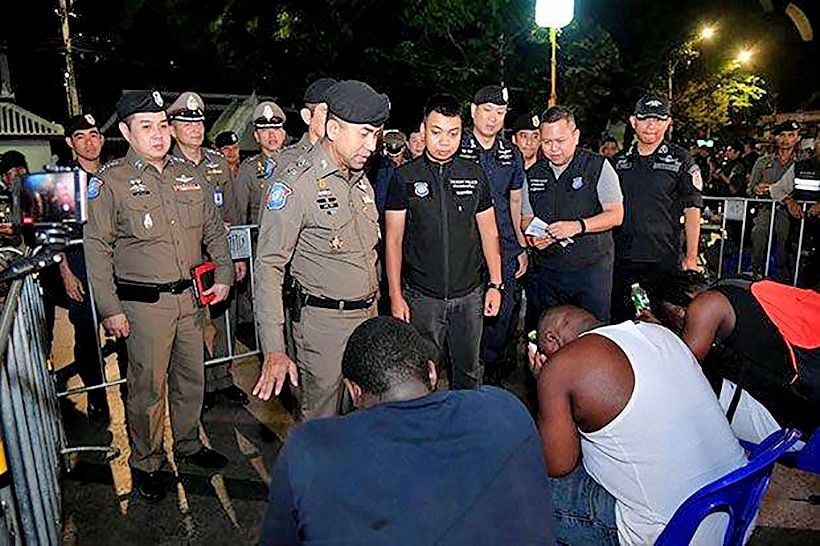
Independent reporting and public scrutiny matter. Outlets like Reuters and The Guardian have exposed horrific abuse: beatings, electric shocks, confinement, and coerced fraud participation.
In 2025, Thailand and neighboring governments began cutting utilities and inspecting scam sites along the Cambodia and Myanmar borders—but only after international pressure revealed years of negligence or complicity. That February, a Myanmar rebel group trafficked 260 people, mostly Ethiopians, into Thailand, where survivors reported abuse and forced participation in global scams.
Taken together, the evidence supports a harsh but necessary condemnation: criminal networks based in and operating through Thailand have created a regional, industrial-scale machine for trafficking and fraud.
Where investigators found evidence of facilitation or tolerance by border officials, and where victims report being moved through Thai territory into compounds, it is right to condemn the failures that allowed this—not to vilify ordinary citizens, but to hold criminal actors and negligent institutions accountable. Reuters’ reporting is explicit: Thailand has become a key transit hub for trafficking victims who end up enslaved in scam centers.
Cambodia: Exploited by Thailand’s Human Trafficking and Scam Networks
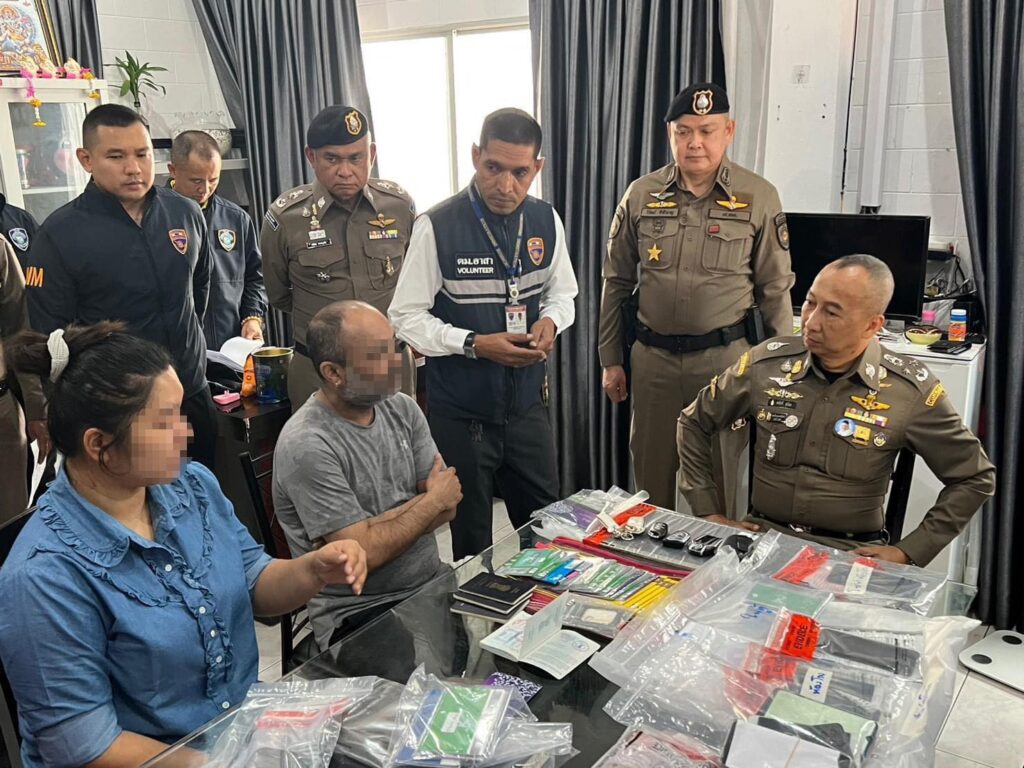
The U.S. Treasury has sanctioned cyber scam operators in Myanmar and Cambodia, stating the industry stole tens of billions from Americans in the past year. Criminal networks have trafficked hundreds of thousands into Southeast Asian scam compounds, particularly along the Thai–Myanmar border, where victims are forced into debt bondage and online fraud. Cambodia’s trafficking and scam crisis is, in large part, linked to networks passing through Thailand.
Multiple investigations and enforcement actions show traffickers exploit the Thai–Myanmar and Thai–Cambodia borderlands as transit corridors. Compounds and criminal hubs on the Thai side or just across the border in Myanmar are accessible via routes through Thai territory. Reuters and other outlets describe victims who “wound up” in scam centers after passing through Thailand. In early 2025, Cambodia launched a high-level task force to combat online scams and conducted major crackdowns on large compounds employing trafficked foreigners.
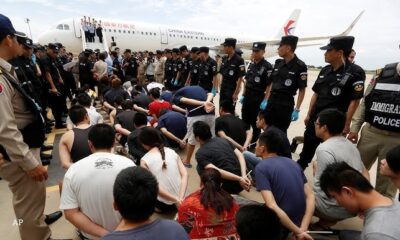
The raids led to thousands of arrests and deportations, targeting criminal networks spanning Myanmar, Thailand, and Cambodia. AP reporting documents Cambodia’s crackdown and notes that the scam industry relies on cross-border labor flows and regional criminal logistics—many originating in Thailand.
UNODC reports that scam and trafficking compounds in Myanmar, Thailand, and Cambodia use the same tactics: false recruitment, coercion, confinement, quotas, and violence. These are coordinated transnational crimes supported by regional facilitators, transport routes, and corrupt checkpoints—not isolated incidents.

Multinational law enforcement inspections and reports implicating Thai immigration and local officials show how traffickers gained operational space in and through Thailand. Even when Thai authorities deny involvement, cumulative evidence and arrest patterns indicate that Thai territory and institutions have been used—sometimes deliberately, sometimes through negligence—as part of these trafficking pipelines.
Cambodia must respond decisively by dismantling criminal networks, prosecuting enablers, tightening cross-border enforcement, safeguarding victims, and overhauling border controls, anti-corruption mechanisms, and labor systems exploited by traffickers.
Both Cambodia and the wider region have suffered greatly from syndicates operating through Thai routes and corrupt officials. Cambodia, in particular, has been harmed by Thailand’s role as a scam logistics hub facilitating trafficking and exploitation.
Holding Thailand accountable as a conduit is warranted. Urgent measures and genuine regional cooperation are needed. Only by confronting these enabling structures can Southeast Asia eliminate scam compounds and human trafficking.
THONG MENGDAVID
Geopolitical and International Security Analyst










-
 National1 month ago
Cambodia Expands Free ID Services While Introducing Clear Fee Structure for Administrative Documents
-
 National3 weeks ago
Cambodia proposes trilateral anti‑crime liaison mechanism with Laos, Vietnam
-

 National2 weeks ago
PM Hun Manet to visit China as trade surges and investment deepens
-

 National2 weeks ago
Cambodia says four soldiers injured in border blast, investigation launched
-

 National1 month ago
Samdech Techo Hun Sen Says Cambodia Can Meet Defence Needs Through Domestic Production
-

 National2 weeks ago
Cambodia opens new distribution hub to expand market access for local businesses
-
 Opinion2 months ago
From Connectivity to Resilience: How Japan’s Strategic Shift Could Transform Cambodia’s Next Development Phase
-
 Economy2 months ago
Cambodia Welcomes 1 Million Tourists in Q1, But Arrivals Fall Sharply Amid Regional Pressures