Economy
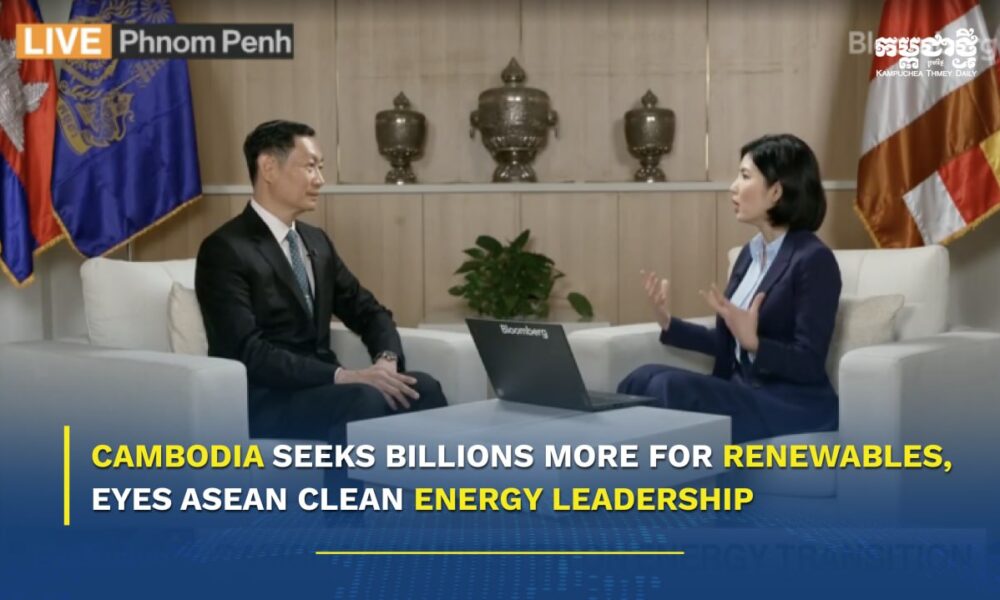
Cambodia Seeks Billions More for Renewables, Eyes ASEAN Clean Energy Leadership
PHNOM PENH, July 24, 2026 (KPT) – Cambodia is seeking several billion dollars in fresh investment to expand renewable generation, transmission lines and battery storage as it targets 70 percent of electricity from clean sources by 2030, officials said Friday.
Mines and Energy Minister Keo Rottanak said the transition strategy aims to bolster economic resilience and shield the country from volatile fossil fuel markets.
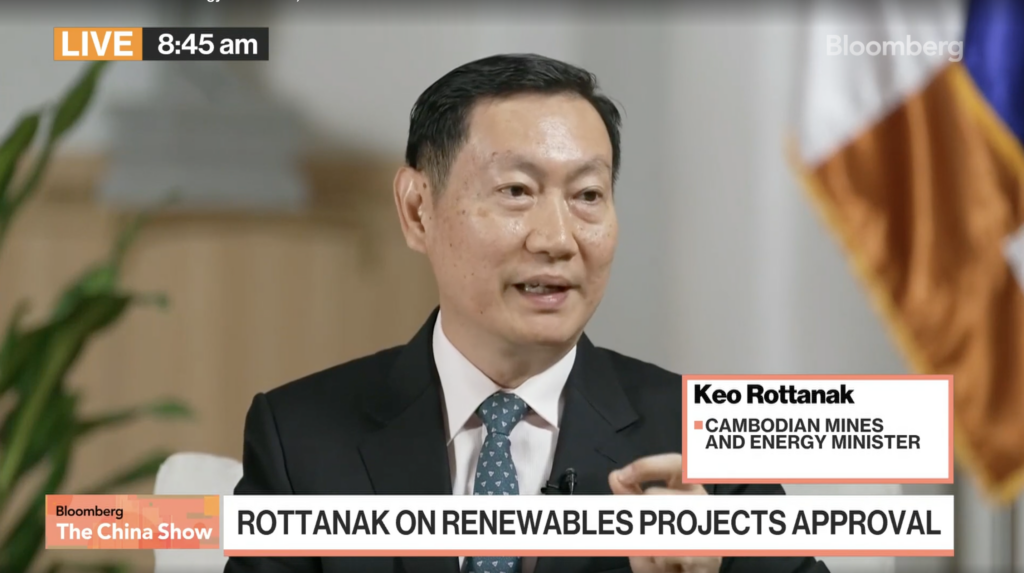
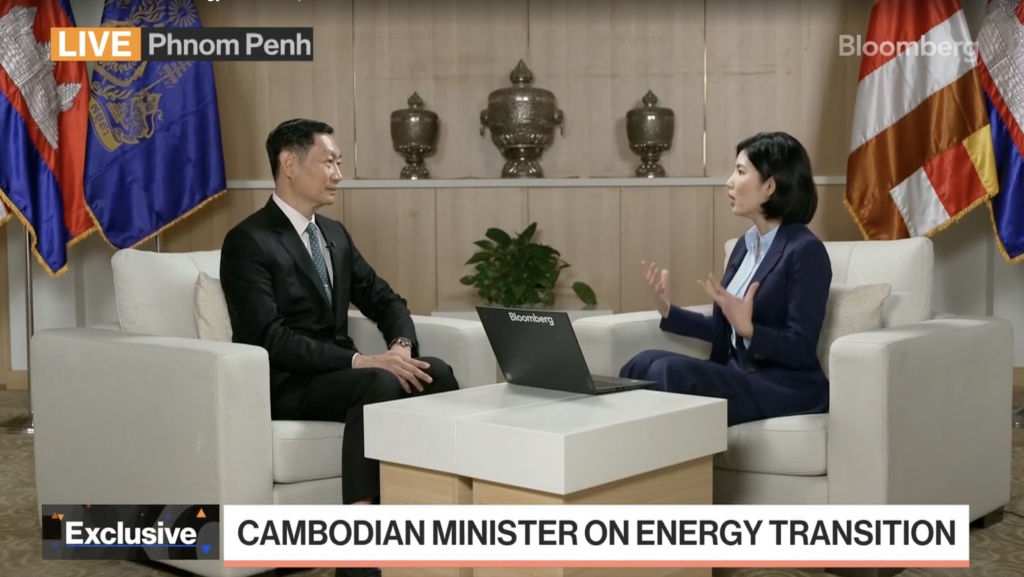
“Our target is at least 70 percent renewable by 2030, which can set Cambodia as the second country in Southeast Asia with that high share,” Rottanak told Bloomberg.
Cambodia now generates about 63 percent of its power from clean energy, helping absorb the impact of surging global oil prices while keeping tariffs stable for households and businesses.
“National resilience comes from having many options,” Rottanak said. “The cleaner option has basically allowed us to absorb external shocks better.”
Despite Brent crude topping US$100 a barrel, Cambodia has avoided fuel shortages through diversified supply and tax relief measures worth US$50 million to US$60 million a month, he said.
To meet rising demand, the government plans a 900‑megawatt LNG plant next year as a transition fuel, awarded via international tender. Rottanak said LNG would make up less than one‑third of the future mix, with 70 percent from solar, wind and hydropower.
Cambodia’s power sector has already drawn more than US$33 billion from public and private investors, backed by partners including the World Bank, ADB, AFD, JICA, KOICA and Germany’s KfW.
Further billions will be needed for generation, transmission and storage. Projects under way include a solar cluster exceeding 1,100 megawatts with 500 megawatts of battery storage, plus more than US$1 billion for transmission financed by China and multilateral lenders.
Rottanak said Cambodia is also deploying advanced grid‑forming battery technology to stabilize the system without heavy reliance on coal, making it one of the first countries to roll out the innovation at scale.







-
 National2 months ago
Cambodia Expands Free ID Services While Introducing Clear Fee Structure for Administrative Documents
-
 National3 weeks ago
Cambodia proposes trilateral anti‑crime liaison mechanism with Laos, Vietnam
-
 National3 weeks ago
PM Hun Manet to visit China as trade surges and investment deepens
-

 National3 weeks ago
Cambodia says four soldiers injured in border blast, investigation launched
-
 National1 month ago
Samdech Techo Hun Sen Says Cambodia Can Meet Defence Needs Through Domestic Production
-
 National3 weeks ago
Cambodia opens new distribution hub to expand market access for local businesses
-
 Opinion2 months ago
From Connectivity to Resilience: How Japan’s Strategic Shift Could Transform Cambodia’s Next Development Phase
-
 National2 months ago
Cambodia’s Defence Budget Rise Reflects Modernisation Strategy Without Cutting Social Spending