Economy
Lower US Tariff Gives Exporters Edge, But Fabric Supply Gap Threatens Future Orders
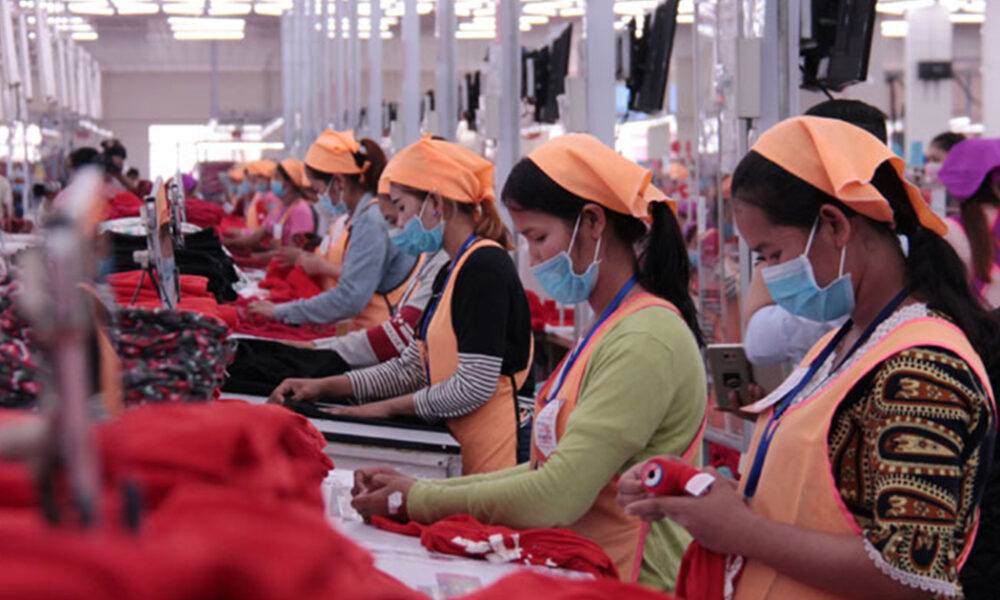
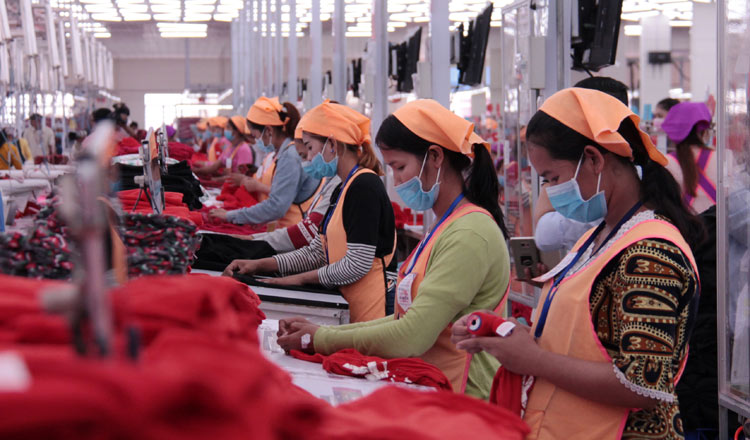
PHNOM PENH, July 24, 2026 (KPT) – The garment industry has gained a competitive advantage after the United States imposed a lower tariff on exports than on regional rivals Thailand and Vietnam, but industry experts warn the benefit could prove short‑lived unless the country strengthens its domestic textile supply chain.
The Office of the US Trade Representative (USTR) said imports from Phnom Penh, Bangladesh, Indonesia and Malaysia will be subject to a 10 percent tariff under its Section 301 action on forced labor, while Thailand and Vietnam will face a higher 12.5 percent rate. The measures follow investigations into 60 economies over their enforcement of bans on imports produced with forced labor.
USTR said the lower tariff was granted after new regulations prohibited imports made wholly or partly with forced labor. The agency also announced plans to establish tariff‑rate quotas over the next three years to encourage greater use of US cotton and textile inputs.
Kaing Monika, Deputy Secretary General of the Textile, Apparel, Footwear and Travel Goods Association (TAFTAC), told KPT English the Section 301 tariff replaces the expired Section 122 global tariff and should not be viewed as an additional duty. He stressed the US action does not accuse local manufacturers of using forced labor, but assesses whether trading partners enforce bans on imports of goods produced with forced labor abroad.

“From a trade competitiveness perspective, exporters remain in a relatively favourable position with a 10 percent tariff, while several competing countries are subject to a higher 12.5 percent tariff,” Monika said.
Former American Chamber of Commerce in Cambodia President Casey Barnett said the new regime presents both opportunities and challenges. He noted that besides the lower tariff, exporters are eligible for a special quota mechanism providing preferential treatment based on the volume of US‑origin cotton and fabric imported. The initiative is intended to boost demand for US cotton while reducing dependence on Chinese supply chains.
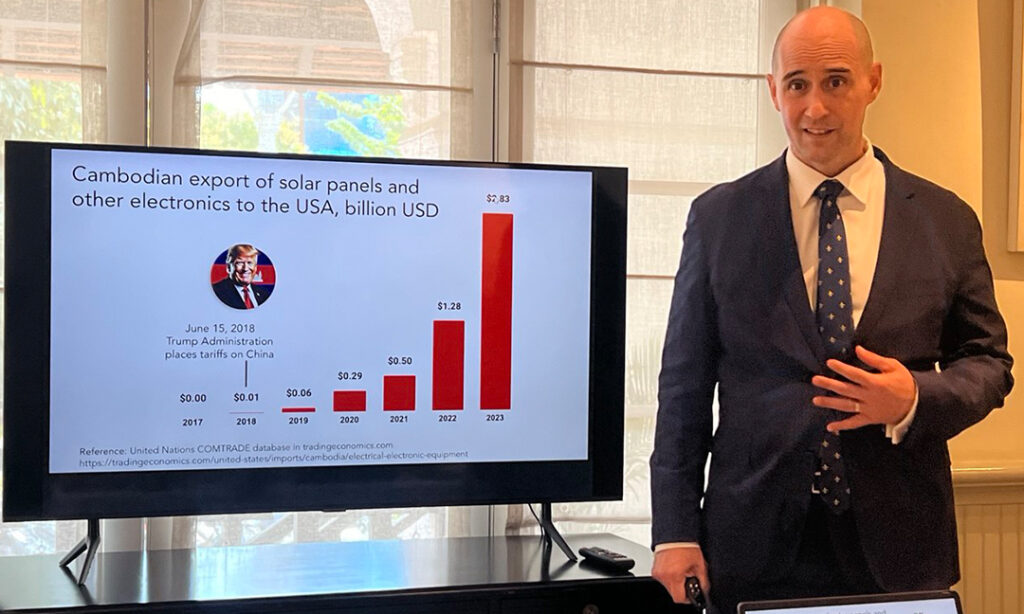
Barnett said exports to the US totaled about US$4 billion in 2025, while imports of cotton and textile materials from China reached US$2.8 billion. By comparison, imports of US cotton and textiles amounted to only US$137,000, underscoring heavy reliance on Chinese raw materials.
He warned that orders could shift to Bangladesh and Indonesia, which enjoy the same 10 percent tariff but have stronger domestic textile industries. “The country lacks a strong textile manufacturing base. It needs to move quickly to attract investment in fabric production or risk gradually losing export orders,” Barnett said.
High electricity costs and lengthy environmental assessment procedures remain obstacles to investment, he added. Barnett also pointed to risks from a second Section 301 investigation into industrial overcapacity, with new US tariff measures expected within two months. Future preferences may come with expectations to reduce dependence on Chinese inputs.
Beyond the US market, Barnett said exporters face uncertainty over future access to the European Union, noting that brands may hesitate to expand sourcing unless there is progress toward a free trade agreement or other preferential arrangement as Everything But Arms preferences phase out.
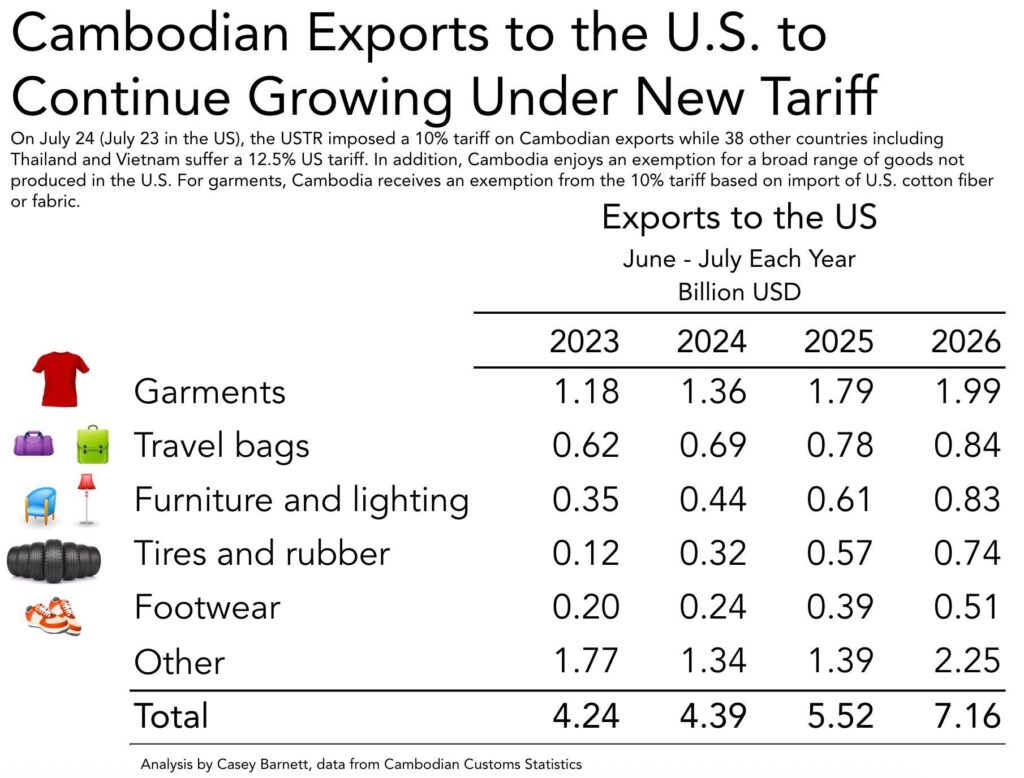
Customs data showed exports to the US reached more than US$7 billion in the first half of 2026, up nearly 30 percent year‑on‑year. Two‑way trade in 2025 totaled US$13.14 billion, with exports rising 28.5 percent to US$12.73 billion.
Analysts say the new tariff structure provides an immediate edge over Thailand and Vietnam, but sustaining that advantage will depend on building a competitive domestic textile industry and diversifying supply chains to meet evolving US sourcing requirements.



-

 National2 months ago
Cambodia Expands Free ID Services While Introducing Clear Fee Structure for Administrative Documents
-

 National3 weeks ago
Cambodia proposes trilateral anti‑crime liaison mechanism with Laos, Vietnam
-
 National3 weeks ago
PM Hun Manet to visit China as trade surges and investment deepens
-

 National3 weeks ago
Cambodia says four soldiers injured in border blast, investigation launched
-

 National1 month ago
Samdech Techo Hun Sen Says Cambodia Can Meet Defence Needs Through Domestic Production
-
 National3 weeks ago
Cambodia opens new distribution hub to expand market access for local businesses
-
 Opinion2 months ago
From Connectivity to Resilience: How Japan’s Strategic Shift Could Transform Cambodia’s Next Development Phase
-
 National2 months ago
Cambodia’s Defence Budget Rise Reflects Modernisation Strategy Without Cutting Social Spending