Economy
Cambodia Not Relying on ‘Plus One’ Strategy Amid Border Tension
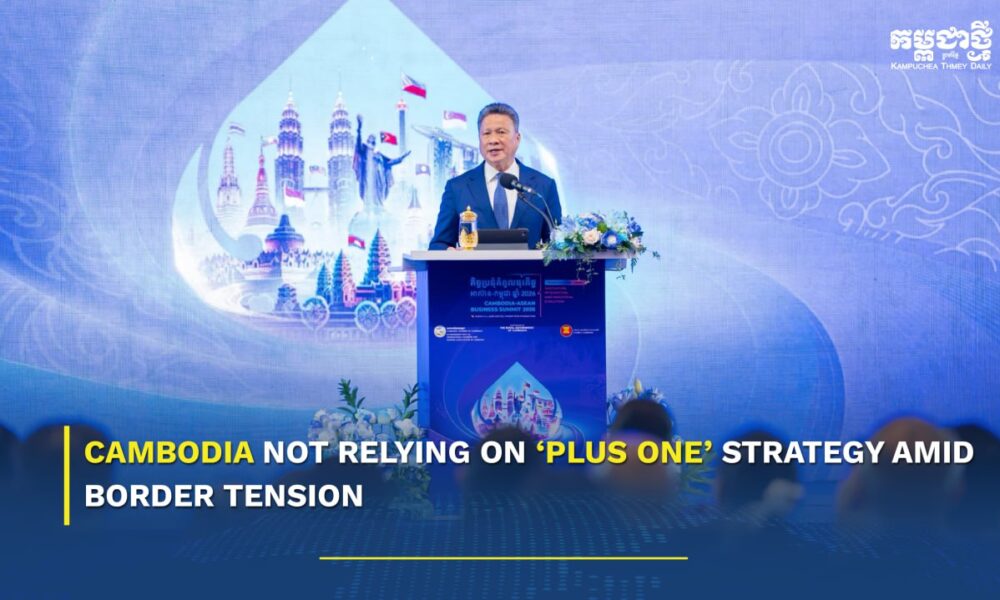
PHNOM PENH, Mar. 5, 2026 (KPT) – Cambodia is positioning itself as a regional manufacturing hub serving wider regional and global markets, moving beyond the commonly cited “Plus One” investment strategy, Deputy Prime Minister Sun Chanthol said Wednesday.
Speaking at the Cambodia–ASEAN Business Summit in Phnom Penh, Chanthol stressed that the Kingdom’s economic plan is not limited to supply-chain diversification trends such as “China Plus One,” “Thailand Plus One” or “Vietnam Plus One,” but is anchored in a broader national strategy to develop Cambodia as a central manufacturing base.
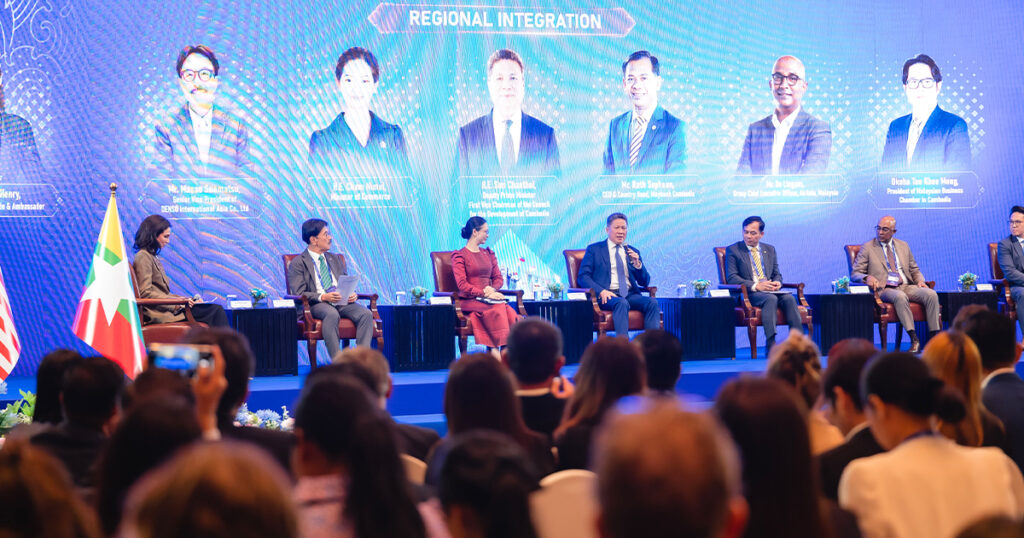
“Cambodia is not only relying on the border, the plus one,” he said. “Plus one is just complementary to the overall strategy of Cambodia as a manufacturing base that can serve the Greater Mekong Subregion.”
Chanthol noted that Cambodia sits at the heart of the Greater Mekong Subregion—comprising Cambodia, Vietnam, Thailand, Laos, Myanmar and parts of southern China—representing a combined market of about 250 million consumers.
He added that ASEAN integration with partners including China, Japan, South Korea, Australia and New Zealand expands Cambodia’s access to more than 2.3 billion consumers.
Cambodia’s long-term strategy, he said, focuses on building large-scale infrastructure and logistics networks to connect more efficiently with global markets.
The government is investing heavily in port and logistics facilities to reduce trade costs and improve connectivity. A major expansion of Cambodia’s deep-sea port is underway, which will sharply increase capacity to handle international shipping.
Currently, only about 18 percent of vessels operating across the Asia-Pacific can call at Cambodian ports. Once the first phase of the new container terminal is completed next year, around 93 percent of vessels in the region will be able to dock, Chanthol said.
Further expansions are planned through 2030, including additional terminals with deeper draft capacity, enabling direct shipping between Cambodia and global markets without transshipment through neighboring countries.
Chanthol said the infrastructure push is aligned with Cambodia’s national logistics master plan, which aims to modernize transport systems and reduce the cost of doing business.
“Plus One is important,” he said. “But it is only one part of a much larger strategy to build Cambodia into a production and logistics hub that can serve the region and the world.”









-
 National1 month ago
Cambodia Expands Free ID Services While Introducing Clear Fee Structure for Administrative Documents
-

 National3 weeks ago
Cambodia proposes trilateral anti‑crime liaison mechanism with Laos, Vietnam
-
 National2 weeks ago
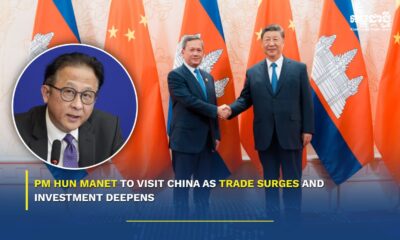
PM Hun Manet to visit China as trade surges and investment deepens
-

 National2 weeks ago
Cambodia says four soldiers injured in border blast, investigation launched
-

 National1 month ago
Samdech Techo Hun Sen Says Cambodia Can Meet Defence Needs Through Domestic Production
-
 National2 weeks ago
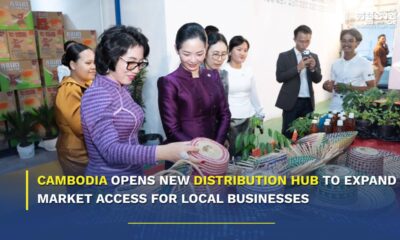
Cambodia opens new distribution hub to expand market access for local businesses
-
 Opinion2 months ago
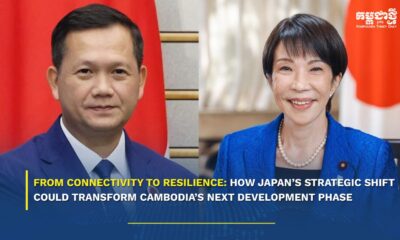
From Connectivity to Resilience: How Japan’s Strategic Shift Could Transform Cambodia’s Next Development Phase
-

 Economy2 months ago
Cambodia Welcomes 1 Million Tourists in Q1, But Arrivals Fall Sharply Amid Regional Pressures