National
Smithsonian Returns Sacred Khmer Masterpieces, Marking Major Step in Cambodia’s Cultural Healing
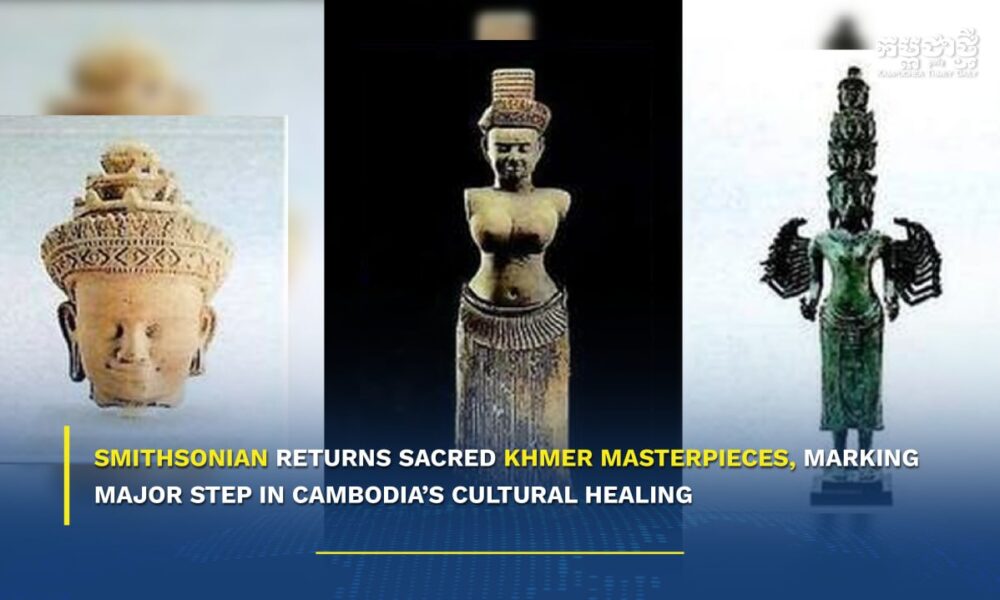
PHNOM PENH, Cambodia (Dec. 17, 2025) — Cambodia welcomed the return of three sacred Khmer sculptures from the Smithsonian Institution’s National Museum of Asian Art, a landmark moment widely seen as an act of cultural justice and national healing after decades of war and loss.
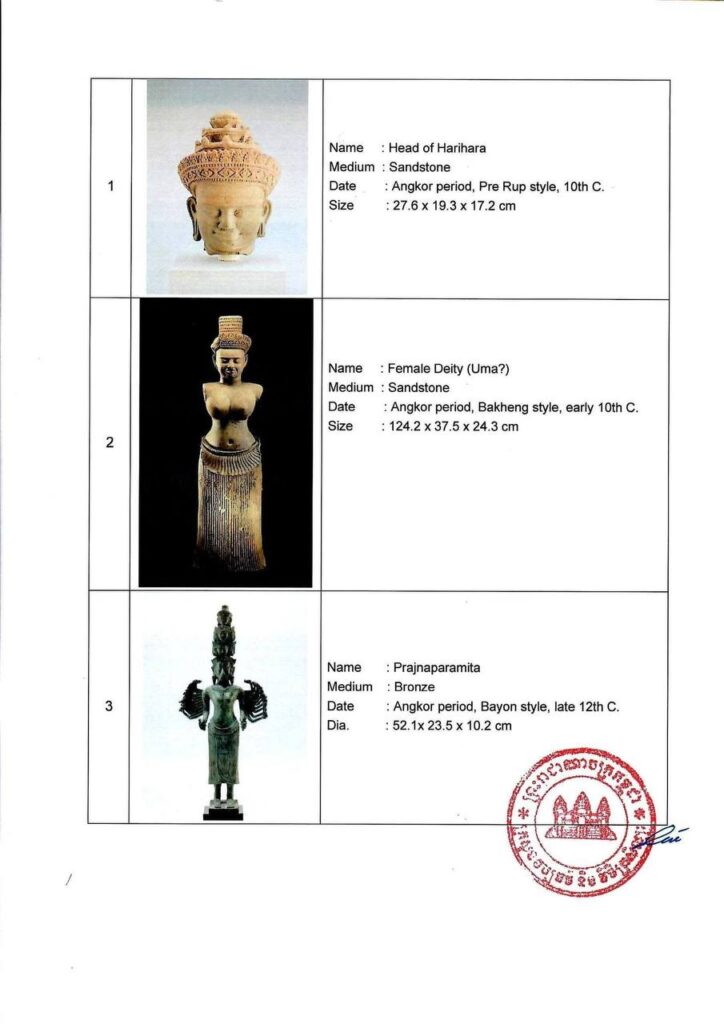
The Ministry of Culture and Fine Arts said that on Oct. 27, the Smithsonian’s Board of Regents formally approved the return of the Head of Harihara (10th century), the Female Deity Uma (10th century) and Prajnaparamita (late 12th century). The masterpieces were removed from Cambodia during years of civil war and instability that fueled widespread looting of cultural heritage.
The repatriation follows extensive provenance research confirming the sculptures were taken during periods when Cambodia was unable to protect its heritage. Their return marks the first restitution carried out under the Smithsonian’s Ethical Return Policy for the National Museum of Asian Art.
Minister of Culture and Fine Arts Phoeurng Sackona described the homecoming as more than the recovery of artworks, calling the sculptures “living embodiments of the spirit of our ancestors and the identity of the Khmer people.”
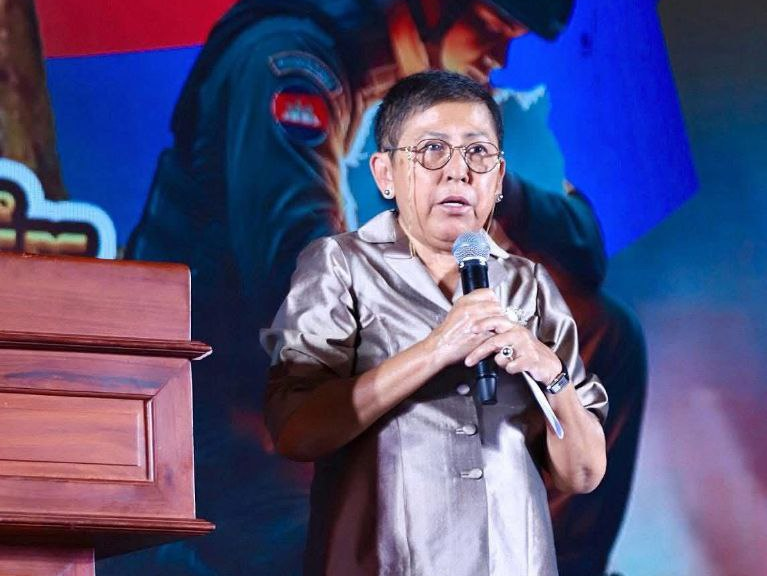
“These sacred works represent the timeless strength, devotion and creativity of the Angkor Empire,” she said, adding that their return offers “a moment of national reflection and healing for a country that has endured decades of conflict and cultural destruction.”
The ministry expressed deep appreciation to the Smithsonian for its cooperation, emphasizing that the return was made possible through good-faith dialogue, mutual trust and respect for Cambodia’s cultural rights. Officials voiced hope the decision would encourage other museums worldwide to adopt and actively implement ethical return policies.
The repatriation involved close collaboration between Cambodian restitution teams, the National Museum of Asian Art’s curatorial and provenance specialists, the U.S. Embassy in Phnom Penh and international cultural heritage experts.
For Cambodia, the return of the sculptures represents a symbolic restoration of history and dignity — an affirmation that cultural wounds inflicted during war can be acknowledged and repaired, and that justice for heritage is an essential part of national recovery.








-

 National2 months ago
Cambodia Expands Free ID Services While Introducing Clear Fee Structure for Administrative Documents
-
 National3 weeks ago
Cambodia proposes trilateral anti‑crime liaison mechanism with Laos, Vietnam
-

 National2 weeks ago
PM Hun Manet to visit China as trade surges and investment deepens
-

 National2 weeks ago
Cambodia says four soldiers injured in border blast, investigation launched
-

 National1 month ago
Samdech Techo Hun Sen Says Cambodia Can Meet Defence Needs Through Domestic Production
-

 National2 weeks ago
Cambodia opens new distribution hub to expand market access for local businesses
-
 Opinion2 months ago
From Connectivity to Resilience: How Japan’s Strategic Shift Could Transform Cambodia’s Next Development Phase
-

 Economy2 months ago
Cambodia Welcomes 1 Million Tourists in Q1, But Arrivals Fall Sharply Amid Regional Pressures