Opinion
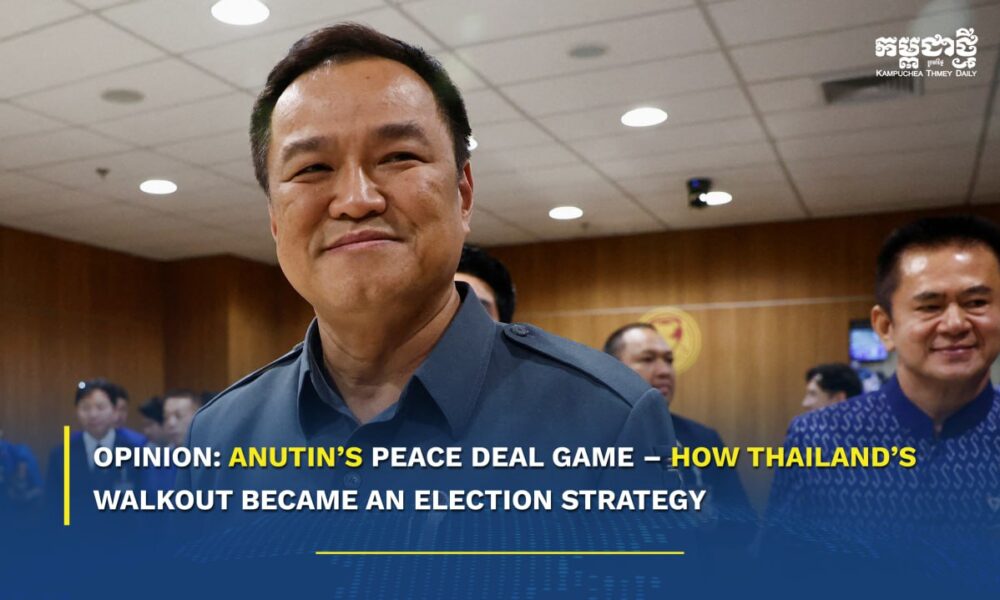
Opinion: Anutin’s Peace Deal Game – How Thailand’s Walkout Became an Election Strategy

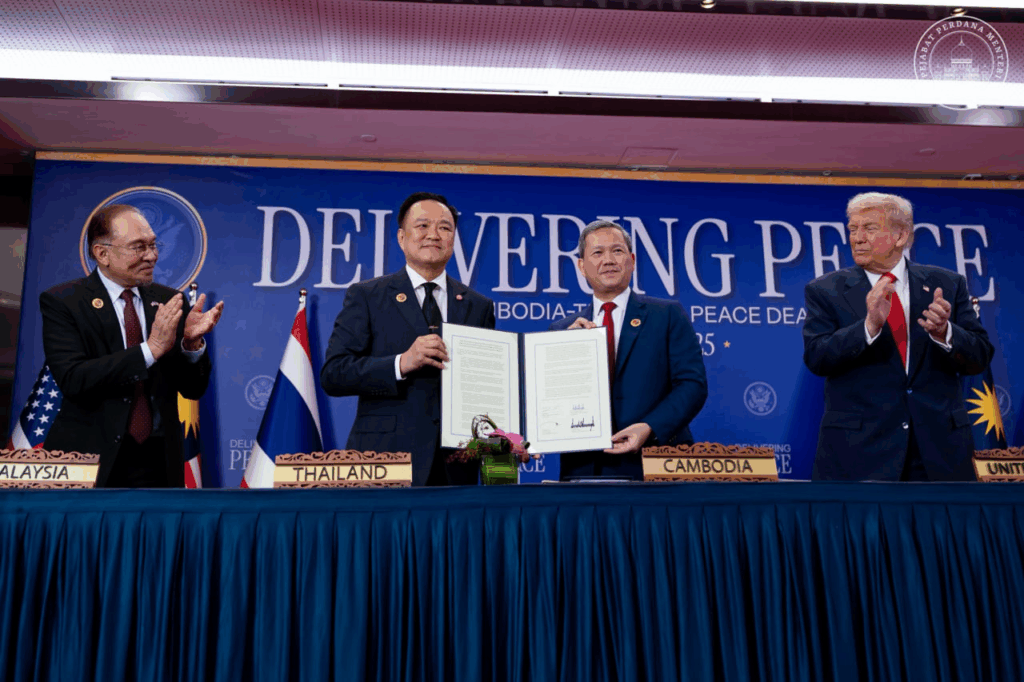
In the lead-up to the October 26 KualaLumpur Peace Accord, Anutin Charnvirakul repeatedly avoided attending, putting forward a series of shifting excuses. The accord, held on the sidelines of the ASEAN Summit and jointly brokered by U.S. President Donald Trump and ASEAN Chair Anwar Ibrahim, was intended to mark a breakthrough in Cambodia- Thailand relations. Before the summit, Anutin told Trump that Thailand would not proceed unless Cambodia first met Bangkok’s preconditions. He resisted Trump’s mediation, asserting Thailand’s dominance and signaling that Bangkok would not be dictated to by external powers. However, his attempts failed, and the accord was ultimately signed between Cambodia and Thailand in the presence of President Trump and ASEAN Chair Anwar Ibrahim.
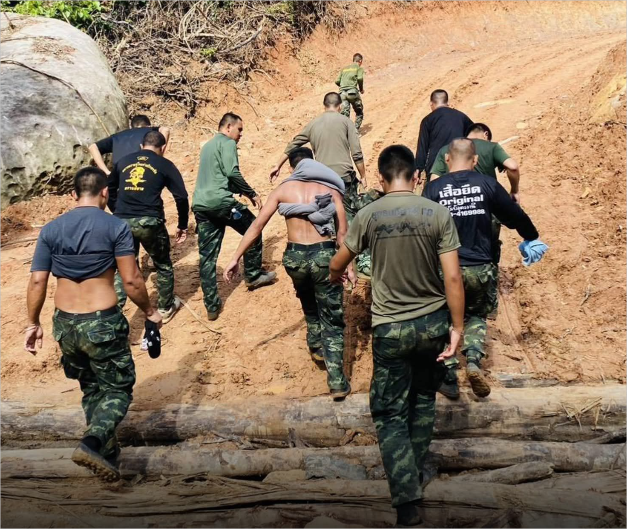
On November 11, a mine blast in Thailand’s Sisaket Province injured four Thai soldiers, one losing his right foot and three with minor wounds, prompting the Thai military and foreign ministry to accuse Cambodia of laying new mines in violation of the truce, which Cambodia denied and rejected as a baseless and unfounded accusation.
Seizing on the incident, Anutin moved to unilaterally void the President Trump brokered accord, a decisive step that signaled Thailand’s resistance to outside influence. His action directly undercut President Trump’s claim of having secured peace between Cambodia and Thailand, weakening a diplomatic success Washington had hoped to showcase. By scrapping the accord, Anutin reaffirmed Bangkok’s independence position and declared that Thailand alone would determine the course of its regional affairs.
Within ASEAN, the message was clear that Thailand, not ASEAN, would set the terms and peace of bilateral normalization. The action demonstrated Bangkok’s reluctance to yield to multilateral pressure in its management of Cambodia- Thailand border issues.
For Cambodia, Anutin’s move was a calculated display of Thailand’s leverage, a reminder that Bangkok could alter agreements at any moment, but also an opportunity to reassess its engagement with calm and strategic focus.
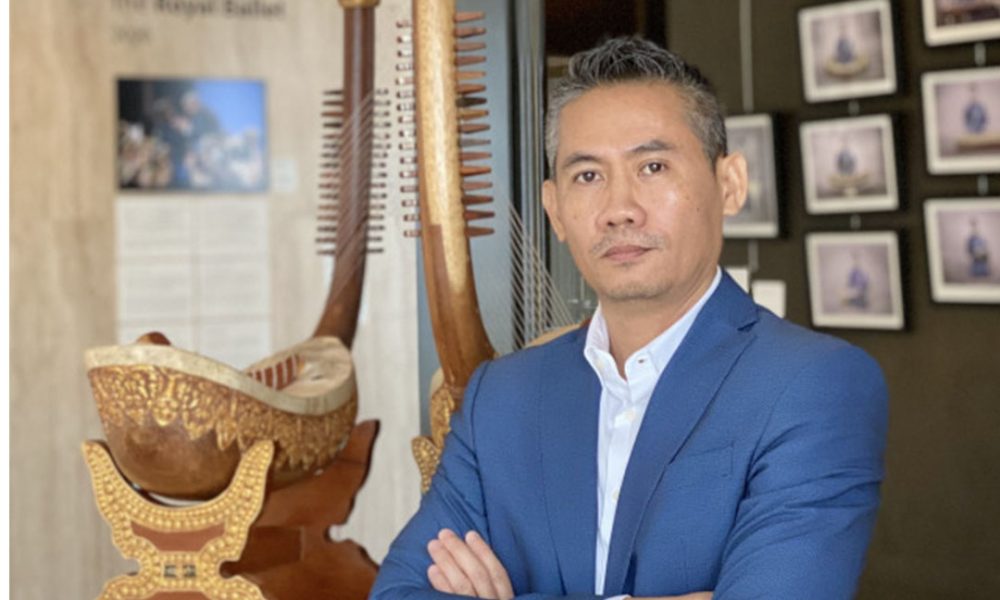
Mr.Chhay Bora – Strategic Advisor, and Government Affairs & Public Policy Expert
While the regional implications were significant, Anutin’s move prioritized domestic political calculations. With Thailand facing severe natural disasters and growing economic strain, and with Bhumjaithai locked in fierce competition with Pheu Thai and the Move Forward, voiding the accord allowed Anutin to project decisive leadership at a moment of national vulnerability. Even through the move risked straining ties with Washington’s partners and unsettling regional peace, it offers him a powerful way to signal strength at home.
Yet behind this series of mine blasting and foreign policy drama lay a domestic political gamble. With Thailand’s 2026 general elections at stake, Anutin’s Bhumjaithai Party was under pressure to defend its political territory in an environment increasingly shaped by the dominance of Pheu Thai and the rise of Move Forward. Thai media reporting on party composition, internal power struggles, and shifting alliances underscored how Bhumjaithai faced growing challenges to maintain its influence at both national and provincial levels.

Against this backdrop, the party’s strategists leaned on nationalist sentiment that resonated strongly in rural provinces, with Thai media noting how the issue boosted parties presenting themselves as defenders of national interest.
Bhumjaithai, meanwhile, drew strength from its entrenched rural networks, local infrastructure projects, and provincial patronage systems, which continued to secure its loyalty outside Bangkok.
Tearing up Trump’s pace accord served a dual political purpose – insulating Anutin from nationalists backlash and energizing conservative, provincial voters wary of foreign interference. By rejecting a U.S.- led deal, he cast himself as a defender of Thai sovereignty and traditional authority.
Though damaging to regional diplomacy, the move fit Anutin Bhumjaithai’s populist narrative and strengthened his image as a pragmatic strongman prioritizing Thailand’s domestic momentum ahead of 2026 election. This came at the expanse of maintaining peace with Cambodia and broader region, and further restrained Bangkok’s ties with Washington.
Author: Chhay Bora – Strategic Advisor, and Government Affairs & Public Policy Expert










-
 National2 months ago
Cambodia Expands Free ID Services While Introducing Clear Fee Structure for Administrative Documents
-
 National3 weeks ago
Cambodia proposes trilateral anti‑crime liaison mechanism with Laos, Vietnam
-
 National3 weeks ago
PM Hun Manet to visit China as trade surges and investment deepens
-

 National2 weeks ago
Cambodia says four soldiers injured in border blast, investigation launched
-
 National1 month ago
Samdech Techo Hun Sen Says Cambodia Can Meet Defence Needs Through Domestic Production
-

 National2 weeks ago
Cambodia opens new distribution hub to expand market access for local businesses
-
 Opinion2 months ago
From Connectivity to Resilience: How Japan’s Strategic Shift Could Transform Cambodia’s Next Development Phase
-

 Economy2 months ago
Cambodia Welcomes 1 Million Tourists in Q1, But Arrivals Fall Sharply Amid Regional Pressures